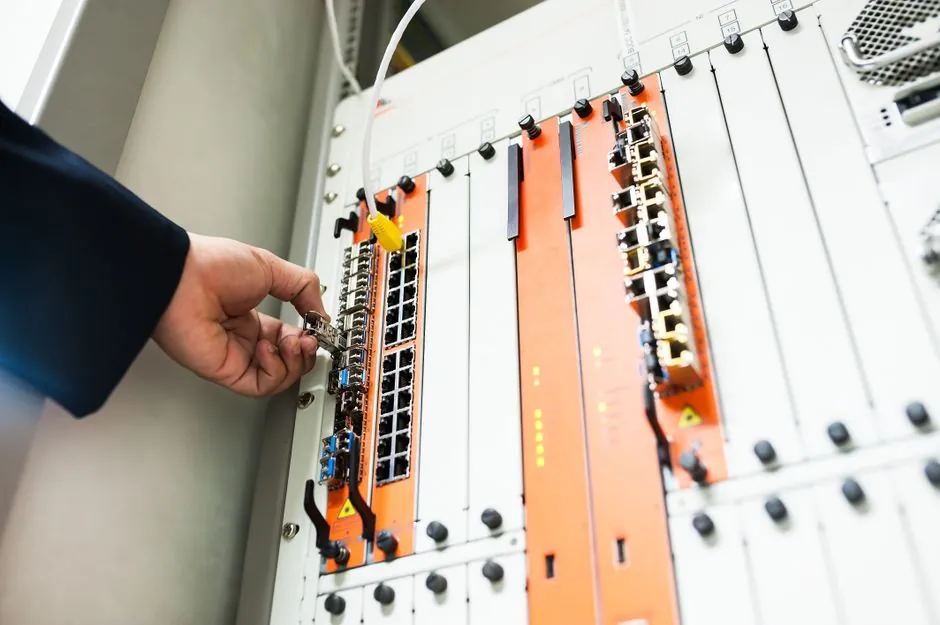
Sovereign AI capacity is projected to rise from 1.3 GW in 2026 to 3.1 GW by 2031, increasing demand for electrical and mechanical equipment across national compute programs [S6].
The Sovereign AI Index tracks over 180 sovereign AI initiatives.
What Sovereign AI Infrastructure Means
Sovereign AI broadly reflects a desire to develop, deploy, and govern technology based on a country's interests, norms, and values. It is not limited to a government-owned cloud: the same infrastructure category includes AI data centers, supercomputers, GPU clusters, and compute-access programs [S5].
The Sovereign AI Index tracks over 180 initiatives.
Capacity Growth and the Equipment Demand Signal
Sovereign AI capacity will nearly triple from 1.3 GW in 2026 to 3.1 GW by 2031, with China holding the largest concentration of sovereign AI capacity [S6]. The increase represents 1.8 GW of net additions across five years, or approximately 360 MW per year if spread evenly, although individual project timing will be uneven.
Bain projects a broader AI data center buildout of $5 trillion to $6.5 trillion through 2030, adding about 150 GW or more of capacity and nearly tripling global capacity in five years [S3]. On a simplified proportional basis, the sovereign segment's projected 1.8 GW addition is about 1.2% of Bain's 150 GW base-case buildout, but the national programs can still create concentrated demand for long-lead equipment [S3][S6].
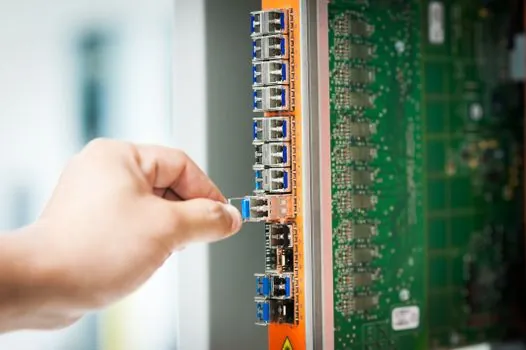
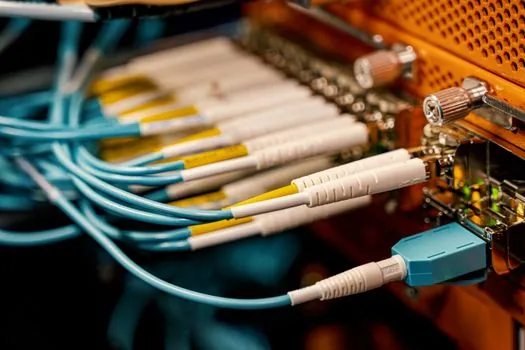
Equipment demand therefore extends beyond servers. A sovereign facility needs transformers, switchgear, UPS systems, cooling distribution, rack infrastructure, optical networking, storage, and building services as well as GPUs.
Power Availability Sets the Delivery Schedule
Grid constraints are creating a need for energy innovations as data-center capacity grows. Bain also identifies power, chips, skilled labor, and permitting as simultaneous constraints, with transformers and other critical equipment described as scarce [S3].
Three supply routes carry different project consequences. Grid-connected facilities depend on utility upgrades and multi-year connection work. Power, chips, skilled labor, and permitting are constrained at once, and closing the gap will require structural moves such as new power and technology.
Global data-center electricity demand is projected to nearly double by 2030. Utility planning, including peak demand growth and resource-plan resets, must be treated as a prerequisite for the data-center procurement schedule rather than a post-project issue.
Cooling and Construction Equipment Requirements
Liquid cooling becomes a core equipment requirement when high-density AI racks enter a project.
Construction planning must also account for water use, noise, land, and community acceptance, since these factors can cause local opposition or permitting delays. Sovereign projects face the same physical limits even when their compute assets are nationally controlled.
For procurement teams, this makes construction machinery and equipment only one part of a broader interface. The relevant delivery package includes power and mechanical equipment, specialist labor, civil works, thermal systems, networking, and rack-level IT. The data center and AI equipment chain should therefore be planned as an integrated schedule with separate lead-time paths.
Comparing Sovereign, Hyperscale, and Colocation Capacity
The main sourcing options differ on control, delivery speed, and capital commitment. Sovereign projects maximize policy and data control but require public coordination; hyperscale builds provide access to mature procurement and operating ecosystems but bind the customer to a provider; colocation can shorten the route to capacity but provides less control over the underlying platform [S4].
Sovereign AI is suited to governments and regulated institutions that require domestic control over sensitive workloads. It is not the right procurement route for every enterprise, because the public investment, energy-security obligations, and specialist operating requirements can exceed the value of local hosting for ordinary commercial workloads [S4][S5].
Contracting and Delivery Risks
Long-lead procurement is the first failure mode. Grid additions take more than four years, critical equipment inventories are constrained, and GPU, memory, and optical networking allocations can be locked years ahead [S2][S3]. Projects that delay power, cooling, or accelerator commitments risk missing the commissioning window even when land and funding are available.
Skilled-labor shortages form a second failure mode. AI facilities need electricians, mechanical tradespeople, and cooling specialists, and Bain identifies all three as constrained alongside power, chips, and approvals [S3]. A third risk is permitting, compounded by public concern over electricity prices, water consumption, noise, and land use [S1][S3].
Equipment selection should consequently be tied to utility milestones, commissioning sequences, and redundancy decisions rather than headline capacity alone. Sovereign AI programs also need a clear operating model for their infrastructure layer. The Sovereign AI Index defines a project by public backing and strategic purpose, not by who owns every rack, so governance structure, data location, service users, and procurement ownership should be documented before equipment is specified [S5].
Market Outlook and Trackable Procurement Signals

JLL expects nearly 100 GW of new data center capacity to be added between 2026 and 2030, taking global capacity to approximately 200 GW, with a 14% sector CAGR [S2]. EMEA is forecast to add 13 GW at a 10% CAGR, supported by government infrastructure programs and sovereign AI cloud demand associated with data-privacy requirements [S2].
The equipment opportunity is substantial but timing-sensitive. JLL estimates $1.2 trillion in real-estate value creation through 2030 and an additional $1 trillion to $2 trillion for IT equipment fit-out, while the average grid-connection wait exceeds four years [S2]. For sovereign AI buyers and vendors, the first trackable signal is the conversion of announced programs into funded grid and site milestones. The second is transformer, switchgear, accelerator, and liquid-cooling lead times. Those signals indicate whether the projected 3.1 GW sovereign capacity is becoming buildable or remains an announcement [S3][S6].