
Global fab construction spending is projected to increase 23% to $47.5 billion in 2026 and 33% to $63.3 billion in 2027, with 20 new 300mm fabs or lines expected to start construction worldwide in 2026 [S2].
The spending cycle covers cleanrooms, process utilities, tool installation, commissioning and qualification, while front-end equipment spending for 300 mm facilities is forecast at $149 billion in 2026 and $227 billion through 2029 [S2][S3].
Construction spending is separating from equipment investment
Construction expenditure is a distinct capital category from semiconductor process equipment, and the two budgets do not move at the same scale or pace [S3]. SEMI’s 300 mm outlook puts 2026 global construction spending at $47.5 billion, while front-end equipment spending reaches $149 billion, a difference of $101.5 billion [S2].
Global 300mm front-end fab equipment spending is forecast to reach $227 billion through 2029, while global fab construction spending is projected to reach $68.4 billion in 2028 [S2].
Project announcements do not automatically equal physical spending. This timing separation matters when evaluating vendor pipelines: structural work can begin before process tools are installed.
Cleanroom complexity defines the construction budget
Cleanroom construction costs range from $1,200 to $2,500 per square foot, while fully tool-ready cleanrooms can reach $5,000 to $10,000 or more per square foot [S4]. A basic industrial shell costs $150 to $300 per square foot, demonstrating how quickly contamination control and production readiness multiply the base building cost [S4].
ISO Class 1–2 EUV lithography space costs more than $20,000 per square foot [S4].
The market scope includes cleanroom walls, ceilings, raised floors and fan filter units, plus HVAC, ultrapure water, process gas and chemical distribution, exhaust and abatement, and electrical systems [S3].
Selection depends on project type and readiness
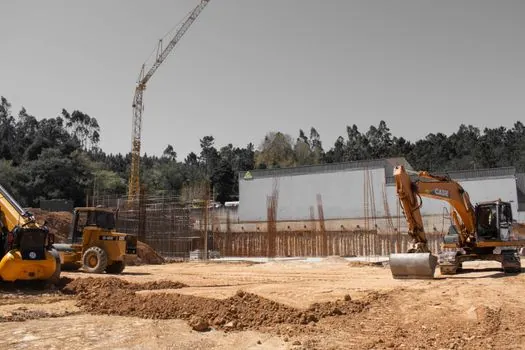
Greenfield construction, brownfield expansion and retrofit require different contracting strategies because the building, utility capacity and contamination-control envelope are not interchangeable [S3]. A greenfield fab requires coordinated design, engineering, civil work, MEP systems, cleanroom installation, tool hook-up and commissioning across multiple specialist supply chains [S3].
The six-phase semiconductor readiness framework covers construction, equipment installation, ramp-up, operations, upgrades and decommissioning [S8]. Buyers should define the intended handoff boundary for each package: conventional construction, tool-ready cleanroom, installed equipment, or a commissioned and qualified production facility.
Equipment and construction demand are converging in 2026
SEMI’s World Fab Forecast projects global equipment spending of $159 billion in 2026, a 29% year-over-year increase, followed by another 14% increase in 2027 [S7]. A separate SEMI projection cited by TechPowerUp gives worldwide 300 mm equipment spending of $133 billion in 2026 and $151 billion in 2027, reflecting differences in scope and forecast vintage [S5].
The broader equipment outlook includes 20 new 300 mm fabs or lines starting construction in 2026 and 18 in 2027 [S2]. Three new 300mm fabs or lines are projected to begin construction in the United States in 2026 and four in 2027 [S2].
Construction is therefore being pulled by a wider equipment pipeline rather than by one isolated project. The 2026 global 300 mm equipment forecast of $149 billion is 31% above the prior year, alongside the 23% construction increase to $47.5 billion [S2]. Equipment availability and installation planning can still constrain when a finished cleanroom becomes operational.
Markets measure different parts of the same build cycle
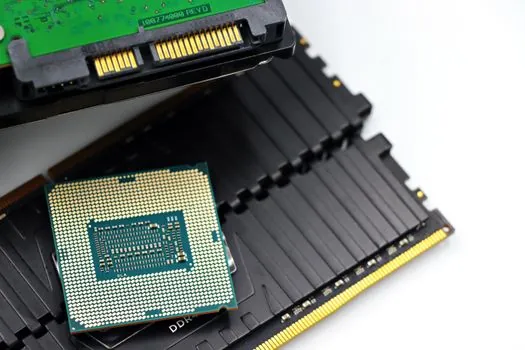
Global semiconductor fab construction was estimated at $72.9 billion in 2026 and forecast to reach $131.5 billion by 2036, representing a 6.1% compound annual growth rate [S3]. This broader market includes design and engineering, civil and structural construction, cleanroom systems, MEP and process utilities, tool hook-up, commissioning, qualification and facility services, but excludes semiconductor process equipment [S3].
This narrower figure should not be compared directly with the $47.5 billion 300 mm construction forecast without checking scope, wafer size and inclusion of civil, structural and utility work.
Annual growth rates also depend on the forecast set. SEMI projects 300 mm equipment spending growth of 31% in 2026, the World Fab Forecast gives global equipment spending growth of 29%, and the cited 300 mm forecast gives 18% [S2][S5][S7]. The apparent discrepancy is a scope issue: 300 mm front-end equipment, all global equipment spending and other forecast vintages are not identical measures.
Construction lead times create a sequenced market
New semiconductor fabs take years to build, and extreme equipment lead times can constrain the schedule even when cleanroom construction is complete [S10]. The construction phase does not end at handover of the building; it extends through the point where the cleanroom is ready for equipment move-in [S1].
Actual project timing illustrates the gap between construction and production readiness. SK hynix’s first cleanroom at the Yongin cluster is expected in 2027, while its M15X expansion is moving through equipment installation [S6]. The cleanroom construction market itself was valued at $1.76 billion in 2025, with a projected $1.83 billion in 2026, showing that the specialized cleanroom segment is much smaller than total fab construction [S9].
Equipment lead time is only one constraint on the interface between construction and production. Process utility capacity, tool hook-up, qualification and commissioning remain separate work packages after physical installation. Contractors therefore need a delivery sequence that coordinates cleanroom readiness with tool arrival rather than treating the project as one construction finish date.
For owners, contractors and equipment suppliers
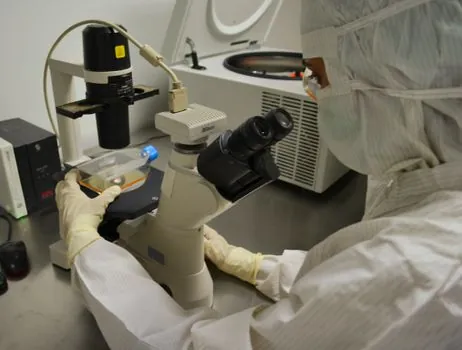
Owners with advanced logic, DRAM, HBM or NAND programs need a scope matrix covering ISO cleanliness, ultrapure water, chemical distribution, exhaust, vibration control, electrical capacity and tool interfaces [S3][S4]. These criteria determine whether a supplier is qualified for a production environment or merely for a conventional industrial package.
Contractors benefit from early procurement because fully tool-ready cleanroom work reaches $5,000 to $10,000 or more per square foot, compared with $150 to $300 for a basic industrial shell [S4]. Equipment suppliers should track construction announcements as a forward indicator, but convert them into a project-specific schedule tied to cleanroom readiness [S1].
Cleanroom contractors are suited to contamination-controlled production areas, while civil and structural contractors cover the industrial shell and site works. General MEP contractors can serve conventional building systems, but semiconductor process utilities require specialized interfaces across HVAC, water, gases, chemicals, exhaust and abatement [S3].
Primary sourcing and standards requirements
Project-level tracking requires both official statistics and specialist fab data because government categories can be too broad and publication lags can obscure real-time investment [S1].
Cleanroom procurement should state the required ISO class, applicable process area and tool-ready condition rather than relying on the generic term “cleanroom” [S4]. The cost breakdown includes ISO Class 1–2 EUV lithography space at more than $20,000 per square foot [S4].
Equipment and construction forecasts should also distinguish scope. The $149 billion figure applies to global 300 mm front-end equipment in 2026, the $47.5 billion figure applies to 300 mm fab construction, and the $72.9 billion market estimate covers a broader construction-services scope [S2][S3]. Keeping those boundaries visible prevents false precision.
For 2026, the most trackable signals are the 20 planned 300 mm fab or line construction starts, the $47.5 billion construction budget, and the $149 billion front-end equipment forecast; execution should be checked against cleanroom handover and equipment move-in, not announcement alone [S1][S2].