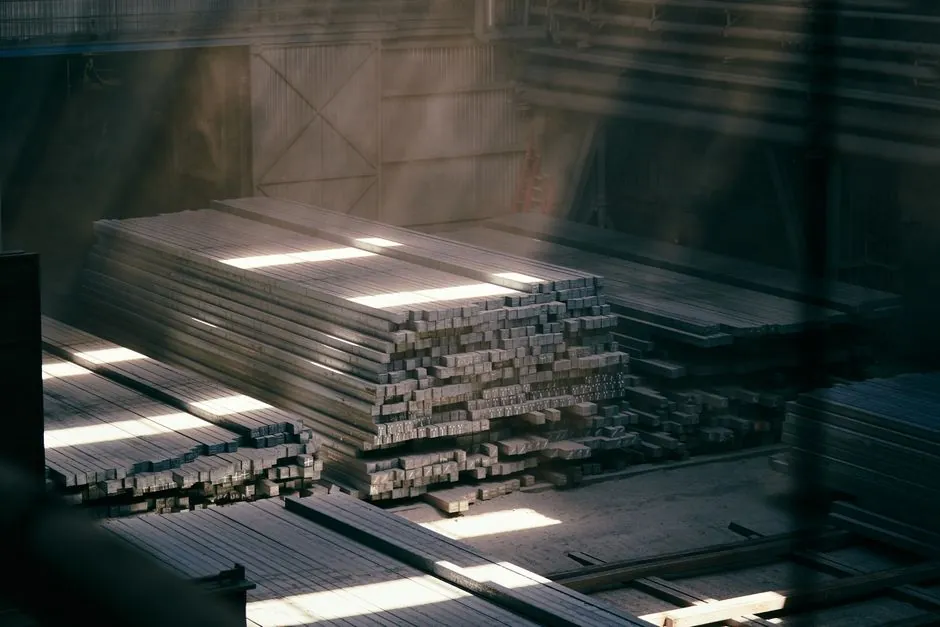
Global steel demand is forecast to grow 0.3% in the OECD summary, 0.4% in the OECD June report and remain essentially unchanged in the worldsteel forecast.
Demand totals are estimated at 1.81 billion metric tons for 2026, while the sector split, regional exposure and capacity balance determine which products and suppliers present the stronger 2026 case [S2][S4].
Decision Criteria for 2026 Steel Demand
The 2026 decision should be based on end-use mix, regional growth, product fit and supply conditions, not on a single global demand percentage, because the cited forecasts range from essentially unchanged to 0.4% growth and worldsteel projects global demand of 1,722 million metric tons in 2026.
Construction has greater exposure to structural cycles, property completions, infrastructure budgets and regional real estate conditions. Manufacturing demand depends more heavily on machinery, automotive output, exports, energy projects and industrial investment, but it can also weaken when customers destock or capital expenditure is deferred.
For buyers, the decisive comparison is therefore not “construction versus manufacturing” at a global level. It is construction versus manufacturing within a specific geography and product grade. Chinese rebar and structural demand cannot be assumed to behave like Japanese or German automotive sheet, and Indian industrial demand is not directly comparable with US data-center construction.
Global Baseline: Flat Growth, Uneven Recovery
worldsteel forecasts global steel demand at 1,722 million metric tons in 2026, essentially unchanged from 2025, followed by 1.7% growth to 1,752 million metric tons in 2027 [S1]. The OECD projection is also positive but differently scaled, with 2026 demand reaching 1.81 billion metric tons after 2.6% contraction in 2025 [S2][S4].
Outside China, worldsteel expects demand to increase 1.5% in 2026 and 4.0% in 2027. Developing economies excluding China are forecast to grow 1.9% in 2026 and 5.1% in 2027, indicating that non-China demand provides a firmer basis than the world total [S1].
The difference between the OECD’s 0.3% and 0.4% global growth estimates is 0.1 percentage point, while worldsteel’s essentially unchanged forecast implies a 0.4 percentage-point spread from 0.4%. Use the lower forecast for conservative capacity planning, while using sector and regional indices to set product-specific coverage [S1][S2].
Construction Outlook by Region
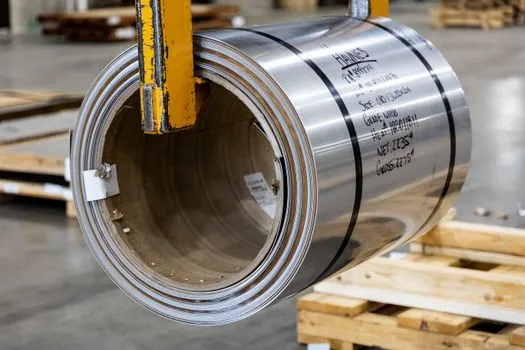
Construction activity remains subdued in China, where the OECD expects steel demand to decline 0.6% in 2026. The OECD forecasts Chinese steel demand to decline 0.6% in 2026 after a 6.9% fall in 2025.
The OECD’s June 2026 baseline forecast China’s steel demand to fall 6.9% to 830.94 million metric tons in 2025 and a further 0.6% to 826.22 million metric tons in 2026.
Outside China, the OECD forecasts stronger steel-demand growth in India, Southeast Asia, Africa and some Middle Eastern markets in 2026.
Construction users should therefore distinguish structural sections, rebar, plate and sheet. A weak property cycle does not automatically imply equal weakness in energy infrastructure, transport equipment or fabricated structural components. Public infrastructure can support demand even where residential construction contracts.
Manufacturing Outlook and Leading Indicators
The near-term manufacturing signal is mixed rather than uniformly strong. In the Precision Metalforming Association’s November 2026 survey, 33% of metalformers expected declining general economic activity over the next three months, 47% expected no change and 20% expected an increase [S3]. That distribution does not support a blanket order assumption for automotive and industrial components.
The OECD identifies India as one of the markets with stronger steel-demand growth in 2026.
Manufacturing buyers should map orders to the end market, not simply classify them as industrial demand. The cited global forecasts of essentially unchanged demand, 0.3% growth and 0.4% growth do not support applying one risk scenario to all automotive grades, machinery plate and electrical steel. Separate export orders from domestic projects, then distinguish one-off capital equipment from repeat production schedules.
Construction and Manufacturing Compared

Construction offers stronger demand where infrastructure budgets are active, including in the Southeast Asian markets identified by the OECD. A principal weakness is Chinese construction activity, where the OECD forecasts steel demand to decline 0.6% in 2026.
Manufacturing has stronger diversification outside China, including US data centers, energy systems, automotive programs and clean technology. However, the PMA survey records only 20% of metalformers expecting economic improvement over the next three months, versus 33% expecting deterioration, so the near-term signal remains subdued [S3].
Product choice changes the comparison. Construction demand is concentrated in rebar, structural sections and related products, while manufacturing spans cold-rolled sheet, automotive grades, plate, machinery steels and electrical steel. Neither sector offers an automatic advantage in price, lead time or inventory risk; those variables depend on the mill, grade, coating, thickness and contractual delivery schedule.
The recommended allocation is manufacturing-led for exposed industrial markets with funded projects, and construction-led only where public infrastructure or non-residential building schedules are documented. For China, maintain conservative structural-steel assumptions and do not use manufacturing exports as evidence that property demand has stabilized [S1].
Capacity, Pricing and Supply Risk
The OECD estimates global steelmaking excess capacity at 640 million metric tons in 2025 and projects 745 million metric tons by 2028. Demand is expected to increase by 34 million metric tons from 2026 through 2028, while capacity may expand by as much as 139 million metric tons over the same period [S4].
Capacity utilization could fall from 76% in 2025 to 74% or less by 2028, sustaining pressure on steel prices and producer profitability [S4]. This structural imbalance can make headline demand growth a weak proxy for mill profitability or customer pricing power.
Procurement execution also requires market-specific lead-time checks. US sheet and plate lead times in November 2026 extended beyond 10 weeks, with some mills offering availability only from March or later. Plate lead times exceeded their 2021 peak and repeatedly set new highs within a monthly series extending back to 2018 [S3].
For buyers, securing allocation may matter more than optimizing the sector forecast. Dual-source grade-specific supply, distinguish ex-works price from delivered cost, and place scheduling risk above volume assumptions where lead times exceed 10 weeks [S3].
Procurement Recommendations by Use Case

For US and Canadian manufacturers, 2026 demand exposure is strongest where projects have committed funding across data centers, energy systems, automotive supply chains and clean technology. Use project schedules to separate firm tonnage from pipeline demand, and use product-level lead times rather than the global forecast to set coverage [S4].
For ASEAN construction buyers, the 3.5% regional demand forecast supports a more constructive view of infrastructure-linked steel, provided orders are tied to transport, energy or industrial-zone work rather than undifferentiated private construction [S4].
For Chinese real-estate buyers, use a 2.0% national demand contraction as the downside market case, because the later worldsteel forecast shows that infrastructure support did not offset property weakness [S1]. For diversified industrial buyers, maintain flexible mill coverage because the 20% PMA increase expectation is matched by a 33% decline expectation [S3].
The broader relationship between steel consumption and upstream raw materials is examined in How Steel Demand Links to Manganese Ore Prices in 2026. Procurement teams can also use the 2026 Metal Price Outlook to place steel demand forecasts alongside broader metals-price risk.
The next trackable checks are monthly construction starts, the PMA three-month expectations split, worldsteel production data and mill lead times for the exact grade and thickness. Revise the sector allocation when construction starts move against manufacturing sentiment, rather than relying on the 0.3–1.0% global growth range alone.