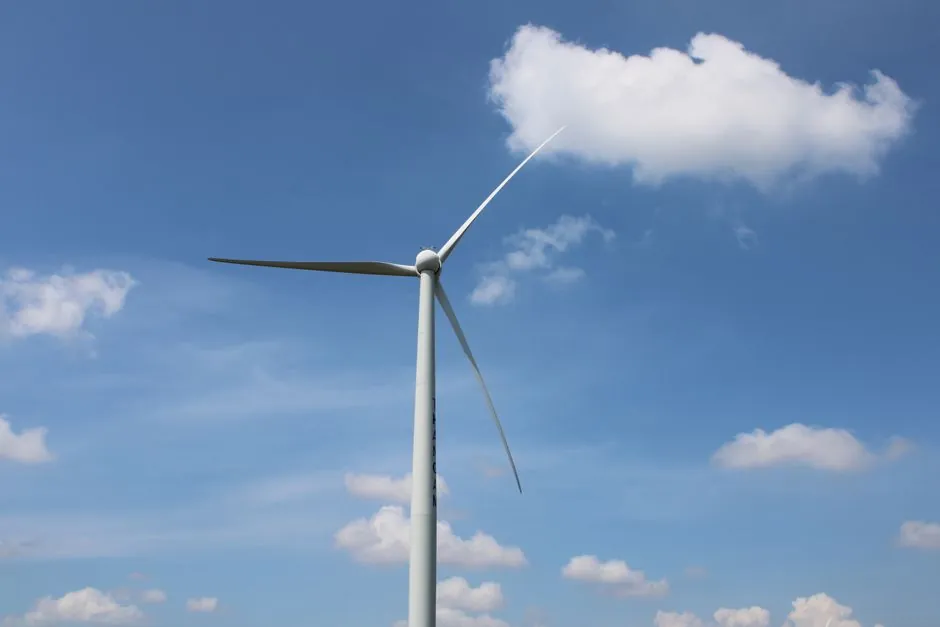
Each new megawatt of wind power requires between 120 and 180 tonnes of steel [S5][S6].
Steel demand scales with installed MW, but the intensity depends on turbine class, tower design, foundation type, fabrication method and whether the project is onshore or offshore [S2][S4].
Steel intensity varies by wind project type
Each new megawatt of wind power requires between 120 and 180 tonnes of steel [S5][S6].
The spread is not a contradiction. Onshore projects generally avoid the marine foundations required offshore, while offshore turbines use larger structures, deeper connections and additional steel-intensive infrastructure. Each new megawatt of wind power requires between 120 and 180 tonnes of steel [S5][S6].
The supported steel-intensity range for wind power is 120–180 tonnes per MW [S5][S6]. A site-specific estimate should account for the foundation and tower rather than applying one ratio to every project [S1][S2][S5].
Onshore and offshore options drive different steel demand
Each new megawatt of wind power requires between 120 and 180 tonnes of steel [S5][S6].
Turbine size and site design still determine the final mass, so the ratio is a screening metric, not a bill-of-materials specification.
Capacity additions translate into calculable material demand
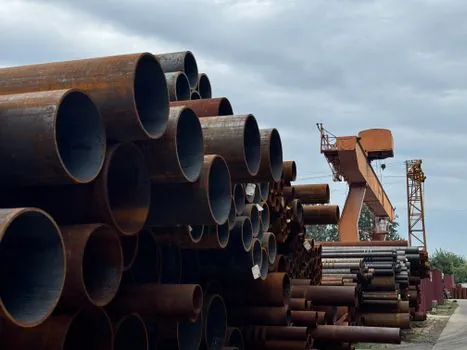
A project adding 100 MW of wind capacity implies approximately 10,000–12,000 tonnes of steel under the 100–120 tonnes per MW onshore basis. Using the broader 120–180 tonnes per MW range produces an indicative requirement of 12,000–18,000 tonnes for 100 MW [S1][S2][S5].
The same calculation scales directly: 500 MW implies 50,000–60,000 tonnes using the onshore basis, or 60,000–90,000 tonnes using the broader range. These totals describe installed plant steel associated with the stated capacity assumptions, not the full life-cycle steel requirement for fabrication, transport, installation, maintenance and eventual recycling.
The arithmetic is useful for preliminary supplier planning, but it should be tied to the actual turbine package.
Large turbines shift tonnes per machine, not necessarily tonnes per MW
This distinction matters because a capacity-based estimate must divide the expected machine count by rated project capacity rather than assume each turbine has the same steel mass.
The steel is distributed across the tower, rotor-related structural components, nacelle, drivetrain supports, fasteners and foundation system, with the tower and foundation often driving project-level differences between onshore and offshore designs [S2][S3].
For procurement, use tonnes per MW as the first-pass capacity factor, then replace it with the supplier’s bill of materials at turbine selection. This avoids treating a headline ratio as a structural design rule.
Steel demand supports several high-volume product streams
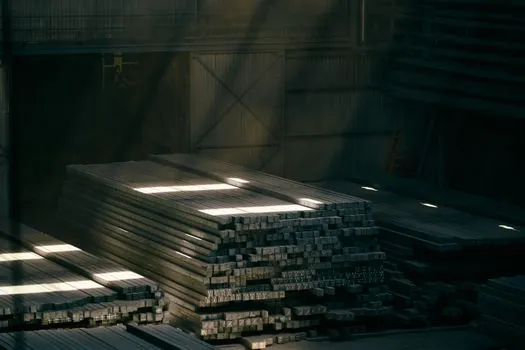
Wind-sector steel demand is not limited to tower plate. Steel is used in tower construction, prestressed components, mechanical connections, foundations and offshore substructures, while high-strength grades are required where rotational speeds, fatigue loading and structural loads govern material selection [S2].
The product scope includes structural plate, sheet, hollow sections, fasteners, reinforcing material, foundation components, corrosion-protection systems and specialist steels for mechanical connections. The 100–180 tonnes per MW estimate covers the embedded steel total, but it does not indicate the exact split among these categories [S1][S5].
Specification work should therefore connect the project ratio to three quantities: rated capacity in MW, turbine count and the supplier-specific steel mass breakdown. For a 250 MW installation, the broad range gives 30,000–45,000 tonnes of embedded steel [S1][S5].
Forecasting requires separate capacity and intensity assumptions
The supported steel-intensity range for wind power is 120–180 tonnes per MW [S5][S6].
Three variables deserve separate treatment: project capacity additions, the wind-sector share of those additions and the selected steel intensity. Capacity expansion alone does not determine steel demand when the mix shifts toward or away from offshore foundations. Turbine scaling also changes tonnes per machine even when tonnes per MW remains within the published range [S2].
Steel demand should also be distinguished from steel supply. The 120–180 tonnes per MW benchmark does not specify mill grade, product form, fabrication route, coating system or recycled content, so it cannot support a procurement award without a project-specific steel take-off. The wider 2026 steel demand outlook provides useful context for comparing wind demand with construction and manufacturing demand.
Bankable estimates need explicit scope and exclusions
A defensible screening calculation records rated MW, turbine count, turbine rating, project location, foundation type, tower configuration and supplier steel take-off. It should also state whether the estimate includes tower, rotor, nacelle, drivetrain, fasteners, electrical infrastructure, offshore foundations and installation hardware. [S5]
Published figures are not directly interchangeable because some focus on steel in foundations, others describe the complete turbine, and still others use broad onshore and offshore comparisons [S1][S2][S3]. Mixing those scopes produces double counting or omissions. The same discipline applies to secondary structures such as access platforms, cables, substations and grid connections, which may fall outside the headline turbine figure.
Two trackable signals will refine demand estimates: the turbine size and steel-mass data in awarded supply packages, and the offshore-onshore split of new wind-capacity additions. Both determine whether actual procurement follows the 100–120 tonnes per MW onshore case, the 120–180 tonnes per MW broader range, or the higher offshore-adjusted intensity [S1][S2][S3].