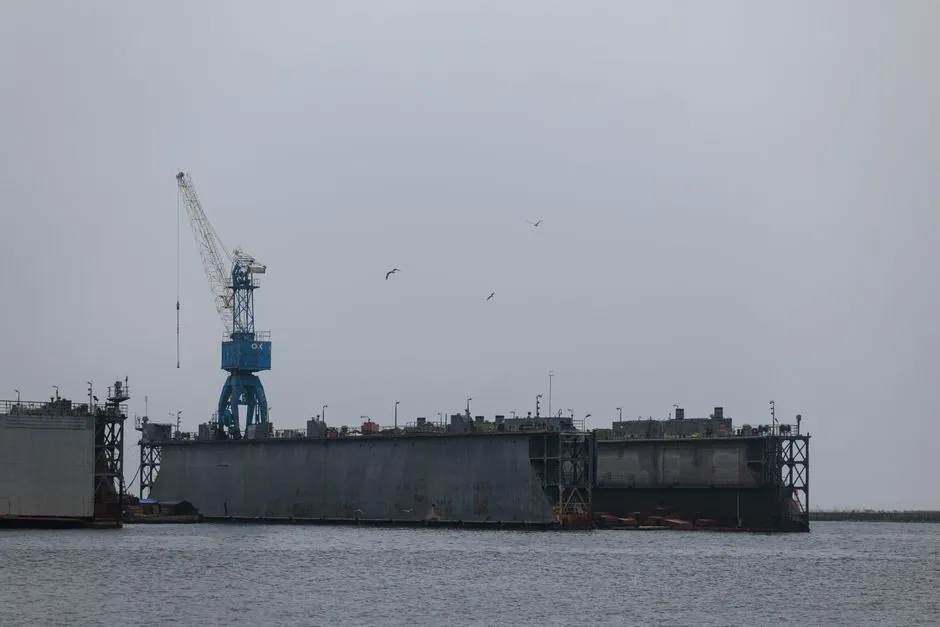
Global steel plate price ranges for 2026 run from $650–$900 per ton for standard carbon plate, $750–$1,050 for heavy-gauge plate and $900–$1,300 or more for high-grade alloy products [S4].
Wind towers and marine hulls need qualified plate, so published commodity bands are only the starting point for budgeting, not executable quotations.
Price bands and the 2026 benchmark
Indicative 2026 pricing was $650–$900 per metric ton for standard carbon steel plate, $750–$1,050 per ton for thick plate above 50 mm and $900–$1,300 or more for high-grade and alloy plate [S4]. These bands cover mill production, basic cutting and handling, and standard mill certification, but exclude landed cost, specialist processing and delivery [S4].
US plate prices averaged $0.870 per kg in Q2 2026, up 6.0% from $0.821 per kg in Q1 2026, as iron ore and coking coal costs firmed [S6].
Wind tower plate versus shipbuilding plate
Wind project pricing is driven by plate thickness, yield strength, weldability, coating preparation and large-delivery consistency; shipbuilding pricing also reflects class approval, hull construction grade, dimensional tolerances and higher plate-processing requirements. Buyers should specify steel plate by grade and thickness before comparing supplier offers. [S4]
Thickness and grade control the material premium
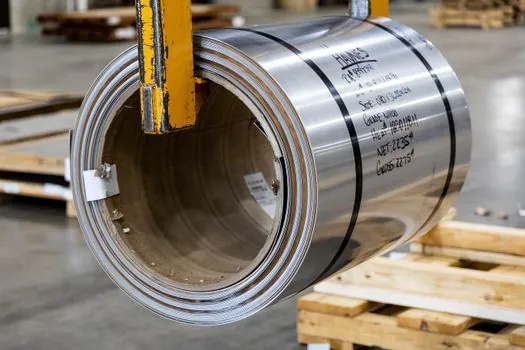
Plate below 10 mm carries lower weight per sheet and greater processing precision, plate from 10–50 mm serves common structural applications, and plate above 50 mm requires specialised rolling and has limited mill availability [S4]. Heavy-gauge material therefore carries a price and lead-time penalty that can outweigh the nominal strength advantage for buyers with incomplete design data.
European structural grades S235, S275 and S355 form a practical comparison set: S235 serves general use, S275 provides increased strength, and S355 is positioned for higher structural performance [S4]. Higher-strength grades can reduce required material mass, but that benefit must be calculated against a higher purchase rate, additional qualification and potential fabrication constraints.
Special processing can change the commercial result. Plasma cutting, laser cutting, drilling, machining, shot blasting and painting add cost, and in many projects processing expenditure can exceed the quoted price difference between plate suppliers [S4]. The comparison belongs in the budget before a procurement award, not in an after-award variation request.
Cost drivers ranked beyond the per-ton rate
Material specification is the first cost driver: moving from standard carbon steel to thick, alloy, marine or quenched-and-tempered plate raises the mill price band, while difficult grades can require higher alloy content and tighter processing [S3][S4]. Thickness is the second driver because weights above 50 mm require specialised rolling and a narrower mill base [S4].
Certification and processing form the third group. Standard mill certification is included in the basic plate price, but class approval, cut parts, machining and coating add scope and schedule [S4]. Fourth is order configuration: thickness, width, length and quantity determine delivered weight, and poor plate sizing can create cutting cost, material waste and avoidable tonnage [S4].
Fifth is logistics and commercial terms. Plate may be quoted EXW, FOB or CIF, while total landed cost also depends on handling, freight, delivery conditions and route distance [S4].
Volume and price sensitivity in project procurement
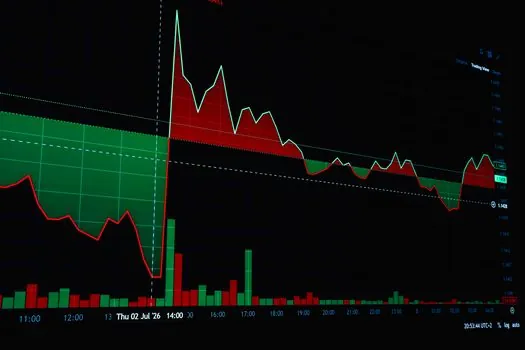
Steel is commonly priced per 100 pounds, and a $40 per CWT quotation equates to $0.40 per pound and $800 for a 2,000-pound ton [S3]. Using the stated conversion of 20 CWT per 2,000-pound ton, a $1 increase per CWT would add $200,000 to a 10,000-ton order. This arithmetic is the practical reason to lock price validity and escalation terms for large wind and shipbuilding packages.
Volume affects both the mill price and the commercial terms. A published range identifies order quantity as a direct pricing input, while large project requirements can expose the buyer to allocation risk when mills prioritize full production schedules [S1][S4]. For shipbuilding programs, staged deliveries can reduce financing and storage exposure, but they also make mill allocation and freight planning more demanding.
Buyers should compare offers on the same technical and commercial basis. That means a defined grade, gauge, width and length, mill certification, processing scope, delivery schedule, Incoterm and price-validity period. Comparing an EXW commodity plate against a CIF processed marine plate will produce a false saving.
Regional conditions affect shipbuilding and wind demand
Q3 2026 conditions diverged by region: North America was positioned to remain firm because of trade protections, controlled production and infrastructure and defence demand; Europe faced mixed conditions from import restrictions and high production costs against maintenance closures and slower heavy engineering; Asia faced property weakness and seasonal construction interruptions [S1].
Asian shipbuilding and wind-tower manufacturing demand was identified as support against a more significant price decline, even while the wider Asian market remained under pressure [S1]. For global buyers, that creates a specific sourcing tension: shipbuilding demand may support regional plate availability, while wind projects still compete with construction, infrastructure and other heavy-engineering orders for production slots.
Asian Metal operates a dedicated Shipbuilding Plate Prices Index, providing a separate benchmark for marine procurement rather than relying on a general flat-steel price [S7]. The shipbuilding steel plate market was projected to expand from $5.48 billion in 2024 to $7.5 billion by 2032, while the wider steel plate market was valued at $72.89 billion in 2026 and projected to reach $91.43 billion by 2035 [S2][S8].
Procurement controls that protect the project budget
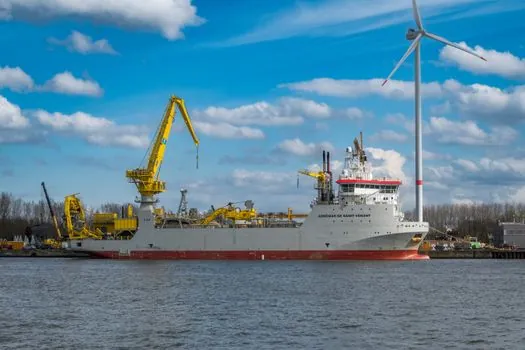
A defensible 2026 budget starts with the applicable technical grade, thickness range, plate dimensions, processing scope and delivery programme, then adds freight, duties, certification, waste and price-escalation allowance. The published price bands should remain benchmark ranges, not procurement limits, because standard carbon plate at $650–$900 per ton does not cover qualified heavy or alloy material priced at $900–$1,300 or more [S4].
Total cost of ownership extends beyond delivered steel. Installation includes unloading, handling, storage and cutting, while maintenance and operating cost can be affected by coating condition, weld consumable compatibility, plate dimensional accuracy and fabrication efficiency. Exact savings cannot be stated without project geometry, but poor sizing demonstrably creates additional cutting cost and material waste [S4].
Track two commercial signals before converting benchmark prices into purchase orders: the quarterly direction of the relevant plate index and the supplier’s price-validity window. US plate moved from $0.821 per kg in Q1 2026 to $0.870 in Q2, a 6.0% increase [S6], while separate quarterly indices recorded 10.4% and 12.0% rises in Q2 and Q3 2026 respectively [S5].