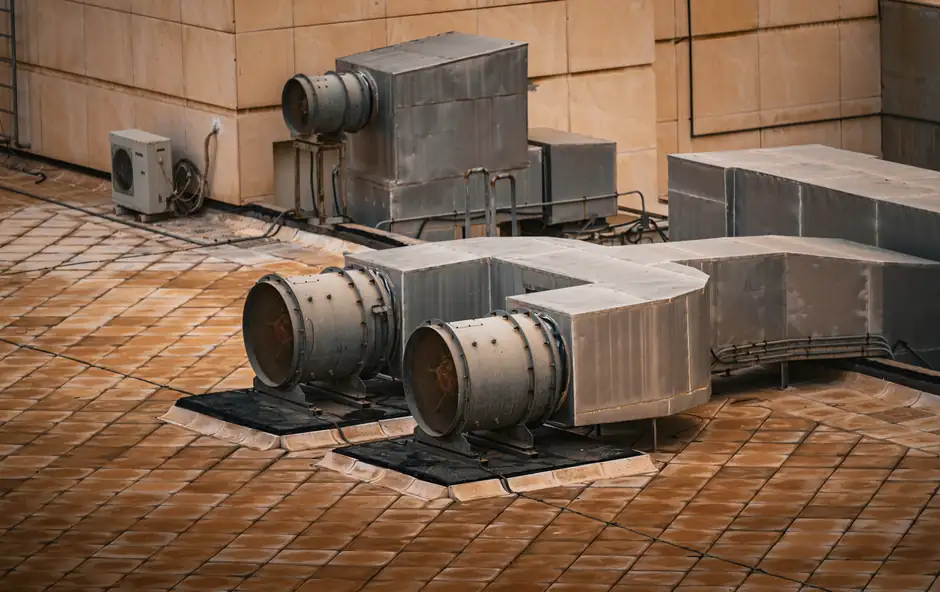
Specifying spiral duct for a corrosive exhaust stream comes down to a chemistry question, not a preference: 304 (about 18% Cr, 8% Ni) handles general industrial air, while 316/316L (304 plus 2-3% Mo) is the grade that survives chloride and acidic fume exposure [S3][S5].
For most lab, kitchen, and process exhaust above pH 4 with no halides, 304 spiral duct delivers adequate life at a meaningfully lower price; for fume hoods, coastal outdoor runs, and any duct carrying HCl, H2SO4 mist, bleach vapour, or salt-air entrainment, 316L is the conservative default that prevents pitting and through-wall leaks within a service cycle [S1][S4].
Composition and Governing Standards
Both grades are austenitic, non-magnetic in the annealed condition, and dual-certified (304/304L or 316/316L) by most North American service centres, which means welded spiral lock-seam and flange tubes meet both the standard and low-carbon chemistry on the same MTC [S3]. The L-variant caps carbon at roughly 0.03% max, restoring intergranular corrosion resistance in the heat-affected zone after welding, which is exactly where spiral duct longitudinal and girth welds sit [S3][S5].
ASTM A240 / A480 govern the sheet and strip used to form round spiral duct; for hygienic or sanitary runs (pharma, food, dairy), ASME BPE finishes and 2B or #4 surfaces are typically called out, while electro-polished ID is reserved for high-purity exhaust [S4]. SMACNA HVAC Duct Construction Standards and NAIMA fibrous duct guides remain the fabrication reference, with gauge and reinforcement sized from system static pressure rather than material grade alone [S2].
Where 304 Spiral Duct Is the Right Pick
304 stainless is the workhorse for general industrial ventilation, food processing ambient air, and commercial kitchen grease exhaust where the corrosion load is organic acids, humidity, and routine wash-down rather than halides [S2][S3]. In indoor mildly corrosive service, 304 typically shows no measurable wall loss across a 15-20 year design life, making the 50-75% material premium for 316 an uneconomic spend on those streams [S3].
For non-corrosive dust collection, wood-shop, paper trim, and most comfort-HVAC-adjacent industrial exhaust, 304 spiral duct in 18 or 16 gauge (about 1.2-1.5 mm wall) is the standard spec; typical manufacturing range is 2-84 inch (roughly 50-2100 mm) diameter with rolled-lip clamp, flange, Tri-Clamp, or butt-weld end connections [S4]. Specifying 304L rather than 304 for any welded spiral lock-seam is the cheap insurance that avoids sensitisation at the seam.
Where 316/316L Spiral Duct Earns the Premium
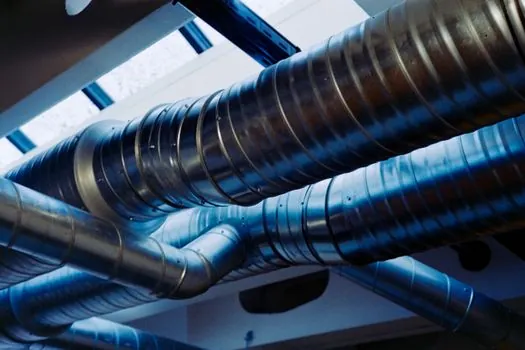
316L earns its surcharge in three environments: chloride-bearing fumes (seawater entrainment, bleach, HCl, chloride-based cleaning vapour), acidic mist above about 100 ppm, and any outdoor coastal installation within roughly 1 km of the surf line [S3][S5]. The 2-3% molybdenum addition shifts the pitting resistance equivalent number (PREN) upward, which directly delays pitting initiation in halide solutions, the dominant failure mode for stainless exhaust duct [S3].
For laboratory acid exhaust, pharmaceutical reactor off-gas, anodising line ventilation, and swimming-pool natatorium dehumidifier relief, 316L spiral duct in 16 gauge (around 1.5 mm) is the conservative baseline; breweries and dairy plants handling CIP (clean-in-place) chloride sanitiser also fall in this bucket, because routine 200-500 ppm Cl- wash cycles will pit 304 within a few seasons [S4][S5]. The lab-exhaust selection guide explicitly recommends 316L over 304 and over FRP fibreglass for chloride- and sulfate-laden fume streams [S5].
Decision Matrix: 304 vs 316L Spiral Duct
Use this four-axis comparison to drive the spec: cost, chloride resistance, weld-zone corrosion resistance, and typical service life. 304 sits at the low-cost / adequate-chemistry corner; 316L sits at the higher-cost / chloride-tolerant corner, and 304L is the middle ground that protects welds without paying for Mo. [S3]
On a like-for-like installed basis (material plus fab labour), 316L spiral duct typically runs 50-75% above 304L in the same gauge and diameter, with the gap driven by the nickel and molybdenum surcharges on the London Metal Exchange [S3]. For non-chloride, mildly acidic exhaust at moderate temperature (under about 260 C continuous), 304L is the most economic defensible choice; for chloride or strong acid service, the 316L premium is recovered many times over by avoiding a single through-wall leak repair inside a rated duct chase.
Fabrication, Gauge, and Sizing Notes for Spiral Duct
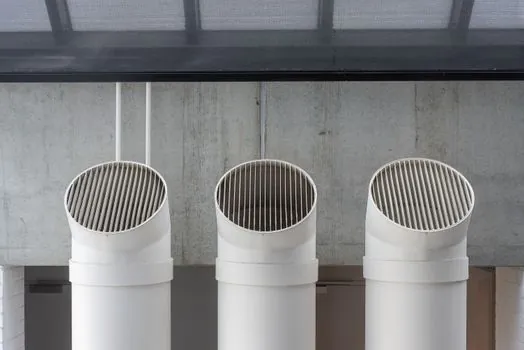
Gauge selection should be driven by system static pressure, duct diameter, and SMACNA reinforcement tables, not by the corrosion grade: a 24 inch (600 mm) 304 spiral at -8 in. w.g. (-2 kPa) needs heavier gauge and external reinforcement than a 12 inch (305 mm) 316L run at -3 in. w.g. (-0.75 kPa) [S2][S4]. Common commercial spiral stock runs 18 to 16 gauge (about 1.2-1.5 mm), with 14 gauge (about 2.0 mm) and 12 gauge (about 2.5 mm) used for large-diameter high-pressure or outdoor exposed runs [S4].
End connections matter as much as grade: Tri-Clamp and electro-polished ID are standard for sanitary exhaust, rolled-lip clamp with EPDM or silicone gasket is the field-reworkable default for industrial, and flanged or butt-weld ends are specified where the duct is welded into a fixed process header [S4]. A quick look at the spiral duct reference confirms that round spiral geometry outperforms rectangular in leakage class and pressure loss, which compounds the grade decision because better airflow reduces condensate dwell time, itself a corrosion accelerator.
Limits, Failure Modes, and What 316L Will Not Save You From
Neither 304 nor 316L is a cure-all: both fail in reducing atmospheres, in concentrated hot caustic (above roughly pH 12 at 80 C), and in flue gas with sustained halogen-acid dew-point conditions, where 904L, AL-6XN, or fibre-reinforced plastic (FRP) duct becomes the correct material [S5]. Stress-corrosion cracking (SCC) above about 60 C in chloride solution is a 304 and 316 risk alike, so hot wet chloride streams above this threshold should be designed out, not just upgraded in grade [S3].
Gasket and sealant compatibility is the second-most common spiral duct failure path: a 316L duct with a lower-cost nitrile or EPDM gasket that cannot take the chemistry will leak long before the shell pits, so the spec must carry the seal compound (typically FKM, PTFE, or white food-grade silicone) as a coordinated line item, not an afterthought [S4].
Sourcing, Cost, and Trackable Next Signals
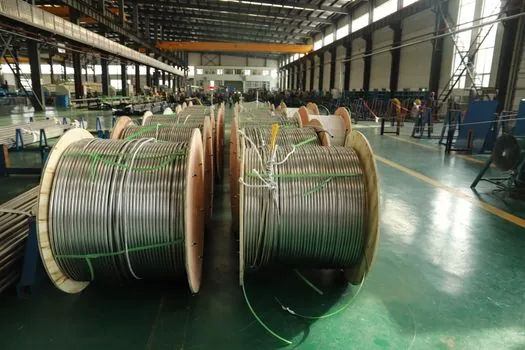
Domestic US service centres stock 304/304L and 316/316L spiral duct coil in the gauges and diameters called out above, with cut-to-length and flanging on a 2-4 week typical lead time for non-standard sizes, and the dual-certification practice means a single heat can ship against either chemistry callout [S3].
For spec writers choosing between stainless steel grades for fume exhaust, the stainless pipe reference captures the same 304/316L trade-off at the pipe scale and is a useful cross-check when the exhaust header drops to process-grade piping. Engineers already working through spiral duct pros and cons for a given building can build on the broader spiral duct decision map to confirm geometry, leakage class, and pressure-drop assumptions before finalising the material callout.