For a single prototype or emergency replacement, binder-jetted 3D sand printing skips pattern tooling entirely, with published build envelopes up to 4000 x 2000 x 1000 mm on production systems [S1]. For batch sizes above roughly 10, the same work in a conventional green-sand mold built from a wood, metal or plastic pattern is cheaper per piece, at about $15 per use in sand and labor versus $120 per printed mold [S2][S4].
The decision is driven by three numbers: per-mold cost, lead time, and the geometric complexity you actually need. The peer-reviewed comparison by Hawaldar and Zhang (2018) shows printed molds consume less sand, demand smaller shrinkage and machining allowances, and need less fettling, while delivering higher measured bond strength than green-sand molds [S4]. Those factors only pay back when the batch is small enough that the pattern's amortization never happens [S2].
Per-Use Cost and Break-Even Math
A binder-jetted sand mold built on a voxeljet or ExOne system runs about $120 per mold, including certified sand and binder, with no tooling amortization [S2]. A conventional green-sand mold built around a reusable pattern runs about $15 in sand and direct labor, but the pattern itself has to be paid for first; for a one-off casting that single pattern cost lands entirely on one part, pushing the effective unit cost above the printed option [S2].
Break-even for the two routes sits between 1 and 10 pieces for typical steel and iron castings, depending on pattern material and part size [S2]. Above that range, a conventional wooden or resin pattern is almost always cheaper, because the same pattern is reused dozens or hundreds of times. For a process engineer, the rule of thumb is to print when the batch is small and the geometry is awkward, and to pattern when the batch is large and the geometry is conventional.
The Hawaldar study, which compared identical test castings across both routes, also recorded substantial savings in sand consumption, design allowance stock, and post-pour fettling on the printed side, with higher measured bonding strength in the printed mold body [S4]. Those are real, line-item savings, but they do not flip the unit-cost math until batch size is small [S2][S4].
Build Envelope, Tolerance and Surface
Production binder-jet sand systems cover a 4000 x 2000 x 1000 mm build envelope today, which fits most single-piece castings shipped by heavy-industry foundries [S1]. ExOne's S-Max line and the voxeljet VX9000, the latter validated with GE Vernova and Fraunhofer IGCV at Baettr in 2025 with a 7,200 kg casting and 20 benchmark molds in print jobs up to 7.5 m, sit at the upper end of that envelope [S1]. D.W. Clark, a multi-alloy US foundry, has been printing over 90% of its impeller cores as single pieces on two S-Max machines, cutting production time roughly in half and tightening tolerances for defense and power-generation work [S1].
Conventional green-sand molding is limited by what the pattern can be withdrawn from: deep undercuts, complex internal cavities, and thin-walled features either need multiple parting lines, glued core assemblies, or sacrificial sections. Hawaldar and Zhang measured lower fettling work and smaller required machining stock on printed molds, because the printed geometry matches the CAD model directly without draft or pattern-side simplification [S4].
Surface finish is a separate axis. As-printed sand surfaces carry a grainy texture tied to the 0.1-0.3 mm silica layer thickness used in binder jetting, while a green-sand mold finished against a coated pattern is usually smoother. For a one-off where the casting will be machined, the printed surface is fine. For a one-off where surface finish matters out of the mold, a printed pattern used inside a conventional flask, which is the route 3D Systems markets for sand foundries, can be a better compromise [S3].
Lead Time and Change-Control
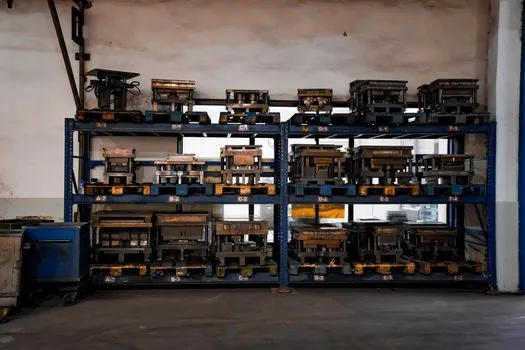
A binder-jetted sand mold goes from CAD upload to a poured mold in days rather than the weeks a machined pattern needs [S1]. For a foundry chasing an emergency power-turbine casting, or a development team iterating on a hydraulic manifold, that delta is the entire reason to use the printer. D.W. Clark's emergency power-turbine part is the canonical example: the foundry turned to binder jetting first to keep a customer running, then bought the machines in-house [S1].
Iteration cost collapses as well. A revised CAD file replaces the previous mold at no extra tooling cost, so design changes between pours do not eat weeks of pattern rework [S1]. For sand casting development, this changes the economics of running multiple design variations in parallel: the printed route makes it cheap to print three slightly different cores and pour three castings, then pick the best one. The patterned route punishes that workflow because each design variation needs a new pattern, or at least a re-machined pattern insert.
For conventional low-volume sand casting workflows that still rely on wooden patterns, the build-prep and traceability overhead is also higher, which is one reason MES platforms now bundle mold build with post-processing on the same record [S1]. Printed molds slot into that traceability chain more cleanly because the build file is the same digital artifact used for quoting, nesting, and quality sign-off.
Where 3D Sand Printing Fits, and Where It Does Not
3D sand printing is the right tool when the batch is 1-10 pieces, the geometry has undercuts or internal passages that would otherwise need glued core assemblies, and the lead-time clock is short. Published examples include single-piece impeller cores, defense and power-generation parts with tight tolerance budgets, and prototype electric-motor housings [S1]. Xylem's impeller cores, formerly glued from four core-shot halves over seven days with gas-defect risk, now print as a single piece in two days on an S-Max, with around 30% lower cost on certain parts and up to 480 cores per build [S1].
Conventional patterned sand molds remain the right tool for high-volume runs of stable geometry, for castings where surface finish out of the mold matters, and for any program where the pattern cost is amortized over hundreds of pours [S2][S4]. A foundry running the same pump housing for five years does not save money by printing the mold; it loses money.
For one-offs, the limiting factor on the printed side is almost always build envelope and certified sand availability, not geometry. Foundries specifying printed molds should confirm the sand and binder combination (typically silica with furan or phenolic resin) is qualified for the alloy and pouring temperature, and that the printed mold's measured permeability and hot strength match the process window [S1]. For patterned one-offs, the limiting factor is pattern lead time and the willingness to accept a glued multi-part core assembly. The two routes converge only in that narrow band where the batch is too large for purely printed molds and too small to fully amortize a machined pattern.
Selection Checklist for the One-Off
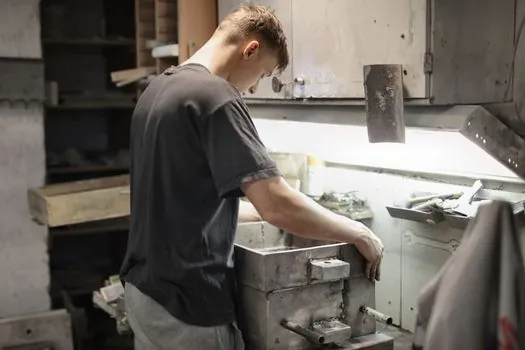
Use 3D printed sand molds when the batch is under 10 pieces, when undercuts, internal passages, or thin walls would force a glued core assembly, when lead time is days rather than weeks, and when the casting will be machined after pour [S1][S2][S4]. Use patterned green-sand molds when the batch exceeds roughly 10 pieces, when surface finish matters out of the mold, when a reusable pattern already exists, and when the geometry is conventional enough to draft out of a wooden or resin pattern [S2][S4].
For castings that fall in the grey zone, a printed pattern used inside a conventional flask, marketed by 3D Systems as a sand-foundry pattern route, splits the difference: pattern cost and lead time drop, but the mold still benefits from green-sand process control [S3]. Hawaldar's data is the cleanest published benchmark for that grey zone, and it shows the printed route wins on allowances, fettling, and bonding strength even when geometry is comparable [S4].
The next signal to watch is build-envelope growth: if binder-jet systems reach 8 m class prints at sub-$120 per mold pricing, the break-even band shifts upward, and a larger share of small-batch castings will move to printed molds. Until then, the one-off and the 1-10 piece prototype remain the printed route's strongest case, with patterned green-sand still owning anything you would consider a production run [S1][S2][S4].
Spec-level background on the components involved: 3d scanner, and sand cooler.
See also our earlier report, 600 W vs 1100 W Percussion Drills: Input Power, Output, and Real Drilling Capacity.