
Most corded hammer drills in the masonry class carry an input rating of 600-1100 W, with motor efficiency of 50-60% meaning a 1000 W input typically delivers around 500-600 W of mechanical power at the chuck [S2].
That spread defines the whole 600 W vs 1100 W buying decision: 600 W class tools are sized for repetitive 6-13 mm bit work in steel and light masonry, while 1100 W class tools stretch to 16 mm steel, 40 mm soft wood, and 22 mm concrete in a single-gear or two-gear package, often crossing 3.8 kg bare weight [S1][S3][S4][S5].
Input Power, Output Power, and the 50-60% Efficiency Floor
Manufacturers usually print the input power on the nameplate because it is the larger figure, but the useful number is output at the spindle: for the Metabo BDE 1100, rated input is 1100 W and output is 620 W, a 56% conversion that lands inside the typical 50-60% drill efficiency band documented for the class [S1][S2][S3][S4].
A higher-quality gearbox raises that ratio at the same input, so two drills rated 1100 W can deliver different output watts and different drilling capacities; comparing input watts alone is a known procurement trap, and published output power or declared drilling capacities are the only fair basis for comparison [S1][S2]. At 600 W input the realistic output is roughly 300-360 W, which is why 600 W percussion drills are normally paired with 10-13 mm chuck capacity rather than the 16 mm chucks common on 1100 W machines [S2][S3][S4][S5].
Real Drilling Capacity: Steel, Wood, Concrete
Published max drilling diameters line up cleanly with the input-power split: the 1100 W Metabo BDE 1100 is rated 16 mm (gear 1) / 10 mm (gear 2) in drill steel and 40 mm / 25 mm in soft wood on its two-speed gearbox [S3][S4], while a 1100 W percussion drill (DWD524) with a 13 mm keyed chuck is rated 13 mm in metal, 40 mm in wood, and 22 mm in concrete [S5].
For the 600 W class, manufacturer data typically caps at 10-13 mm in steel, 25-30 mm in soft wood, and 13-16 mm in masonry, with no impact energy comparable to the 0-56,000 BPM range published for the 1100 W percussion models [S5][S6][S7]. Stanley FatMax publishes 54,400 BPM and 3,200 RPM on its 1100 W two-gear hammer drill FMEH1100K, a working envelope a 600 W unit cannot match without a bit change and slower feed [S6][S7]. A useful internal cross-reference for impact-rated rotary tools is the impact drill category page, which standardises the percussion-mode terminology used across these datasheets.
Speed, Torque, Gears, and Vibration on 1100 W Machines
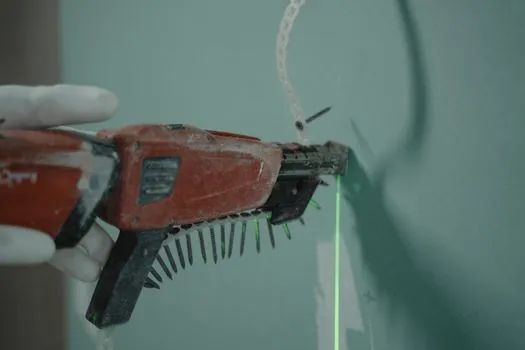
Two gears are standard on 1100 W hammer drills and they trade speed for torque: the Metabo BDE 1100 runs 0-640 / 0-1200 rpm no-load with 430 / 800 rpm at rated load, and delivers 55 Nm (gear 1) / 22 Nm (gear 2) of max torque through a 3-16 mm keyed chuck on a 5/8"-16 UN spindle [S3][S4][S8].
The 1100 W percussion models shift the same envelope toward impact work: the DWD524 runs 0-1250 / 0-3500 rpm with 0-56,000 BPM and 40 / 20 Nm max torque, optimised for masonry and metal rather than large-diameter steel [S5]. Metabo declares 4 m/s² vibration in metal drilling (K = 1.5 m/s²) and 85 dB(A) sound pressure / 96 dB(A) sound power on the BDE 1100, the kind of declared values an EU plant typically files for handheld-tool risk assessments [S4]. For broader machine context inside an industrial tool room, the construction machinery and equipment encyclopedia page covers where corded drills sit next to rotary rigs and larger demolition tools.
Selection Criteria: 600 W vs 1100 W by Use Case
For an electrician drilling 6-10 mm holes in steel trunking, masonry anchors up to 12 mm, and 20-25 mm holes in wood for cable glands, a 600 W percussion drill covers the workload at lower weight (typically 1.6-2.2 kg) and lower input current draw, and it leaves headroom on a 10 A circuit when other tools share the socket [S1][S2].
For fabrication workshops drilling 13-16 mm in steel, 30-40 mm holes in soft wood for plumbing, or 16-22 mm in concrete with a tungsten-carbide bit, a 1100 W two-gear hammer drill such as the Metabo BDE 1100, Stanley FatMax FMEH1100K, or the DWD524 percussion unit is the correct class, because impact energy and torque both scale with input watts in this segment [S3][S4][S5][S6][S7]. A 600 W tool pushed to 16 mm steel typically stalls, trips thermal protection, or chews up chuck life; a 1100 W tool driven at 6 mm steel is simply over-spec and adds operator fatigue without a productivity gain. Related reading on torque and tool selection logic is the 0.5-4.5 V ratiometric vs 4-20 mA: choosing the right pressure transmitter output piece, which applies a similar input-vs-output decision framework.
Decision Matrix: 600 W vs 1100 W Percussion Drill
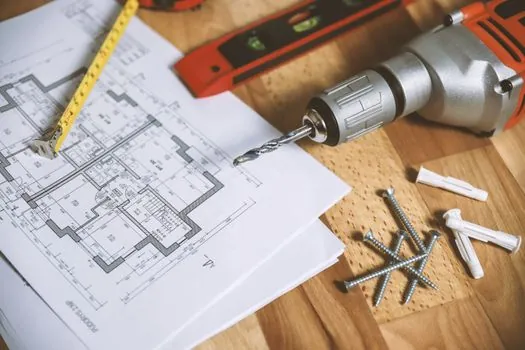
The four criteria that decide this comparison: input power 600 W vs 1100 W (approx. 1.83x); output power around 300-360 W vs 560-620 W (Metabo BDE 1100: 620 W declared); max drilling capacity in steel 10-13 mm vs 16 mm (BDE 1100) or 13 mm with impact focus (DWD524); in concrete roughly 13-16 mm vs 22 mm; and bare weight around 1.8-2.2 kg vs 3.8-4.3 kg [S1][S2][S3][S4][S5][S8].
On cost-per-amp, 600 W models run on smaller inverters and 10 A circuits, while 1100 W models want a dedicated 10-16 A outlet to avoid nuisance trips under load; on integration, both fit the same 1/2"-20 or 5/8"-16 UN spindle, but only 1100 W units typically accept a 16 mm chuck, which is the practical ceiling for Hole Saw and step-bit work in the workshop. Procurement teams standardising on a single SKU across light and heavy duty often end up with two SKUs, one of each class, rather than one mid-power compromise, and the rotary drilling rig encyclopedia entry is the right escalation path once hole diameters push past what a 1100 W handheld can deliver on a continuous basis.
Limitations, Safety, and Sourcing Notes
Three constraints to flag before purchase: First, declared input power is a demand figure on the wall outlet, not a delivered-work figure, so a 1100 W nameplate with no published output spec should be treated as marketing [S1]. Second, percussion ratings (BPM) only apply to masonry/concrete mode; in steel and wood the same tool runs as a rotary drill and the bit, not the wattage, sets the practical hole size [S2][S5]. Third, hand-arm vibration and noise scale with input power; the BDE 1100's 4 m/s² metal-drilling value and 85 dB(A) sound pressure are the kind of numbers an EU user must log under the physical agents directives, and a 600 W tool will sit measurably below them on the same job [S4].
Specifying engineers should request the manufacturer's datasheet, not just the catalogue page, and confirm three values before issuing a PO: rated input (W), output power (W) or motor efficiency, and max drilling diameter in steel / wood / concrete with the bit type stated. Track for the next revision: IEC 62841-2-1 updates for handheld drill safety that may shift declared vibration and noise test methods, and any tightening of EU ecodesign rules on no-load power draw for 1100 W-class universal motors.