Designing a 3D printing production line in 2026 starts with the software stack: STL and OBJ file conversion, layer-based slicing, material selection, and print job management are the four core functions every modern pipeline must specify before any printer is purchased [S1][S2].
SourceForge's 2026 software catalogues explicitly enumerate these functions across both Android and on-premises deployment tracks, signalling that slicing and queue-management tooling — not printer hardware — is the gating decision for a new line [S1][S2]. For a related reference walkthrough of process-to-spec selection on the equipment side, see the 3D printing manufacturing equipment guide.
Software Stack: On-Premises vs Cloud-Hosted Slicing
On-premises 3D printing software is the default for production lines handling proprietary geometry: the on-prem catalogue category on SourceForge covers STL/OBJ conversion, slicer parameter sets, material libraries, and queue management, and it remains the recommended deployment for IP-sensitive operations because the model never leaves the local network [S2].
Android-hosted 3D printing apps cover the same four function blocks — file conversion, slicing, material selection, print job management — but run on mobile endpoints, which makes them suitable for remote monitoring and small-batch approval rather than the main slicing engine of a 1000-part-per-day line [S1]. For a broader Industry 4.0 adoption view, the 3D printing in Industry 4.0 pilot-to-rollout map lays out the spec drivers that decide when a pilot graduates to a production cell.
Process Selection: FDM Polymer vs Polyurethane Casting
FDM 3D printing on polymer filament is the dominant process for low- and high-volume polymer and polyurethane part manufacturing among service bureaus that need a single toolchain, per 3D Productions' published service description covering both FDM part production and CAD/scanning support [S3].
Material-grade selection drives whether a printed part serves as a functional spare, a prototype, or a jib and fixture; 3D Productions lists ten application buckets from agricultural spares to enclosures, each with different tolerance, impact, and UV-exposure requirements that the slicer profile must encode [S3]. The published turn-time band — small simple parts in "just a few hours", larger or intricate designs "a day or more" — is a useful baseline for capacity-planning a 50–200 part-per-shift cell [S3].
Workflow Node Sequence: From CAD File to Finished Part
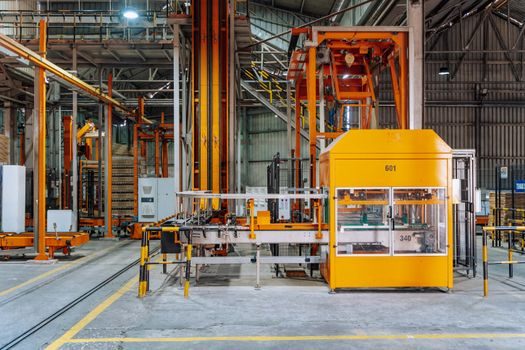
The four-step workflow that every 2026 production line must instantiate is: (1) ingest a digital 3D model file, (2) prepare it for printing using specialised slicer software, (3) build the object on an industrial printer one layer at a time from polymer filament, and (4) clean, finish, and quality-check every part before dispatch [S3].
Step 2 is where on-premises slicing software earns its place on the line, because print-speed, layer-height, infill-percentage, support-structure, and chamber-temperature parameters are the levers that determine per-part cost and dimensional conformance [S1][S2]. Incoming model files typically land as STL or OBJ and are converted inside the slicer before layer decomposition, which means the conversion and slicing engines are effectively one station on the line [S1].
Throughput and Capacity Specs for a Pilot Cell
3D Productions reports operational metrics of 1000+ parts 3D printed, 100+ clients served, and 10+ industries served since incorporation in Zimbabwe in 2021, which is a reasonable reference baseline for a single-shift pilot cell with 2–4 printers [S3].
For higher-volume lines, the slicer queue manager — not the printer count — is the first bottleneck, because modern FDM printers saturate at 60–80% duty cycle when part-changeover is included, and the queue is what amortises that overhead [S1][S2]. Print-speed, temperature, and support-structure parameters are the three primary slicer outputs the queue manager must schedule against to keep that duty cycle stable [S1].
Comparison: Slicer Software Deployment Models
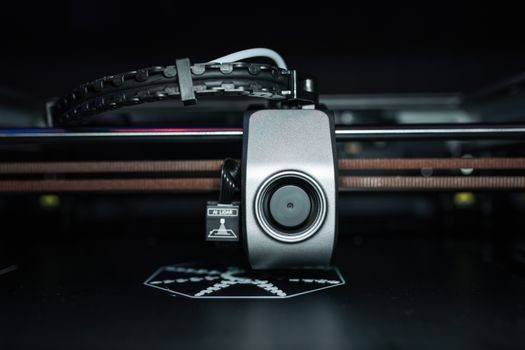
Decision criteria for choosing the slicing deployment in a 2026 line: (1) IP sensitivity — on-premises keeps the STL/OBJ file inside the local network [S2]; (2) mobile operator coverage — Android-hosted apps cover file conversion, slicing, material selection, and job management for remote operators [S1]; (3) job-queue scale — on-prem slicers handle multi-printer queue management, Android apps handle single-printer oversight; (4) cost model — on-prem requires licensed server + IT, Android apps trade subscription fees for limited throughput.
For lines above roughly 5 printers or any line printing IP-restricted geometry, on-premises slicing is the only defensible option; Android-hosted apps fit a satellite site doing overflow or remote-approval work, not the main cell [S1][S2].
Integration with Downstream Cells and Part Handling
3D-printed parts exit the printer and route to cleaning, support-removal, surface-finishing, and quality-check stations before dispatch — the fourth workflow step [S3] — and these downstream nodes set the line's true takt time, not the printer's rated cm³/hour.
For lines that feed a larger assembly or automatic molding line, the 3D print cell typically produces jigs, fixtures, and short-run replacement spares rather than high-volume production parts, and the queue manager must prioritise low-volume high-mix jobs over long steady-state runs [S3]. Cross-reference on part-handling in adjacent cells is covered in the 3D scanner and conveyor sorting line reference entries.
Standards, Sourcing, and Supplier Landscape
Made-in-China's 2026 manufacturer directory lists printing-production-line builders alongside automated assembly, electrostatic powder coating, and pipe-extrusion lines, with ISO 9001 certification as the dominant quality-system baseline for Chinese suppliers of automated polymer and pipe lines [S5].
The Springer 2021 conference paper "Analysis and Improvement of Industrial Production Lines Assisted by 3D Printing" remains the most cited academic reference for using additive manufacturing to support traditional production lines — jigs, fixtures, replacement spares — rather than replace them outright [S4]. For adjacent cell-design reference, the molding line and resin sand line encyclopaedia entries cover the conventional casting cells a 3D print cell typically feeds.
Trackable signals over the next reporting cycle: (1) slicer-software vendors adding multi-printer queue API endpoints for ERP integration, (2) service-bureau throughput benchmarks crossing 1000 parts per cell per month, and (3) ISO/ASTM committee activity on AM production-line qualification standards.