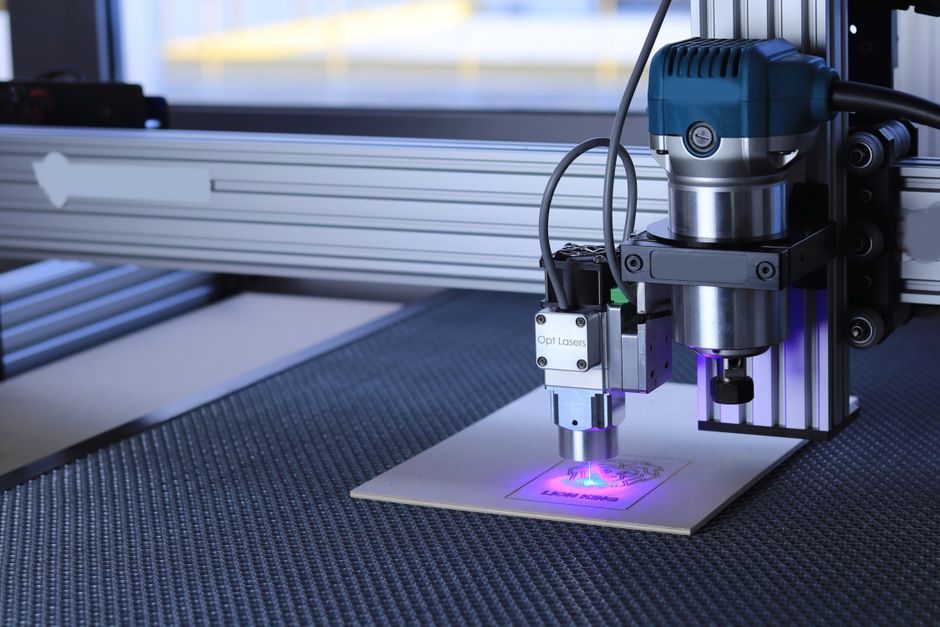
Industrial 3D printing manufacturing equipment covers seven mainstream process families — FDM, SLA, DLP, SLS, MJF, material extrusion of composites, and metal powder bed fusion — each defined by a specific build volume, layer resolution and qualified material set [S2][S4].
Buyer-side selection in 2026 is driven by four spec gates: build envelope in millimetres, achievable tolerance in ± mm, certified material portfolio, and total cost per cubic centimetre — not by printer model alone [S1][S2].
FDM and Composite Extrusion: Thermoplastic Workhorses
Fused Deposition Modeling remains the highest-installed-base polymer AM process, with industrial FDM build envelopes reaching 914 × 610 × 914 mm on Stratasys-class machines and a certified material library of 30+ filaments including PEI (Ultem), PC and ABS [S9]. Carbon fibre 3D printing extends FDM into structural parts, with chopped-fibre filaments in PLA, ABS and nylon requiring hardened steel nozzles, extrusion temperatures up to 300 °C and reinforced extruder gearboxes to handle the abrasive fibre load [S3].
Continuous-fibre systems take this further: dual extruders deposit a thermoplastic matrix and a continuous carbon tow in the same layer, with on-the-fly cutting mechanisms and topology-aware slicing software controlling fibre orientation for maximum directional strength [S3]. For engineering teams evaluating additive manufacturing material options, the practical trade-off is that chopped-fibre gives modest stiffness gains at low cost, while continuous-fibre approaches metal strength-to-weight ratios but at 5–10× filament cost and slower cycle times.
Vat Photopolymerisation: SLA and DLP for Precision
Stereolithography (SLA) and Digital Light Processing (DLP) cure liquid resin layer by layer, with DLP projecting a full cross-section per layer through a UV-LED array and SLA tracing each layer with a galvanometer-driven laser — DLP typically wins on throughput, SLA on resolution at the extreme low end of pixel size [S2][S5]. Typical layer heights for industrial SLA/DLP land in the 25–100 µm range, with achievable tolerances around ±0.1 mm on parts under 100 mm and a material library covering rigid, tough, flexible, transparent and high-temperature resins [S2].
Where dimensional accuracy and surface finish dominate the spec — dental models, jewellery masters, microfluidic chips, optical prototypes — vat photopolymerisation still beats powder-bed polymer processes on as-printed surface roughness (often Ra 0.4–1.6 µm pre-polish) and on minimum feature size below 0.2 mm [S2][S4]. The constraint is resin size: build envelopes top out in the 300–600 mm range on production units, and post-cure UV exposure plus thermal post-treatment are mandatory for end-use mechanical data to be valid.
Powder Bed Fusion: SLS, MJF and Metal AM
Selective Laser Sintering (SLS) sintters thermoplastic powders — primarily nylon 12 (PA2200, PA2201) and TPU — with a CO₂ or fibre laser, producing durable functional parts without support structures because the surrounding powder cake acts as the support [S2][S4]. Multi Jet Fusion (MJF), pioneered for nylon 12 and now extended to PA11 and TPU, uses an inkjet array to fuse agents across the bed and a fusing lamp to melt each layer, typically delivering tighter dimensional control and a smoother surface than SLS at comparable build rate [S2].
Metal powder bed fusion — selective laser melting (SLM) and direct metal laser sintering (DMLS) — runs 316L, 17-4PH, Ti6Al4V, AlSi10Mg and Inconel 718/625 in layer thicknesses of 20–60 µm, with build envelopes commonly 250 × 250 × 300 mm on mid-size industrial systems [S2]. For 3D scanner digitised parts feeding reverse-engineering pipelines, MJF and SLS are the default match because they handle organic, lattice-optimised geometry that FDM and SLA cannot, while metal PBF is the only path for end-use structural metal parts where certification to aerospace or medical specs is required [S1][S7].
Service Bureau vs In-House Equipment Decision
The capital threshold for a meaningful industrial FDM line starts near USD 50k for a single mid-size machine, while a production metal PBF cell (machine + powder handling + inert atmosphere + build-prep software) crosses USD 500k before the building work is counted [S2][S9]. At sub-200-part annual volume, a qualified service bureau such as Unionfab, Qualified3D or DEED 3D typically delivers lower total landed cost because the bureau amortises the equipment, certified materials and post-processing across many customers [S2][S7][S9].
Break-even for in-house equipment normally sits above 500–1,000 parts per year per process, or whenever intellectual-property containment, lead-time compression below five working days, or closed-loop design iteration becomes a strategic requirement rather than a convenience [S7]. Buyers comparing linear guide and motion-system integration should also note that printer axis accuracy — typically ±0.05 mm on industrial FDM, ±0.02 mm on metal PBF — directly bounds the as-printed tolerance, so motion-system spec is a hard ceiling, not a marketing line.
Selection Criteria Comparison Across Process Families
Side-by-side against the four most common industrial spec gates, FDM wins on cost per part and material range but loses on surface finish and minimum feature; SLA/DLP wins on resolution and surface but loses on mechanical strength and build size; SLS/MJF win on mechanical isotropy and no-support geometry but lose on surface and post-processing time; metal PBF wins on end-use metal strength but loses on cost per part, build rate and post-processing (depowdering, stress relief, HIP for aerospace-grade density) [S2][S4][S9].
Buyers shortlisting equipment should run each candidate against a scorecard of build envelope in mm, layer resolution in µm, certified material count, quoted tolerance in ± mm, and machine footprint plus inert-gas or HVAC requirements — a 5-axis vs 3-axis decision lives in the same scorecard, as do nozzle hardened-steel upgrades for abrasive composites [S2][S3]. The peer-reviewed journal 3D Printing and Additive Manufacturing (ISSN 2329-7662), with a 2024 impact factor of 5.355, remains the only dedicated academic venue for original process and qualification data on these process families [S8].
Industrial Applications and Cross-Industry Pull
Aerospace and defence applications on the 3D Systems industrial line include lightweight brackets, propulsion and space-launch components, heat exchangers, investment casting patterns, and 3D printed waveguides, filters and antennas — geometries that exploit topology optimisation and lattice infill unavailable in subtractive manufacturing [S1]. Semiconductor tooling covers flexure and structural optimisation, gas conveyance and mixing, linear stage cooling, manifold fluid flow, showerhead optimisation and wafer-table thermal management, where metal PBF in 316L or Inconel routinely replaces machined stainless assemblies [S1].
For robotics and humanoid platforms, 3D printing covers structural housings, custom gear carriers, cable management and end-effector bodies, with crossed roller guide integration into motion stages driving the demand for low-vibration, dimensionally stable polymer and metal AM parts that can be iterated weekly rather than quarterly [S2]. On the consumer and dental side, biocompatible resins and certified CoCr alloys for crowns and bridges are now routine production work, not prototyping [S1].
Limits, Failure Modes and Qualification Gaps
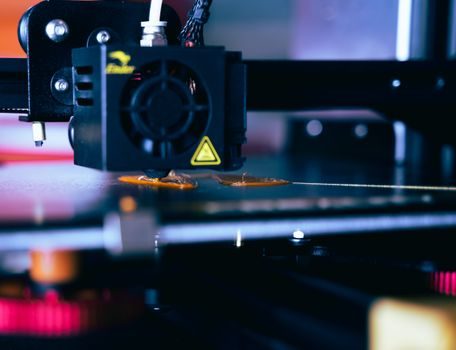
Carbon-fibre FDM hardware failure modes centre on nozzle wear, extruder gearbox fatigue and delamination when chamber temperature is not held above the matrix glass transition — the abrasive carbon load shortens nozzle life by 3–10× relative to neat PLA, and print parameters must be tuned to the specific fibre-matrix combination rather than copied from generic PLA profiles [S3]. Metal PBF parts routinely ship with 95–99.5% as-built density, leaving residual porosity that only hot isostatic pressing (HIP) or post-machining can eliminate for fatigue-critical aerospace or medical applications [S2][S4].
Vat photopolymerisation parts must be post-cured and rinsed per OEM schedule, or UV-exposure-incomplete parts will distort or leach uncured monomer over service life; SLA/DLP also struggle with large, thick-walled sections because exothermic cure heat accumulates and cracks the part [S2]. Buyers comparing process options should also weigh the recurring cost of certified materials — Stratasys-certified PEI/PC spools, MJH-approved PA12 powder, and aerospace-grade Inconel powder all carry per-kilogram price premia 3–10× over generic equivalents, and the OEM warranty on a printer is normally voided by non-OEM consumables [S9].
Trackable signals for the rest of 2026 include the next quarterly release cycle from 3D Systems' Q1 2026 financial results (already published on the corporate site), continued expansion of HP's learning centre and certified Multi Jet Fusion material list, and the publication of revised ISO/ASTM 52900-series process terminology updates in the peer-reviewed 3D Printing and Additive Manufacturing journal — each is a concrete procurement signal rather than a marketing event [S1][S4][S8]. Buyers should re-validate any equipment decision against the latest peer-reviewed qualification data and the OEM's published material certificate before issuing a PO.
This topic is covered further in Dust Particle Meter Selection: Principle, Range, and Application Match.