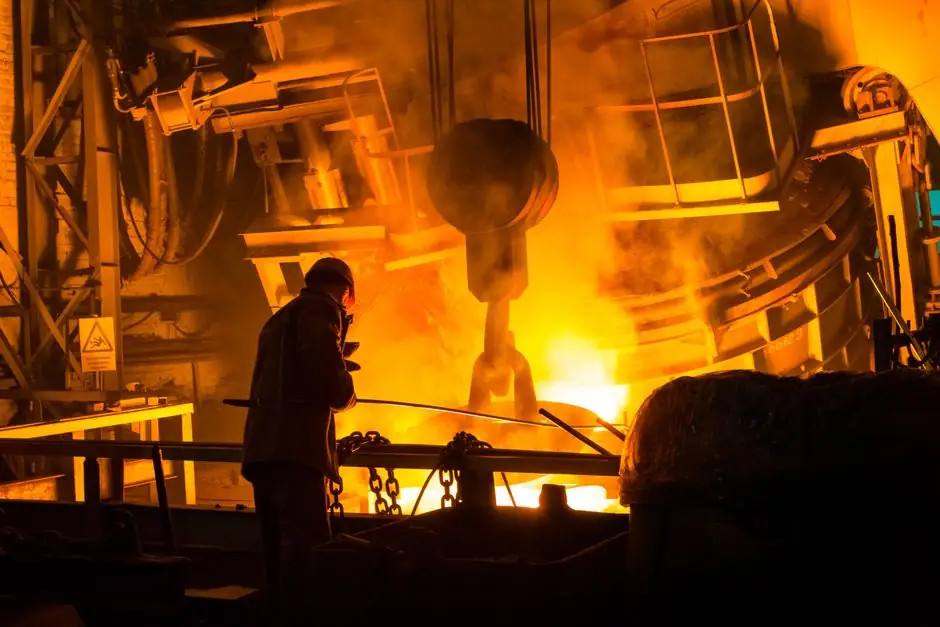
Aluminum die casting of A356 alloy is a three-temperature problem: the molten metal in the holding furnace, the shot sleeve, and the steel die must each be held inside a narrow band, or the cast part pays for it in porosity, cold shuts, and shortened tooling life [S1][S3].
A356 is the dominant Al-Si-Mg foundry alloy for safety-critical automotive structural parts, and its temperature-sensitive freezing range makes the melt, shot, and die windows the process variables a process engineer actually has to defend on the shop floor [S1][S6]. The numbers below are the working bands that show up across current technical guidance, with a side-by-side comparison of HPDC, vacuum, and gravity paths so the right window is picked for the right geometry.
A356 Thermal Landmarks: Solidus, Liquidus, and the Working Pour Band
A356 does not behave like pure aluminum: published foundry data puts the onset of softening near 555°C and full fluidity only at 615°C, giving a roughly 60°C mushy zone that the die casting process has to traverse quickly once the shot starts [S9].
Across the cited guidance, aluminum alloy melts broadly sit between 600°C and 660°C, while the actual pour / shot temperature used for A356 is set 50-70°C above the alloy's crystallization point so the metal stays inside the die cavity long enough to fill thin walls before the liquidus is crossed again [S1][S7]. That places the practical A356 melt target in the 615-680°C band, with the upper limit set more by hydrogen pickup and die soldering than by metallurgy. Neway's process notes describe A356 as the go-to choice for precision castings precisely because its narrow freezing range keeps feeding predictable when the melt, shot sleeve, and die temperatures are all held in spec [S6].
Die (Mold) Temperature Window for A356: 200-280°C Operating Band
For aluminum die casting, mold temperatures are commonly controlled within a range of approximately 200°C to 280°C, depending on the application, and this is the first window a setter verifies with a contact pyrometer after the die has been preheated [S1].
The band is a direct trade-off: too cold and the skin freezes against the die surface, producing misruns, cold shuts, and surface streaks; too hot and the cycle stretches, the ejector pins gall, and solder / erosion at the die cavity accelerates [S1]. Within the aluminum die casting machine class, the die-temperature loop is closed by heated oil channels in the die plate plus a die-face thermocouple, and the setpoint is chosen by wall thickness, with thin-wall structural parts biased to the 250-280°C end of the window. The same A356 melt delivered into a gravity die casting machine sees a slightly different die setpoint because the fill is slower and the metal is exposed to the die wall longer before feeding stops.
Shot Sleeve and Melt Loss: What Happens Between Furnace and Cavity

Upon contact with the cooler shot chamber walls during vacuum die casting, the melt rapidly reaches near-liquidus temperature, initiating nucleation and forming the first solid fraction, which is the fundamental reason the shot profile has to be both fast and temperature-aware [S2].
The shot sleeve is the silent defect generator: a cold-chamber A356 cycle pours metal at roughly 640-680°C into a steel sleeve that is itself water-cooled, so the melt can lose 30-80°C between pour and die entry if the slow-shot phase is sloppy [S1][S4]. The vacuum die casting machine variant attacks this by evacuating the cavity before injection, which both reduces gas porosity and limits the temperature drop the slug sees on its way through the sleeve [S2]. For foundries running unmodified cold-chamber presses, the practical control is to minimize dwell time in the sleeve and to keep the sleeve walls themselves preheated with the same oil circuit used on the die, so the A356 entering the cavity is still 30-50°C above liquidus when the high-velocity phase begins.
Comparison: HPDC vs Vacuum HPDC vs Gravity Die Casting for A356
Process path changes the temperature problem more than the alloy does, so the right comparison is by die and shot regime rather than by alloy grade [S1][S4].
On a standard die casting machine in HPDC mode, the cycle is short (often under 90 s), the die runs at 200-280°C, and the melt is shot at 640-680°C with intensification pressures that can exceed 60-70 MPa on the cavity, which is the right answer for high-volume thin-wall structural A356 parts where cosmetic surface and dimensional repeat dominate [S1][S4]. Vacuum HPDC drops the cavity pressure to a fraction of atmospheric before injection, which lets the foundry push the melt temperature toward the lower end of the band (closer to 620-640°C) without losing fill, and that combination is the one that shows the largest reduction in porosity on safety-critical A356 nodes [S2]. Gravity die casting uses the same alloy but a much lower fill velocity, so the die is held at the upper end of the window (often 250-300°C), the pour is dropped closer to 615-640°C, and the cycle stretches enough that solution heat treatment (540°C for 8 h, quench, then age at 160°C for 6 h, per the T6 parameters reported for Sc-modified A356) becomes economically viable for the higher-end mechanical property targets [S5].
Process Limits, Defect Signatures, and When A356 Is the Wrong Alloy
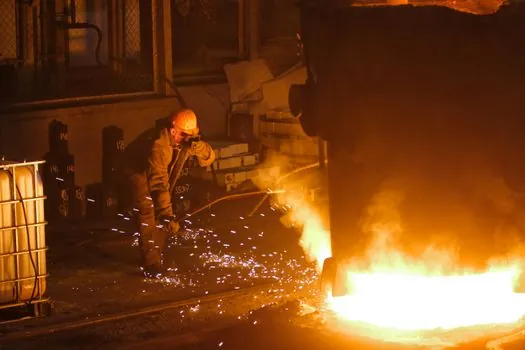
If the melt exceeds roughly 700°C in the holding furnace, oxidation and hydrogen pickup rise faster than fill quality improves, and the defect signature shifts from cold shuts to subsurface porosity and blistered surfaces after T6 [S1][S9].
The cited guidance is consistent on the failure mode map: a melt that is too cold produces misruns and cold shuts; a die that is too cold adds surface streaks and premature skin freezing; a die that is too hot adds cycle time, ejector-pin galling, and shortened die life; and any of the three drifting out of band will show up as porosity on a radiographic or density-index check long before it shows on a coordinate report [S1][S3]. A356 is also the wrong call when the service environment demands elevated-temperature strength above roughly 200-250°C, when the section thickness drops below about 2 mm and the foundry cannot hold a tight enough shot window, or when the part has to survive a demanding weld repair cycle, in which case the Sc-modified or higher-copper alloys documented in the gas aluminum melting furnace process notes start to make more sense [S5][S6].
Sources, Standards, and Trackable Signals
The 50-70°C superheat band, the 200-280°C die window, and the 540°C / 8 h solution plus 160°C / 6 h age T6 cycle are the three quantitative anchors that show up across the cited material, with the liquidus / full-fluidity 555-615°C spread on A356 itself pulling the whole stack into a usable setpoint [S1][S5][S7][S9]. Aluminum HPDC die temperatures and the cold-chamber pour path are documented as the standard industrial configuration for A356 and other Al-Si-Mg alloys, with clamping tonnage on production presses ranging from roughly 250 tons up to almost 6000 tons, which sets the scale of the thermal mass the die-temperature loop has to control [S4].
Two signals worth tracking over the next quarters: published data on Al-Si-Mg variants with tighter freezing ranges (to shrink the 60°C mushy zone A356 currently carries), and standardization work on closed-loop die-face pyrometry tied directly to the shot profile, since both would compress the existing pour, die, and shot windows and let the same A356 chemistry run at tighter superheat with lower scrap [S1][S2][S8]. For hydraulic and shot-speed sizing on the press side that carries these temperatures, see Aluminum die casting machine hydraulic sizing for fast shot speed and the broader aluminum die casting machine reference page.