
Fast shot speed in an aluminum die casting machine is set by the hydraulic circuit, not the electric motor: accumulators, intensifier ratio, and the directional/flow control valves together deliver the 80–120 MPa intensification pressure window typical of cold-chamber aluminum work [S1][S5].
For aluminum giga-castings and thin-wall structural components above 4 mm average wall thickness, sizing the hydraulic power unit correctly is the difference between a stable fill and porosity, flash, or short-shot scrap, which is why injection cylinder bore, accumulator pre-charge, and valve response time must be selected as one system [S2][S6].
Where the Fast Shot Pressure Window Actually Lives
Industry practice and published case data place intensification (specific injection) pressure for sealed aluminum castings in the 80–120 MPa band, with 90 MPa used as the design point on a representative AlSi9Cu3 gearbox housing at 4 mm nominal wall [S1]. That pressure is generated in a two-stage hydraulic circuit: a primary pump/accumulator bank feeds the shot cylinder at slow speed, then a smaller intensifier piston multiplies pressure during the final cavity-fill and packing phase [S2][S8].
The fast shot phase begins once the shot sleeve is full; some plants accelerate immediately on sleeve-fill, but most controllers stage through a low-speed slug phase, a transition point, and a high-velocity cavity-fill phase before triggering intensification by position, back-pressure rise, or velocity decay [S4][S6]. On Shibaura Machine's TOSCAST platform, for example, intensification start is closed-loop rather than position-only, so the same intensification timing is held across ladle-volume variation, which is the main reason modern controllers can sustain 90 MPa intensification without over-pressure spikes [S5].
Sizing the Three Hydraulic Subsystems That Set Fast Shot Speed
Three subsystems set the achievable fast shot velocity, and each must be sized to the part, not the machine nameplate: [S4]
1. Accumulator bank. Nitrogen pre-charge is typically set to roughly 60–70% of the system's hydraulic working pressure, and the usable oil volume is what determines how long the intensifier can hold the 80–120 MPa window during cavity fill. Blondheim's high-pressure die casting work shows the hydraulic shot system is built from hydraulic pumps feeding accumulators, with the accumulator being the energy store that actually carries the peak injection pulse [S8].
2. Shot cylinder and intensifier ratio. The shot cylinder bore sets slow-shot force and the volume displaced per second, while the intensifier ratio (commonly 2:1 to 4:1 on cold-chamber aluminum cells) sets the multiplication from system pressure to intensification pressure. The plunger diameter, intensifier area, gate area, and runner system are the four variables that any flow-predictor simulation must be run against, because each one shifts the velocity-pressure curve independently [S7].
3. Servo proportional / meter-out valve response. Two-cylinder shot systems with hydraulic servo meter-out control can adjust speed and pressure on every stroke, rather than relying on a fixed cam or position-based profile, which is what allows stable fast-shot acceleration without inducing additional gas into the melt [S5].
Who Needs Aggressive Fast Shot Sizing, and Who Does Not
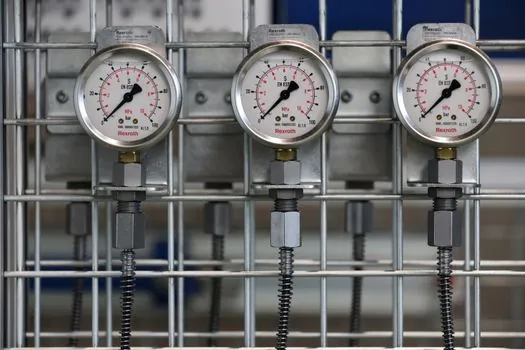
Aggressive fast-shot hydraulic sizing is mandatory for: large thin-wall structural parts where fill time has to stay below roughly 100 ms to avoid cold-shut; safety-relevant housings (gearbox, battery tray, structural nodes) where porosity limits are tied to leak-test or crash performance; and integrated gigacastings above 4 mm wall where the shot weight is large and the intensification phase has to be sustained across a long cavity-fill stroke [S1][S2].
It is not the right priority for small non-sealed zinc or magnesium parts, where the lower fill pressure and shorter intensification window let a smaller standard power unit run the cell economically. For those, the right reference is a standard catalog HPU rather than a custom accumulator-heavy build, which is one of the decision axes covered in standard catalog versus custom-engineered hydraulic power units.
Decision Comparison: Slow Shot, Fast Shot, and Intensification
The three injection phases are not interchangeable, and confusing them is the most common cause of mis-sized hydraulic circuits: [S1]
Slow shot (sleeve fill): low velocity, controlled to avoid air entrainment at the pour hole. Dominant variable: shot cylinder flow, controlled by proportional flow valve. Typical pressure: well below 20 MPa on the system side.
Fast shot (cavity fill): high velocity, ramped to fill the cavity in the shortest time consistent with the part geometry. Dominant variable: accumulator volume + valve bandwidth. Typical pressure: 40–70 MPa on the system side, before the intensifier ratio multiplies it.
Intensification (packing through solidification): peak pressure, held until the gate freezes. Dominant variable: intensifier ratio and shot-end control. Typical pressure: 80–120 MPa specific pressure at the plunger [S1][S5][S6].
A common sizing error is to oversize the pump and under-size the accumulator: the pump can keep the slow shot flowing, but the accumulator is what carries the fast-shot pulse, so a 200 L accumulator at 140 bar pre-charge is generally more useful for fast shot than an extra 30 kW of pump flow on a cold-chamber aluminum cell [S8].
Interaction With Clamping Force and Machine Class
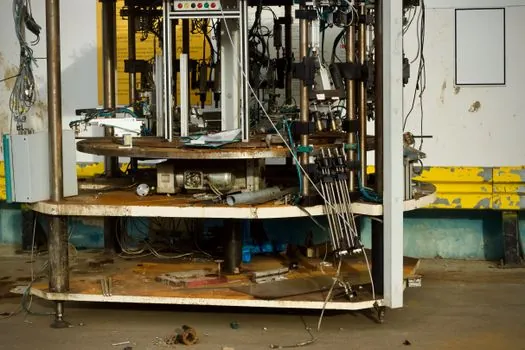
Fast shot velocity and clamping force are linked through cavity pressure, and they must be sized together. For large structural aluminum parts in the 1,600–2,000 ton clamp class, the hydraulic power unit has to deliver both the injection pulse and hold the die closed against the resulting cavity pressure at the same instant, which is why the largest cells often run a separate accumulator bank per function rather than a shared manifold. The trade-off between clamp tonnage, shot weight, and intensification pressure is laid out in the aluminum die casting machine tonnage sweet spot reference. [S5]
Within the broader die casting machine category, the cold-chamber aluminum cell is the most hydraulically demanding because the shot sleeve is loaded separately and the intensification phase is the longest. Vacuum die casting cells add a vacuum pump and valve sequencing on top of the same hydraulic core, but the fast-shot sizing logic is unchanged: accumulator + intensifier + servo valve, with the vacuum loop considered auxiliary.
Failure Modes When the Hydraulic Sizing Is Wrong
When the fast-shot hydraulic system is undersized, the failure modes are predictable: porosity from incomplete intensification if the accumulator cannot hold pressure through solidification, cold shuts from velocity decay during cavity fill, and flash from clamp-force sag if the clamping and injection circuits share an accumulator [S2][S5].
When the system is oversized, the failure mode is different and less obvious: over-pressure spikes that damage the die, wasted energy through proportional-valve heat, and shortened seal life on the intensifier piston. A correctly sized system holds intensification pressure flat through the last 10–20% of the stroke and releases cleanly, with intensification start tied to a process feedback signal rather than a fixed position [S5][S6].
Trackable Signals to Watch

Two signals are worth tracking in a 2026 process-engineering context: the first is controller-side intensification start logic, where closed-loop start (back-pressure or velocity-decay) is replacing fixed-position start on most new aluminum cells, and the second is nitrogen pre-charge health on the fast-shot accumulator, which drifts over 12–24 months and is the most common silent cause of fast-shot velocity decay on a cell that was correctly sized at commissioning [S5][S8].
Component reference pages worth checking: aluminum die casting machine.