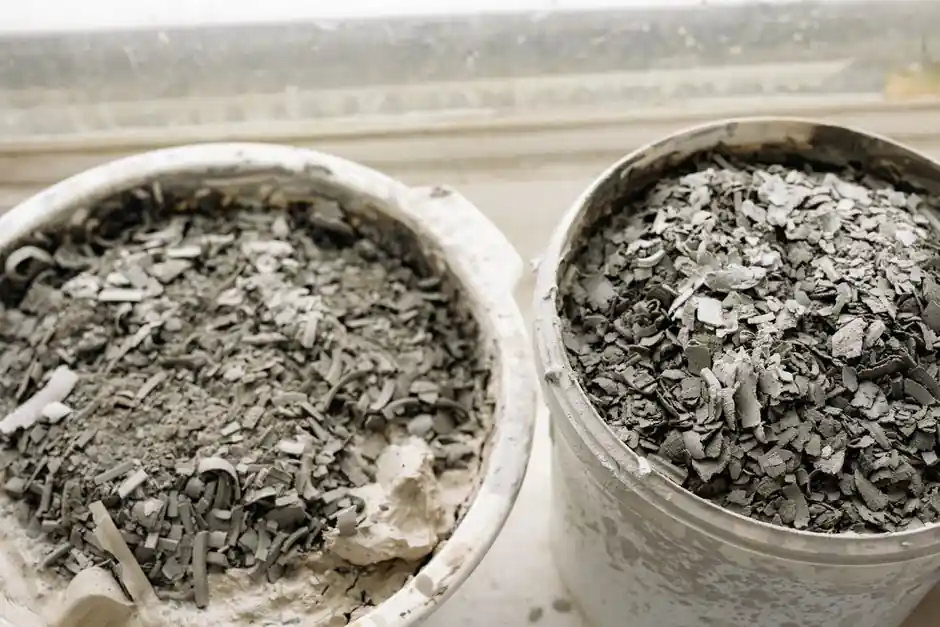
Thermal reclamation at temperatures set by thermogravimetric analysis is the only method that fully removes cured alkaline resol phenol-formaldehyde residues from foundry sand, with the matrix able to be returned to the same binder system for multicycle reuse [S1][S2].
The blocker most engineers underestimate is not the carbon residue but the potassium and sodium salts left in the grain: these salts are the actual cause of shortened bench life, extended strip time, and impaired tensile strength once the sand is put back into a no-bake line [S4].
Why Mechanical Reclamation Is Not Enough for Alkaline Phenolic
Alkaline phenolic binders are two-part systems: a resol phenol-formaldehyde resin dissolved in aqueous potassium hydroxide, sodium hydroxide, or a blend, hardened by an aliphatic ester, ester vapour, or CO2 [S4]. Curing proceeds through base-catalysed hydrolysis (saponification) of the ester, generating potassium or sodium carboxylate salts and liberating the alcohol [S4]. Those salts, plus any unreacted alkali, are the chemical fingerprint of the system and they cannot be brushed off a silica grain.
Single- and double-attrition mechanical plants are widely deployed because they are cheap, but at roughly 70% reclaimed-sand replacement the bench life is significantly shortened and strip time is extended, forcing foundries to either over-dose binder or dilute with new sand [S4]. The conductivity of a 20 g sand sample in 100 mL of deionised water (μS/cm) is the standard shopfloor proxy for soluble salt load, and it tracks bench life and strip time closely enough to be used as a release test [S4]. A 2023 Łucarz study on chromite-sand matrix showed that mechanical attrition alone left alkali-phenolic binder residues detectable by thermogravimetric analysis and scanning electron microscopy, and that the chromite surface chemistry amplified the contamination problem relative to silica [S5].
What Thermal Reclamation Actually Has to Do
Thermal calcination is the only reclamation route that fully strips phenolic urethane and alkaline phenolic binder residues; mechanical or wet methods cannot reach the same residual carbon and alkali level on these systems [S6]. The work performed by Łucarz and published in 2023 used TGA in both aerobic and anaerobic atmospheres to define an integral polymer decomposition temperature, then confirmed it by roasting spent sand at stepped set points and measuring weight loss, ignition loss (LOI), and grain-surface chemistry [S1]. The conclusion of that work was an explicit target temperature window: high enough to crack the resin film, low enough to protect the silica from phase change and keep fuel cost in line [S1].
Operationally, the calciner must reach and hold the sand at that target long enough for the carbonaceous film to oxidise, which typically means a fluid bed or rotary tube with residence time tuned to the binder loading. The patent literature on alkaline phenolic thermal reclamation (Foseco, WO1998022240A1 / EP 0949978 B1) describes the use of an oxygen-containing fluidised bed to burn off the resin film and reports a measurable drop in loss-on-ignition and in potassium content of the sand after the thermal step, with both metrics tracked before and after burn-out [S2][S3].
The Potassium Residue Problem: Why It Survives Calcination
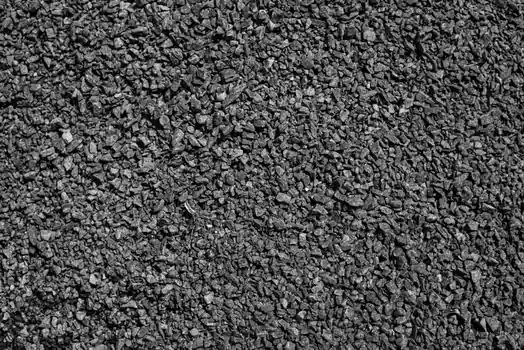
Potassium is not a binder fragment; it is the catalyst residue. Every mole of KOH in the original resin ends up, after ester cure, as a potassium carboxylate or potassium carbonate bound to the silica surface, and those salts have melting points well below the temperatures needed to oxidise the carbon film [S4]. A pure thermal cycle will burn off the organic skin but leave a K2CO3 / K-salt layer that fluxes the silica and forms low-melting-point eutectics with the grain surface, which is why foundries running alkaline phenolic through a standard thermal calciner have historically seen grain sintering, pitting, and reduced refractoriness on the second or third cycle [S7].
The standard engineering fix is to pre-mix a special inhibitor into the sand before the thermal step: the inhibitor reacts with the residual alkali salts to form higher-melting, non-fluxing compounds, allowing the calciner to run at the temperature the resin decomposition needs rather than at a temperature the alkali can survive [S7]. Without that inhibitor, the calciner either under-heats (leaves carbon) or over-heats (damages the grain); the additive is what decouples those two failure modes. The same salt-tracking logic carries through to mechanical-only flows: a fresh batch of sand in the same line has low μS/cm, and conductivity climbs with each cycle as the residual potassium and sodium accumulate, until dilution with new sand is the only release valve [S4].
Selection Criteria: Temperature, Atmosphere, and Additive
Three parameters decide whether an alkaline phenolic thermal reclamation line is fit for purpose. First, target temperature, set from TGA of the specific resin formulation rather than from a generic calciner nameplate, because resol resins from different suppliers decompose over different ranges and a fixed set point is a common source of either wasted fuel or carbon residue [S1]. Second, residence time and atmosphere, where a fluidised bed with controlled oxygen gives more uniform burnout than a rotary calciner at the same nominal temperature, and aerobic vs anaerobic TGA curves give the upper and lower bound the operator actually needs [S1].
Third, the inhibitor / additive package, which is the differentiator between a thermal line that can run alkaline phenolic in closed loop and one that can only handle the resin part of the job [S7]. For foundries that already operate sand reclamation units, adding the inhibitor stage ahead of the existing calciner is the typical retrofit path; for green-field installations, the thermal section needs to be sized for the higher mass flow that alkaline phenolic generates relative to bentonite-bonded systems because LOI is higher and salt load is higher on every cycle [S1][S4].
Process Comparison: Mechanical vs Thermal for Alkaline Phenolic
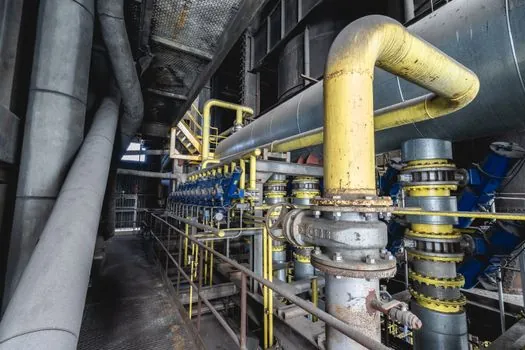
Mechanical attrition is the right primary stage for alkaline phenolic only if the sand ends up in a downstream thermal step or if the foundry accepts a hard cap on reclaimed-sand percentage: single-attrition plants run cleanly up to roughly 70% replacement, beyond which bench life and strip time drift out of the work window, and binder dose has to climb to compensate [S4]. The conductivity test (20 g sand + 100 mL deionised water, μS/cm) is the cheapest in-house gate on how much salt load the line is tolerating, and it should be run on every batch before the sand is added to the muller [S4].
Thermal calcination, in contrast, resets the sand to near-virgin LOI and drops potassium content to a much lower baseline, but it is energy-intensive and will damage the grain without the inhibitor additive that locks the residual alkali into a refractory compound [S2][S3][S7]. A practical hybrid used in the trade is: mechanical attrition for grain cleaning and break-down of lumps, then thermal calcination with the inhibitor additive for full resin and salt burn-out, with conductivity and LOI measured at the calciner outlet as the release spec for return-to-muller [S4][S6][S7]. Foundries running this hybrid can push reclaimed-sand percentage well above the 70% mechanical-only ceiling without paying the strength and bench-life penalty [S4].
Use Cases, Limitations, and the Standards Frame
Alkaline phenolic no-bake is specified where dimensional accuracy and low gas evolution matter (large iron and steel castings, some non-ferrous work), and the resin system itself is a settled technology, but the reclamation loop is where the cost and the environmental case are won or lost. The waste hierarchy is clear: reuse in the same binder system is the preferred end-of-life route for foundry sand, mechanical attrition alone is insufficient for alkaline phenolic, and thermal reclamation with an inhibitor additive is the only closed-loop option for foundries that want to keep their sand stream out of landfill [S1][S2][S4]. The 2018 Aalto study on repurposed equipment reported excellent reclamation of alkaline phenolic no-bake sand by thermal methods, while green-sand reclamation under the same repurposed rig did not produce satisfactory results, which is a useful reminder that the equipment and the recipe are matched to a specific binder chemistry [S8].
Limitations are concrete: thermal reclamation is fuel-cost-heavy, the inhibitor additive is mandatory rather than optional on alkaline phenolic feed, and without it the calciner will either under-burn carbon or over-sinter the silica surface [S7]. A 2026 foundry-silica-sand materials analysis notes that adding silica fume improves strength properties of alkaline phenolic reclaimed sand and supports high reclamation rates, which is the kind of feed-side formulation lever that a foundry running high reclaimed-sand percentage should evaluate alongside the calciner set points [S9]. Operationally, the gate metrics a process engineer should track are LOI on the calciner outlet (target set per resin TGA), conductivity in μS/cm on a 20 g sample (release spec set empirically by the foundry), and reclaimed-sand percentage in the muller batch (lower when running mechanical-only, since mechanical attrition cannot fully remove alkaline-phenolic residues, and higher when thermal calcination and inhibitor dosing are added to the loop) [S1][S4][S6][S7].
The wider context is that construction machinery and equipment supply chains are one of the larger downstream consumers of castings, and any improvement in sand loop economics on iron and steel no-bake lines is one of the few places a high-mix foundry can still find margin. The lighting equipment and electric lamps sector, by contrast, is largely die-cast aluminium and is not a direct consumer of alkaline phenolic reclaimed sand, so the technology choice is really an iron-and-steel no-bake decision rather than a general foundry one.
Track, on the next data point, whether the foundry's release spec drifts: if μS/cm on the calciner-outlet sample trends up over successive cycles, the inhibitor additive is being under-dosed or the calciner temperature is sitting in the K-salt fluxing window rather than at the resin-decomposition window set by TGA [S1][S4][S7].
Background reading: 7075 Aluminum vs P20 Steel for Prototype Molds: A Spec-First Decision.