
ABS is an amorphous styrene-acrylonitrile/polybutadiene terpolymer whose monomer split (15-35% acrylonitrile, 5-30% butadiene, 40-60% styrene) directly sets heat, impact, and surface behaviour, and procurement must read that split before quoting any grade [S1].
Six commercial families cover nearly every spec sheet a buyer will see: General Purpose (GP, 15-20% rubber), High Impact (HI, 20-30% rubber), Flame Retardant (FR to UL94 V-0), electroplating, high-heat (above 100°C, often alpha-methylstyrene modified), and transparent/MABS for optical parts [S1].
ABS Grade Comparison on Decision Criteria
GP ABS is the cost/performance workhorse for housings, toys, and rigid consumer parts; HI ABS is specified when Izod impact must stay high at low temperature, typical of automotive bumpers and luggage shells [S1]. FR ABS is required where UL94 V-0 is non-negotiable, meaning TV/monitor back covers, printer chassis, and any enclosure near a potential ignition source; specify halogenated vs. non-halogenated additive system up front, since both routes reach V-0 but diverge sharply on recyclability [S1].
High-heat ABS (alpha-methylstyrene modified) and electroplating-grade ABS sit in a different procurement lane: both are lower-volume, tighter-tolerance, and priced at a premium versus GP. Transparent/MABS grades, the fastest-growing subset, hit light transmittance of roughly 88-91%, comparable to PC (87-91%) and approaching PMMA (92-93%), but with Izod impact of 50-235 J/m versus only 16-24 J/m for PMMA, which is why they are displacing PMMA in thin-wall housings and medical device covers [S3].
Regional Sourcing: Asia Sets the Price Floor
Asia-Pacific producers, led by Chi Mei (Taiwan) and LG Chem (Korea), are the world's largest ABS suppliers and set the global price tone; sourcing from this region offers the widest grade variety but extends lead times [S1]. For the transparent/MABS segment specifically, Asia accounts for over 90% of global consumption, so a European or North American buyer who tries to dual-source transparent ABS away from Asia will struggle on both breadth and unit cost [S3].
European supply (INEOS Styrolution, ELIX Polymers, Versalis) concentrates on high-end specialty grades for automotive interior and medical, with ELIX noted for pre-colored specialty compounds; Americas capacity (INEOS Styrolution, Trinseo, SABIC) serves automotive and construction with generally stable supply but at a price premium driven by higher feedstock costs [S1]. Practical rule: lock Asian volume for GP/HI and pull European or American allocation for FR, high-heat, and medical-contact grades where change-control documentation matters more than resin price.
Virgin vs. PCR and the Color Question

Post-Consumer Recycled (PCR) ABS is increasingly mandated by OEMs and typically delivers 10-20% cost savings versus virgin, but color consistency and impact strength vary lot to lot, so any application with tight visual or mechanical tolerance needs a re-test plan, not just a price sheet [S1].
Most ABS volume is purchased as Natural (ivory/off-white) pellets and let down with colorants at the molding press; pre-colored compounded ABS costs more per kilogram but removes a process step and a variable, which is usually the right call for visible consumer parts [S1]. For buyers comparing polypropylene resin sourcing, the same virgin-versus-recycled trade-off applies, but ABS recycled streams are thinner, so the quality penalty is larger for any given PCR target.
Transparent ABS and MABS: A Spec-First Lane
MABS is the technical name for transparent ABS, made by matching the refractive index of the rubber phase to a methyl methacrylate-modified matrix, which is why conventional ABS scatters light and MABS does not [S3]. Among named grades, LG Chem TR530F delivers Izod impact of 235 J/m at 3.2 mm/23°C with Rockwell R88 hardness and MFI 10 g/10 min (220°C/10 kg), fitting thin-wall flexible parts like artificial nails; for higher-flow or higher-clarity variants (TR552F and beyond), buyers should compare MFI, haze, and yellowing index, not just impact, because those three parameters diverge sharply across the MABS family [S3].
Global transparent ABS demand reached roughly USD 2.62 billion in 2025 with a projected 7.25% CAGR to USD 4.28 billion by 2032, while the MABS subset specifically was USD 476 million in 2025, forecast at 4.0% CAGR to USD 623 million by 2032 [S3]. For sourcing teams modelling 2026 budgets, the transparent/MABS line is the segment where virgin supply tightness shows up first, so locking 12-month volume agreements is more defensible than spot buying.
ESG and Regulatory Pressure Now Land in the PO
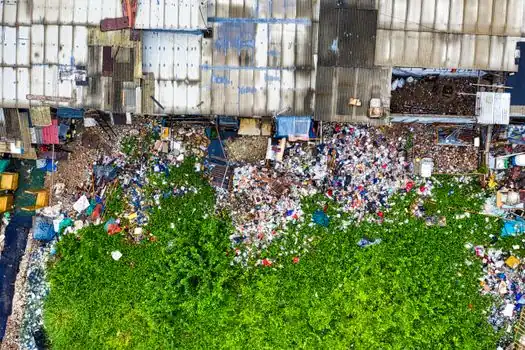
Sustainable procurement has shifted from CSR slide-deck to contract clause, driven by the EU Corporate Sustainability Due Diligence Directive (CSDDD), the Corporate Sustainability Reporting Directive (CSRD), and California's SB 253, which together force Scope 3 emissions and labor-practice disclosure into supplier scorecards [S4]. A 2024 EcoVadis survey found 56% of global companies cite ESG risk mitigation and regulatory compliance as a primary driver of their sustainable procurement programs, with corporate sustainability and net-zero goals close behind at 39% [S4].
Concretely, an ABS PO in 2026 should carry: declared PCR content with traceability to a recycling stream, a halogen-free FR statement where applicable, an ISCC Plus or equivalent mass-balance claim if bio-attributed ABS is on the table, and a clause obligating the supplier to share product carbon footprint per kg. WRAP's updated public-sector guidance on plastic procurement, while focused on single-use and packaging, also provides a transferable process framework (criteria, weightings, re-tender rules) that private buyers can adapt for ABS contracts [S2].
Limits, Failure Modes, and What to Watch
ABS is not for everyone: it has poor UV resistance unless stabilized, weak chemical resistance to strong solvents, and continuous-use temperatures below the high-heat grade's 100°C ceiling, so outdoor enclosures, fuel-system parts, and under-hood automotive components are out of scope unless a specific modified grade is qualified [S1]. Specify wrong, and the failure mode is well known: surface cracking, gloss loss, and loss of impact in the first summer outdoors.
On the sourcing side, two watch items for the next two quarters: (1) whether the CSDDD national transposition deadlines push more OEMs to demand PCR content floors in ABS specifications, and (2) whether Asian producers tighten MABS allocation further as the projected USD 4.28 billion 2032 transparent ABS market pulls volume from standard ABS lines [S3][S4]. For buyers using polyethylene resin sourcing as a benchmark, expect ABS to follow the same ESG-driven contracting pattern, with a 6-12 month lag.
Spec-level background on the components involved: linear guide, crossed roller guide, and engineering plastic.