China supplies about 45% of global PVC resin capacity in 2026, anchored by six feedstock-driven provincial clusters that split roughly 70/30 between coal-based calcium-carbide routes and oil/gas-based ethylene routes, per a Q2 2026 supply-chain analysis [S5].
For procurement managers, the question is not whether to buy from China, but which of the three resin grades (SG-3, SG-5, SG-7, or SG-8) fits the end product, which cluster matches the spec, and which supplier can pass REACH and RoHS audits for the destination market [S1][S5].
Resin Grade Selection: SG-3 to SG-8 by K-Value and End Use
Suspension-grade PVC resin is sorted by K-value, which tracks polymer chain length and viscosity: SG-3 sits at K 71-72, SG-5 at K 66-68, SG-7 at K 60-62, and SG-8 at K 55-59 under GB/T 5761-2006 spec sheets, with Hubei Yihua publishing a newer GB/T 5761-2018 reference for the same grade bands [S2][S3].
Higher K-value grades carry higher viscosity number (ml/g) and lower bulk density, which is why SG-3 is the soft grade for cable sheathing, films, and high-grade artificial leather, while SG-5 is the workhorse for rigid pipe, profile, and plate, and SG-8 is reserved for transparent rigid sheet and high-strength pipe fittings [S2][S3][S4]. For pipe and profile buyers, the PVC-U pipe encyclopedia entry covers how SG-5 K-value shifts translate into finished-pipe pressure ratings.
Cluster Map: Feedstock Route, Capacity Share, and Risk Profile
Resin capacity is geographically split by feedstock economics: Shandong (mixed coal/oil, ~22% of China capacity), Inner Mongolia (coal-calcium-carbide, ~18%), and Xinjiang (coal, ~15%) lead on volume, while Jiangsu (~12%), Zhejiang (~10%), and Guangdong (~8%) specialise in higher-purity and specialty compound output, per the 2026 cluster analysis [S5].
The cost logic is straightforward: coal-rich inland provinces run on the cheapest electricity in China, so they dominate mid-grade SG-5 and SG-7 supply, whereas coastal ethylene-route plants charge a premium for higher-purity resin that feeds medical, electronics, and transparent-rigid end uses. Inner Mongolia, with Ordos as a flagship hub, carries documented 2025-2026 emissions-compliance risk for older carbide-route plants, and Xinjiang adds geopolitical and outbound-logistics friction for export buyers [S5]. For buyers comparing resin to higher-performance polymer routes, the PEEK and POM reference pages frame the cost-versus-temperature trade-off that pushes some specs off PVC entirely.
Spec Sheet Reality: What the GB/T 5761 Numbers Actually Mean
GB/T 5761 spec sheets force a common set of measurable parameters, and the numbers across Hubei Yihua, Xinjiang Tianye, and Shandong Weifang Phoenix align within tight bands: SG-5 carries viscosity 107-118 ml/g, bulk density ≥0.48 g/ml, sieve residue on 250 µm ≤1.6%, fish-eye count ≤20 per 400 cm², and residual VCM ≤5 µg/g [S2][S3][S1].
The hardest spec to police in practice is whiteness after 160 °C / 10 min heat treatment, which sits at ≥78% for SG-5 and SG-3, ≥75% for SG-7 and SG-8, and ≤80% on Yihua's ultra-high-polymerisation YH2500 grade, because that single number is the cleanest proxy for thermal stability and catalyst residue. Buyers who skip this check routinely receive resin that yellows under processing and fails downstream colour audits. The wider synthetic resin reference outlines how PVC sits in the broader thermoplastics family.
Supplier Vetting: REACH, RoHS, Capacity, and Audited Plants
Three Chinese suppliers illustrate the realistic buyer shortlist. Hubei Yihua Group runs 1,200 KMT/yr capacity under ISO-aligned quality systems, brands resin as "Yihua," and packs in 20 kg, 25 kg, 700 kg, 800 kg, or 1,000 kg bags with customisation available [S3]. Xinjiang Tianye produces 1,200,000 t/yr under ISO 9001:2000 and states REACH compliance, a critical box for EU-bound cargo [S2]. Weifang Phoenix New Material is a Shandong-based trading company with 100,000 t/yr production capacity, RoHS/ISO/CE certifications, free samples, and a MOQ of 1 t; their SG-3 grade datasheet quotes K-value 66-68, viscosity 107-118 ml/g, and 0.40% max volatiles, with EXW/CFR/CIF/FOB/CIP/DDP/DDU trade terms out of Qingdao, Shanghai, or Tianjin [S1].
For an export buyer's first call, the minimum evidence pack is: (1) current GB/T 5761 or updated GB/T 5761-2018 third-party CoA against the buyer's K-value band, (2) REACH registration statement or letter of compliance, (3) RoHS test report if the resin enters electrical or toy end-products, (4) residual VCM ≤5 µg/g declaration, and (5) plant audit or virtual audit with traceability of raw materials. A broader Aramid Fiber Sourcing From China: 2026 Spec, Price, and Supplier Map reference is useful here, because the same vetting sequence applies when you are qualifying any Chinese polymer supplier, not just PVC.
Price, Logistics, and 2026 Trade Terms
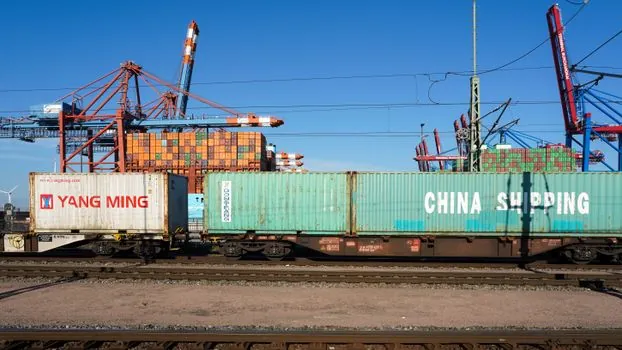
Indicative Q1 2026 FOB-China pricing for standard SG-5 resin sits in a broad band, with Weifang Phoenix's listing at US$650-900/t and 25 kg bag packing on EXW, CFR, CIF, FOB, CIP, DDP, and DDU terms out of Qingdao, Shanghai, and Tianjin [S1][S5]. Hubei Yihua offers container-friendly 25 kg and 1,000 kg jumbo bags, and Xinjiang Tianye highlights ISO 9001:2000 certification plus REACH for EU shipments [S3][S2].
Two logistics variables move the delivered-cost number more than headline price: inland truck distance from plant to port, and the World Bank Logistics Performance Index (LPI) 2025 ranking for the destination corridor, both flagged in the 2026 SourcifyChina supply-chain report [S5]. Inner Mongolia and Xinjiang resin usually tranships through Tianjin or Lianyungang by rail, which adds 7-10 days versus coastal Shandong supply and roughly US$30-60/t in extra freight at 2026 diesel levels. For buyers running JIS or FOB contracts, locking the plant-to-port leg inside a single purchase order eliminates the most common demurrage dispute.
Decision Map: Who Should Buy Where
Rigid pipe, window profile, and conduit buyers running high-volume SG-5 contracts should anchor on Shandong (Weifang, Zibo, Dongying) for the best mix of port access, mid-grade resin, and compound supply, with Inner Mongolia and Xinjiang as second-source options once REACH paperwork is on file [S5]. Cable, film, and medical-grade buyers chasing higher K-value or ultra-high-polymerisation resin (YH2500, YXP-5 delustring) belong on Hubei Yihua's product line, and should demand delustring and whiteness CoAs in addition to the GB/T 5761 baseline [S3].
Buyers who only need finished PVC products (pipes, flooring, cable assemblies) rather than raw resin should pivot to Guangdong, which is not a major resin producer but is the dominant Chinese hub for downstream processing and custom compounds, and can ship finished goods faster than any inland resin plant [S5]. As a sanity check, any 2026 tender that quotes a single resin source without an LPI-ranked logistics plan or a second-feedstock (coal vs. ethylene) fallback is underspecified, and the buyer's risk is concentrated in one feedstock-route plant outage.
Trackable 2026 signals to watch: GB/T 5761 spec revisions rolling into the next revision cycle, Inner Mongolia emissions enforcement actions against older carbide plants, and the next Hubei Yihua capacity expansion announcement for ultra-high-polymerisation grades. The Titanium Sponge Demand 2026-2030: Capacity, Grades, and Sourcing Map reference uses a similar feedstock-cluster lens and is a useful template if the buyer's portfolio later expands into other Chinese base chemicals.