Polypropylene procurement in 2026 is decided on three documents before price is discussed: the grade designation (homopolymer, random copolymer, or impact copolymer), the melt flow index window in g/10min at 230°C/2.16kg, and a batch-specific Certificate of Analysis [S1][S2]. Buyers who skip that sequence absorb off-spec MFI, lost cycle time, and rejected lots at the press, not at the desk [S1].
The scope below covers injection molding, blow molding, thermoforming, nonwoven, and under-hood automotive PP, with the field-test, RFQ, and supplier-qualification steps that convert a resin quote into a repeatable specification [S2][S3][S4]. For plants already running engineering thermoplastics, the same disciplined approach is documented for PEEK resin selection and the high-stiffness family around POM resin, where CoA traceability and lot-to-lot tolerance drive yield the same way.
Grade Family and MFI Window: The Two Axes That Drive PP Selection
Homopolymer PP gives the highest stiffness and heat resistance and is the default for rigid packaging, caps, and appliance housings; random copolymer adds ethylene comonomer for clarity and stress-crack resistance in thin-wall and transparent parts; impact copolymer (heterophasic) adds a rubber phase for energy absorption at low temperature, and is the workhorse for automotive bumpers, battery housings, and under-hood brackets [S1][S5]. Random copolymer grades are specifically recommended for thin-wall packaging where stress-crack resistance matters more than the small homopolymer cost premium [S1].
Melt flow index is the second axis and is matched to the converting process before anything else: high MFI in the 10-35 g/10min band suits thin-wall injection molding, while low MFI of 0.5-4 g/10min suits blow molding, sheet extrusion, and thermoforming where melt strength matters more than flow [S2]. For nonwoven meltblown lines, the MFI window tightens further and is usually pinned to a specific resin grade rather than a range, because the fiber diameter distribution collapses if MFI drifts more than roughly 10% between lots [S2]. For under-hood automotive parts, additional gates apply: heat deflection temperature by ISO 75 Method B is specified at ≥55°C for unfilled ICP and ≥130°C for 30% glass-filled grades, and Charpy notched impact by ISO 179-1/1eA is held at ≥8 kJ/m² at -20°C on the unfilled impact copolymer [S5]. Buyers running reactive processing of thermoset equivalents face the same lot-traceability problem, which is why the related discipline of synthetic resin sand line production also leans on lot-coded release.
What an RFQ Must Contain Before a Supplier Can Quote Accurately
A polypropylene RFQ that produces usable, comparable quotes contains the following fixed fields: PP type (homopolymer, random copolymer, or impact copolymer), grade/product code, required certifications (FDA, EU food contact, automotive OEM approvals), melt flow index value and tolerance, primary processing method, special properties, total quantity, delivery timeline, packaging format, delivery destination, required documentation, quality standards, pricing terms, payment terms, and quote validity [S2]. Without an MFI value plus tolerance, the same resin grade can be quoted at three different prices because the supplier is free to substitute within the grade family [S2][S3].
The MFI tolerance deserves a specific callout: for injection molding, the working practice is to specify ±20% maximum on the target MFI, because wider swings produce measurable cycle-time and fill-pattern drift at the machine [S1][S3]. A second non-obvious field is annual forecast, which is what separates a transactional spot quote from a long-term supply agreement; suppliers price committed volume differently from one-off truckloads, and the gap is usually larger than the headline per-pound price difference suggests [S2].
Field and Lab Tests That Screen Out Off-Spec Lots Before They Hit the Hopper

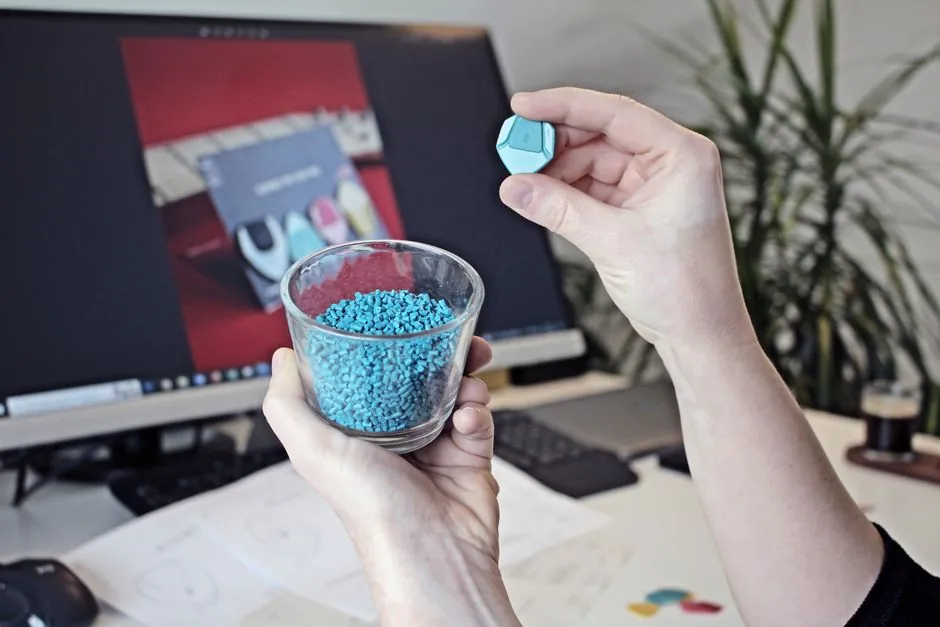
Pre-purchase screening starts with visual inspection of the pellets: uniform 2-4mm size, consistent color, smooth surface, and no dust, fiber, or foreign contamination; visible condensation or clumping flags moisture pickup, which converts to voids and hydrolysis on the screw [S4]. Three quick functional tests are widely used: a controlled-heat melt at 160-170°C where clean PP melts evenly without heavy smoking, a manual bend test where standard grades flex without immediate fracture, and a density float in water, where PP at roughly 0.9 g/cm³ should float and sinking pellets indicate filler loading or contamination [S4].
Lab-level verification on incoming lots is the harder gate. Lot-to-lot, the four properties that move the most and the fastest are MFI, ash content, gel/fiber count, and antioxidant package performance; ash content in particular is a direct contamination check and is the most common cause of a rejected automotive shipment [S1]. For critical applications, molecular weight distribution data should be requested, because a narrow-distribution PP grade delivers a more stable surface finish and tighter dimensional control than a broad-distribution grade at the same MFI [S1]. Buyers who do not run their own DSC or GPC should at minimum require the CoA to report MFI, density, tensile, and HDT against a published spec, and tie statistical process control limits to 10 or more historical lots so an off-spec shipment is visible against the supplier's own baseline [S1]. The same SPC logic shows up in mechanical assemblies, for instance in crossed-roller guide preload selection, where lot-coded release and a documented tolerance window are what make the spec enforceable.
Price Structure: Where the Real Per-Kilogram Cost Lives
A polypropylene resin price per kg is dominated by raw material cost at roughly 70-80% of delivered price, driven by propylene monomer linked to crude oil and ethane, with regional and seasonal swings on top [S4]. Processing and grade premiums add another 10-20%, with the spread between homopolymer and impact copolymer, plus specialty additive packages (UV stabilizers, clarifiers, flame retardants) and glass- or mineral-filled compounds, sitting in this layer [S4]. Logistics and packaging contribute 5-15%, and the difference between a bulk railcar and 25kg bagged shipment is usually larger than the bagged premium most buyers expect, especially on import lanes [S4].
Quotations that undercut the rest of the market by more than a few percent are a documented red flag, because the cost stack above has limited room to compress without changing the grade, the additive package, or the origin [S4]. A second pricing flag is the absence of both spot and annual contract options in the same response: a supplier that will only quote one or the other is either capacity-constrained or unwilling to commit, and that is a supply-security signal independent of price [S2]. On timing, PP typically follows propylene monomer with a 4-6 week lag, so a 2-3 month forward view of monomer is the working horizon for spot-purchase timing [S3].
Supplier Evaluation, Certifications, and Supply Security

A qualified PP supplier must show ISO 9001 process control, a CoA template that reports actual values against spec, and the relevant regulatory dossier for the end use: FDA or EU food contact for packaging, automotive OEM material specifications for tier-1 parts, REACH and RoHS for electrical and consumer goods [S3][S4]. For automotive under-hood work, the OEM standards referenced in current grade selection guides include GM GMW3011, VW PV 3900, Ford WSS-M4D815, and Toyota TSH5516G, and each is tied to specific heat, impact, and aging gates rather than generic PP type [S5].
Supply security is best handled with two or three qualified sources, not one, but the count should be held low enough that each supplier gets enough volume to stay responsive on technical service and pricing [S3]. Pilot-scale testing on the buyer's own equipment, before committing to full lot, is the single most common recommendation in current procurement guidance, because lab properties do not always translate to cycle time and dimensional stability on a production press [S3]. Regional sourcing can trim delivered cost by roughly $0.02-0.05/lb versus longer lanes, depending on distance and fuel, which on a 25-ton truckload is a non-trivial line item [S3]. Adjacent resin families follow the same pattern; for buyers cross-qualifying PVC for a similar application, a structured approach is documented in PVC resin sourcing from China by grade and cluster.
Failure Modes and Common Pitfalls in PP Procurement
The recurring failure modes in PP buying are well documented: MFI drift between lots that breaks cycle time, off-spec antioxidant package that shortens heat-aging life, contamination that shows up as gels or black specks, and moisture pickup during ocean transit that hydrolyzes the polymer and drops molecular weight [S1][S4]. Two procurement-level mistakes drive most of these: accepting a wide MFI range instead of pinning a tolerance, and treating the CoA as a formality rather than a contract document [S1][S3].
A third pitfall is grade substitution inside the same family: a random copolymer quoted against a homopolymer target can pass the datasheet check on MFI and tensile but fail on stress-crack resistance in the field, sometimes weeks after the part is in service [S1][S5]. The mitigation is mechanical: write the PP type, the MFI target with tolerance, the additive package, and the OEM or regulatory approval into the RFQ and the purchase order, and require the CoA to report each one against an actual number, not a pass/fail box [S2][S3][S4].
The most actionable next step for any PP buyer in the next procurement cycle is to lock the RFQ template to the field list above, run field screening on the first 2-3 incoming lots of any new supplier, and tie SPC limits to at least 10 historical lots before signing an annual contract [S1][S2][S3]. For plants also qualifying fillers or mineral additives, the linear guide discipline of lot-coded acceptance and tolerance windows is the same control pattern applied to a different component, and signals worth tracking through Q4 2026 are monomer price direction and any OEM updates to GMW3011, PV 3900, WSS-M4D815, and TSH5516G [S5].