
An absolute pressure transmitter references a sealed vacuum on the back of the sensing diaphragm, so its output includes atmospheric pressure plus the applied process pressure, and it is the only configuration that gives a stable reading independent of weather and altitude [S2][S3]. Choosing one is a sizing exercise before it is a brand exercise: you lock the calibrated URL (upper range limit), LRL (lower range limit), turndown, and reference behaviour first, then match the body, wetted material, and protection concept to the service.
This map applies to four common duties where absolute reference is non-negotiable: vacuum and low-absolute gas, sealed headspace on tanks, vapor pressure on hydrocarbon service, and barometric or altitude-corrected measurements on analyzer and HVAC skids. Industrial OEM datasheets cluster absolute units around 0–15 psia to 0–5,800 psig-equivalent absolute spans, with the Kobold SEN family extending down to vacuum and the Dylix BR family reaching 20,000–100,000 psi ranges for high-pressure intensifiers [S4].
Reference, Range, and Turndown: The Three Numbers That Drive Sizing
Absolute transmitters use a fixed vacuum reference behind the diaphragm, which makes the output insensitive to barometric drift and ambient venting, a behaviour that gauge units cannot replicate when the low-pressure side is exposed to weather or stack draft [S2]. For sizing, define the normal operating point, the maximum static (upset) pressure, the LRL and URL of the calibrated span, and the required turndown ratio, because most industrial absolute units specify 50:1 to 100:1 turndown with reference accuracy expressed as a percent of the calibrated span, not the URL [S1][S4].
A workable sizing rule: set the URL at 1.25× to 2× the maximum normal process pressure, set the LRL at or below the minimum expected absolute pressure, and confirm that the turndown (URL divided by span) does not starve the stated accuracy class. The industrial OEM platform data shows spans ranging from 0–50 psig equivalent up to 0–5,800 psig for compact absolute/gauge units, with high-precision platforms like Kobold KPG/KPK reaching 15,000 PSIG and ultra-high units such as the Dylix BR family spanning 20,000–100,000 PSI for specialised test and intensifier duty [S4].
Sensor Technology vs. Service Media: A Comparison of Four Realistic Options
A side-by-side read on the criteria that drive absolute-pressure service decisions:
Bonded foil strain gauges paired with a transmitter (such as the Intempco PT01 line up to 10,000 PSI) remain a low-cost OEM fit for machinery and panel builders where high-accuracy is not the primary driver [S4].
Use this comparison when shortlisting: if the duty is corrosive wet gas with elevated temperature, pick monosilicon with a remote seal in Hastelloy or tantalum wet-end. If the duty is clean refrigerant or vacuum, pick ceramic. If the duty is ultra-high pressure with sharp pressure spikes, pick thin-film metal. If the duty is a low-cost OEM gauge swap-in, bonded foil is acceptable, with a 0.5% to 1% accuracy class budgeted in the spec [S3][S4].
Wetted Materials, Overpressure, and Vacuum Survival
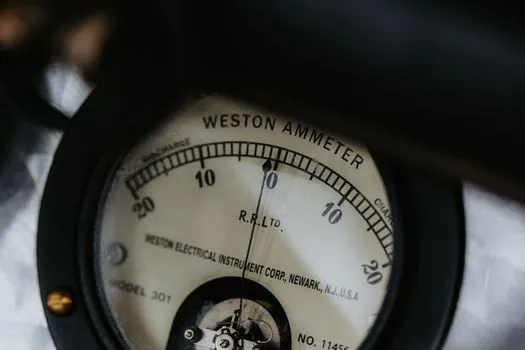
Wetted-parts compatibility routinely overrides accuracy on a project specification, and on absolute service the same statement becomes a hard failure criterion: an incorrect diaphragm alloy in chlorine, sour H2S, or steam will drift, pit, or fail in weeks [S1]. 316L stainless steel is the default, while Hastelloy C276, Monel 400, Tantalum, and PTFE-coated diaphragms are the upgrades for chloride pitting, sour service per NACE MR0175, hydrofluoric acid, and aggressive condensates respectively. Vacuum-rated diaphragms require an explicit vacuum-safe construction, since elastomer O-rings and certain adhesives can outgas or collapse below 0.1 psia [S2][S4].
Overpressure rating, often stated as 1.5× to 4× URL depending on the platform, must cover both normal surge and water-hammer events. The Kobold KPA platform highlights a no-weld, no-O-ring seal design for cycle-heavy pump and compressor duty, which removes two common leak paths on absolute head-pressure loops [S4]. On tank-vapor and distillation service, a remote seal with capillary fill fluid (silicone, inert halocarbon, or food-grade oil) is the standard way to keep the absolute cell at ambient temperature while the process runs at 200°C to 400°C, and the fill-fluid selection must match the process to avoid diffusion and span shift.
Hazardous-Area Certification and Protection Concept
Specifying an absolute pressure transmitter in Zone 0, Zone 1, or Division 1 service means the device carries two responsibilities, process feedback and a layer of protection against ignition, so area classification must drive the protection concept rather than the other way around [S5]. ATEX 2014/34/EU covers Europe, IECEx is the international scheme, FM certifies in North America, CSA covers Canada, and UKCA applies in Great Britain, and these marks are not interchangeable, so a multi-region project should list each required mark on the data sheet [S5].
The protection concept trade-off is concrete: intrinsic safety (Ex ia / Ex ib) limits loop energy below ignition thresholds and allows live calibration, but it requires a barrier or galvanic isolator in the safe area; explosion-proof (Ex d) contains ignition inside a robust housing but adds threaded flame paths, conduit seals, and hot-work permits; non-incendive (Ex nA) trims that overhead for Zone 2 / Division 2 but only works when the transmitter, wiring, and power source are designed as one loop [S5]. Temperature class T1 through T6 sets the maximum surface temperature of the device and must stay below the auto-ignition point of the gas group present, with Group IIC (hydrogen, acetylene) carrying the strictest design requirements [S5].
Signal Output, Protocols, and SIS Integration

Absolute transmitters in process plants output 4–20 mA with HART for the majority of installations, with FOUNDATION Fieldbus and PROFIBUS PA reserved for digital-only plants, and these protocols are not interchangeable because HART rides an FSK signal on a 4–20 mA analog loop while Foundation Fieldbus and PROFIBUS PA are fully digital [S1]. On OEM skids and test stands, 0–10 VDC and 0–5 VDC outputs remain common where a PLC analog input is local and short cable runs make transmitter-grade conditioning unnecessary [S4].
For transmitters in Safety Instrumented Functions, define SIL capability, redundancy, and proof-test interval at project kickoff rather than at commissioning, because retrofitting SIL into a base specification typically costs more than specifying it on day one [S5]. A standard 4–20 mA absolute transmitter with HART is a good fit for non-SIS level, flow, and pressure indication, while a redundant or dual-certificated HART + Foundation Fieldbus device is the right call for a high-consequence SIS loop.
Failure Modes, Calibration Drift, and Total Probable Error
Absolute transmitters fail in three characteristic ways: reference vacuum leak (output rises toward barometric), diaphragm fatigue on cyclic service (zero shifts), and span shift from temperature cycling (gain drifts), and each has a different signature in the control room [S1][S4]. Reference leaks typically present as a slow upward drift to atmospheric plus offset, which is a different failure mode from a gauge transmitter that vents to atmosphere through a clogged port.
Total probable error combines reference accuracy, static pressure effect, thermal effect, and stability over the calibration cycle, and on absolute service the static pressure effect is often negligible because the reference is sealed, which is one of the engineering reasons absolute units are preferred over gauge for sealed headspace and vapor-pressure measurement [S2].
Sourcing Standards, Common Footprints, and a Spec-First Shortlist

Common OEM footprints the spec writer will see in 2026 include the Dylix GX (0–15,000 PSIG), Dylix GXR (0–20,000 PSIG), Dylix BR (20,000–100,000 PSI), Kobold PAS (-14.5 to 8,700 PSIG), Kobold SEN (vacuum to 10,000 PSIG), Kobold KPA (0–50 to 1,000 PSIG), Kobold PDA (vacuum to 5,800 PSIG), Kobold KPG/KPK (up to 15,000 PSIG), and Intempco PT01 (0–10,000 PSI) [S4]. These are not all absolute devices, but the spec can usually select an absolute cell option within the same family, with NEMA 4X or IP66/67 ingress and HART as the most common add-on options.
For a project that pairs absolute pressure measurement with chemical or hydrocarbon service, see the spec-first guide for absolute pressure transmitters in chemical processing. For a similar spec walk on the differential cousin, the differential pressure transmitter sizing and selection guide and the DP transmitter supplier map covering 4 sensor families and 6 selection rules read as a matched pair, since the same wetted-material, hazardous-area, and turndown logic applies. The encyclopedia entry on absolute pressure transmitters is a useful reference for the vacuum-reference definition, while the pressure transmitter and differential pressure transmitter pages cover the broader industrial equipment taxonomy.
For a spec writer, the practical closing checklist is short: confirm absolute reference on the data sheet (not sealed gauge); lock URL, LRL, span, and turndown against the process data sheet; pick the wetted material against the worst-case fluid composition; pick the protection concept against the area classification; and pick the signal protocol against the control-system architecture, with SIL capability, redundancy, and proof-test interval written in if the device lands in an SIS loop [S1][S4][S5].