Automotive AM material choice is now a process-coupled decision, not a catalogue pick: ASTM International groups the technology into seven process families (VAT, PBF, ME, MJ, BJ, SL, DED), and end-part properties are set by alloy chemistry, powder design and machine parameters acting together [S1].
For production-intent metal work, laser powder bed fusion (L-PBF) and binder jetting are the two realistic paths; for polymer jigs, fixtures and prototype interiors, material extrusion (FDM/FFF) with ABS, Nylon (PA12/PA11) and Polypropylene is the default stack [S1][S7]. Specifying without that process-material pairing in writing is the most common cause of failed PPAP in automotive AM programs.
Process families and the alloy families each one unlocks
L-PBF is, functionally, a stack of micro-welds, so laser power, spot size and gas flow define density and microstructure as much as the alloy chemistry does; the material is effectively made inside the build chamber [S2]. That is why OEM-supplier co-development of powder design is treated as a hard requirement for serial production, not a soft suggestion [S2].
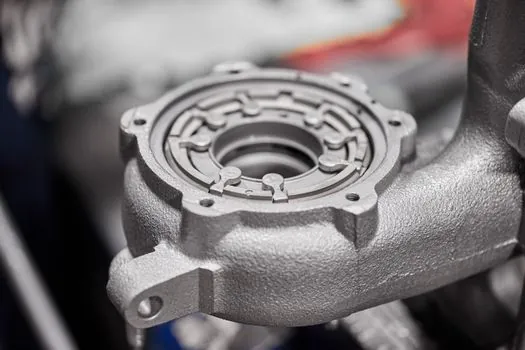
Commercial automotive metal PBF libraries now cover aluminium alloys, nickel alloys, cobalt-chrome, maraging steel (1.2709 family), stainless steels (316L, 17-4PH), refractory alloys, titanium (Ti6Al4V), pure copper and case-hardening steels, with copper seeing renewed interest for induction coil and heat-exchanger bobbins [S3]. For motorsport and EV thermal hardware, L-PBF aluminium and binder-jetted stainless are the two workhorse routes that consistently hit PPAP-level mechanical data [S3].
Polymer stacks: where each resin actually fits
Polymers in automotive AM split into three buckets by function. ABS is the workhorse for interior visual prototypes and styling mock-ups because it accepts paint and post-processing like an injection-moulded part [S5]. Nylon (PA12 / PA11) via powder-bed fusion or SLS delivers the best mechanical-to-cost ratio for functional prototypes and low-volume brackets, while Polypropylene via material extrusion is the lightweight, corrosion-resistant default for one-off jigs and ergonomic check fixtures [S7].
For factory-floor tooling, material extrusion of glass-filled Nylon and PP replaces machined aluminium fixtures, cutting lead time from weeks to days and removing dedicated tooling stock [S6]. If the part sees sustained temperatures above 100 °C, continuous-load brackets, or any under-hood service, drop straight to a metal PBF alloy; polymer FDM parts are not a substitute there [S5][S6].
Decision matrix: matching use case to material-process route
Run a four-criteria filter (mechanical load, thermal exposure, lot size, surface/finish class) before shortlisting any AM route. The matrix most automotive engineering teams use looks like this: (1) high mechanical + high thermal + serial volume, choose L-PBF aluminium or maraging steel; (2) complex conformal cooling in injection tools, choose L-PBF copper or maraging steel for the insert; (3) medium-load functional parts at 100-10,000 off, choose binder-jetted stainless or sintered PA12; (4) prototype visual / ergonomic parts under 100 off, choose FDM ABS or PP [S2][S3][S5][S7].
The numbers from documented automotive AM programmes back this up: 35+ function-improvement projects and 30+ OEM collaborations, with a reported 62% mass reduction on an L-PBF aluminium accelerator pedal versus the conventional steel reference, are the kind of result that drives the alloy choice rather than the catalogue [S3].
Qualification gates that drive material lock-in
Heat treatment cannot rescue a poor feedstock or process decision; in L-PBF the powder you load and the parameters you run set a ceiling on density, microstructure and fatigue that downstream thermal cycles can only trim [S2]. That is why powder design considerations now extend to alloy volatiles, reactivity, handling and storage, not just particle size distribution [S2].
Material qualification (MQ) and part qualification (PQ) data is generated up front and reused across parts, so locking the alloy, powder spec and machine parameter envelope early pays back across the next ten part numbers. A second consequence: changing alloy supplier mid-program is treated as a re-qualification event, not a procurement swap, because powder-design choices couple the alloy to the as-built microstructure [S2]. For deeper background on how advanced metal powders, including copper and aluminium grades, are classed, the advanced material overview is the right entry point.
Failure modes and limits to engineer around
Polymer AM parts absorb moisture and creep under sustained load, so FDM ABS and PP brackets need explicit humidity and load caveats on the drawing; Nylon SLS parts behave better but still need gate location thinking like injection moulding [S5]. Metal L-PBF parts carry anisotropy in fatigue and ductility tied to build direction, so critical load paths must be specified with build-orientation rules, not just material grade [S1][S2].
Where the application needs magnetic, chemical or surface-finish behaviour that the AM alloy cannot deliver as-built, secondary operations (HIP, heat treatment, machining, plating) re-enter the cost model and can erase the AM lead-time advantage if scoped late. For finishing routes from plating to powder-coat on AM substrates, the finishing material reference summarises compatibility by alloy family. For process engineers also weighing chemical compatibility, chemical material covers the polymer-side exposure map that ABS, PA12 and PP each handle differently.
Sourcing signals to track over the next planning cycle
Watch two concrete data points when qualifying an AM material for the next automotive programme: the OEM-specific MQ/PQ data package (alloy, powder design, parameter envelope, heat treatment) and the published list of qualified machines, since L-PBF results are machine-sensitive in a way that mill-certified bar stock never is [S2]. Supplier-published case data showing weight reduction percentages and serial part counts is a useful proxy for production maturity [S3].
A practical next step is to pull one current BOM, flag every part under 10 kg that is machined or cast, and run each through the four-criteria matrix above; in most plants that exercise returns 5-15% of parts as AM-eligible on the first pass, with polymer jigs and aluminium brackets leading the conversion queue. A useful adjacent reference is this mold temperature controller sizing map, which covers the thermal-control side of the same tooling cell where many AM conformal-cooling inserts now get specified.