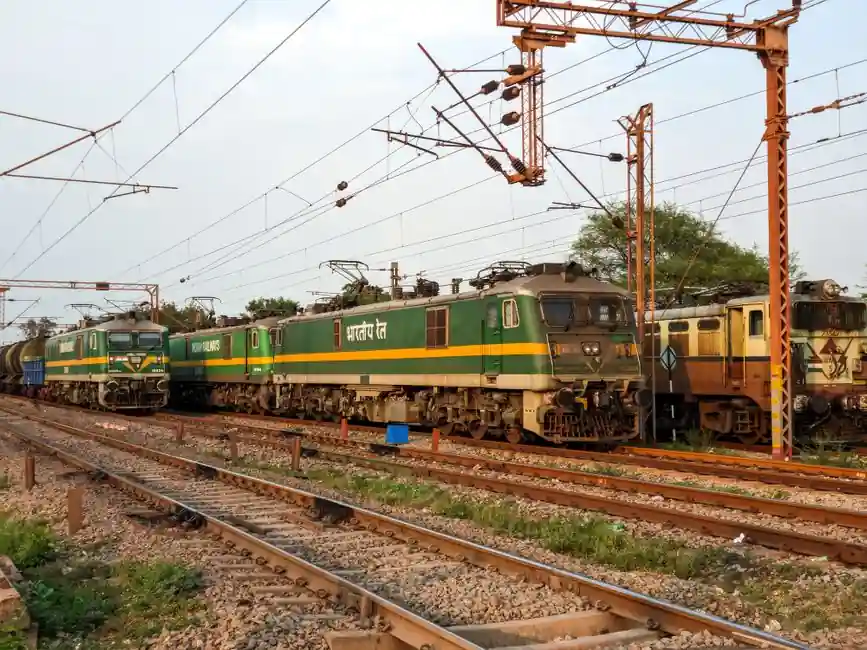
The Material Powder Industries Federation (MPIF) maintains the materials standards book that rail-tier PM parts shops and OEM buyers actually quote on drawings, and that document is the de facto reference for tensile, density and fatigue data on common PM grades [S3].
Selection for a rail part comes down to four engineering axes: load and contact stress, temperature window, corrosion environment, and dimensional tolerance; coating compatibility (zinc-rich primers, etc.) sits on top of all four and is decided jointly with the rolling-stock paint line [S6]. Any candidate metal powder must clear MPIF test-bar data and a real wheel- or axle-disc dynamometer run before it replaces a wrought baseline.
Why PM Fits Rail: Wear, Lubrication, and Net-Shape Geometry
Press-and-sinter delivers near-net-shape parts with minimal scrap, which matters for rail SKUs that are mid-volume (a few thousand to tens of thousands per year) and geometrically complex, the same logic that pushes iron-copper, copper, and bronze PM into bearing and bushing service [S5]. Bronze and high-graphite iron impregnated with oil remain the conventional self-lubricating PM bearing grades for slow-speed, high-load pivots on rolling stock and infrastructure, where grease access is poor [S3].
Compared with wrought or cast equivalents, PM components can integrate lubrication reservoirs, controlled porosity, and alloyed hard phases in a single compaction, with secondary machining limited to ID/OD finish, keyways, or oil holes [S2]. The rail industry's interest in PM for restoration and repair of worn profiles, rather than only new-build parts, is a parallel track documented in academic reviews of metal-ceramic and PM applications on railway equipment [S1].
Iron-Copper-Carbon Baseline: The Workhorse Grades for Rail Sleeves and Bushings
Admixed iron-copper and iron-copper-carbon compositions are the default for rail structural PM parts because copper strengthens ferrite and sinter-hardens the matrix without the cost of nickel.
Microalloying with niobium and vanadium at 0.05 to 0.20 w/o refines austenite grain size through precipitate pinning and improves both strength and ductility, useful when the sleeve has to survive a press-fit into a steel housing [S2]. Sinter-hardenable variants are then cooled directly from the sintering temperature to deliver a martensitic/bainitic surface without a separate quench line, which is a major cost lever for rail-tier PM shops that already run a mesh-belt sintering furnace [S3]. For corrosion-side protection, zinc-rich inorganic or organic zinc silicate primers are applied at the rolling-stock paint line, not in the PM shop, and the choice of substrate PM grade has to be compatible with that primer chemistry [S6].
Stainless and High-Chromium PM: When Corrosion or Heat Outruns Plain Iron
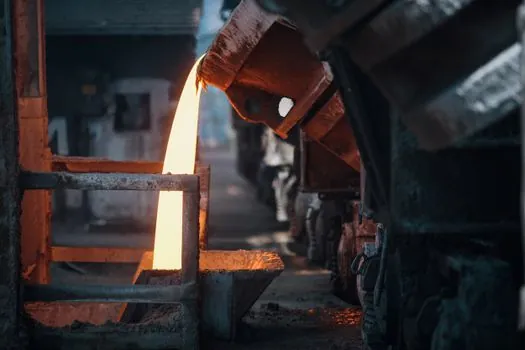
When the service environment moves into tunnel wash zones, coastal corridors, or underfloor equipment exposed to de-icing salt, pre-alloyed stainless PM grades are the default. The 400 series (409L, 410L, 430L, 434L) is pre-alloyed with chromium for wear and moderate corrosion, while the 300 series (303L, 304L, 316L) is the corrosion-resistant end of the catalog and dominates brackets, sensor housings, and interior structural hardware [S3][S4].
Tribaloy and Sinter-Hardened Grades: Wheel, Brake, and Wear Surfaces
For wheel tread repair, brake interface hardware, and high-temperature wear zones, Tribaloy T-400 and T-800 cobalt-based hardfacing powders are a known PM route, with powder feed typically applied via plasma transfer arc (PTA), laser cladding, or HVOF on rail wheels and brake discs [S4]. Hardfacing overlays are the rail branch of powder new material surfacing, distinct from press-and-sinter structural parts, and the acceptance bar is wear rate, thermal-fatigue cracking resistance, and bond integrity with the parent wheel steel [S4].
Sinter-hardened PM steels sit in the middle: harder than an as-sintered iron-copper part, tougher than a full hardfacing overlay, and they can be oil-impregnated for self-lubrication when the wear zone also needs a controlled lubricating film [S3]. For applications with sliding contact under boundary lubrication, sinter-hardened iron-copper-carbon with admixed graphite is the practical compromise that avoids a separate heat-treat line.
Pre-Alloy vs. Admix: Why the Distinction Matters on a Rail Drawing
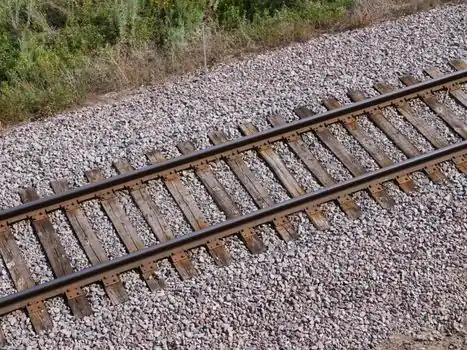
Admix powders are blends of elemental iron, copper, nickel, and graphite where each particle remains a single element, and the alloy forms during sintering. Pre-alloy powders have every particle at the same target composition because alloying (e.g. Ni, Mo) was fused in during atomization, typically water atomization for press-and-sinter grades [S2][S4]. The rail implication is dimensional control: pre-alloy powder gives tighter post-sinter dimensional scatter, which matters for parts that mate to precision-machined axle journals or brake caliper bores.
Admix compositions are cheaper and more flexible for small-batch rail restoration and legacy part replication, and a water-atomized iron-copper-carbon blend is the usual starting point [S4]. The trade-off is that PM "stainless" is not really an admix blend in the same sense, since chromium is pre-alloyed to keep corrosion resistance consistent from particle to particle [S5].
Additive Manufacturing Branch: SLM and DED for Rail Spare Parts
Selective laser melting (SLM) and directed energy deposition (DED) of metal powder have moved into a niche but real role for rail: low-volume spare parts, obsolete brackets, and geometry-optimized interior fittings that are not economical to tool. The 2025 SLM selection guidance for U.S. manufacturers and OEMs is explicit that powder morphology, flow rate, and oxygen control drive part quality more than the alloy name on the label [S9].
For additive rail parts, the most commonly specified powder families are 316L stainless, 17-4 PH, and tool-steel grades such as H13, with Hastelloy C276 reserved for the most corrosive tunnels and underfloor equipment [S4][S7]. The supply chain question is still a major filter, since rail qualification cycles run into years, and a domestic or near-shore atomization source is usually preferred over long import lead times [S9].
Standards, Testing, and Qualification
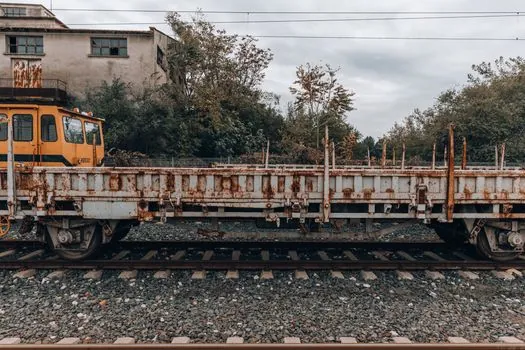
Any PM grade cited on a rail drawing should be backed by an MPIF material standard, with mechanical, chemical, and testing data traceable to that standard [S3][S8]. The practical test sequence is test bars (MPIF standard 10/15/30 geometry), density by Archimedes, hardness, fatigue on rotating-bending or axial rigs, and a wear test (block-on-ring or pin-on-disc) representative of the in-service contact pair, before any dynamometer test on the rail vehicle itself [S2][S3].
For coating compatibility, the primer line (zinc-rich inorganic or organic zinc silicate) is the gate, and the PM substrate has to survive that cure cycle and the subsequent topcoat schedule without hydrogen embrittlement or galvanic incompatibility [S6]. Comparable marine and medical PM selection logic is laid out in spec maps for offshore and medical-device parts, and the same alloy-by-environment grid is starting to be applied to rail: see this marine engineering metal powder spec map and this medical-device metal powder selection guide for the parallel decision logic.
Decision Grid: PM Grade vs. Rail Application
The four most relevant rail PM families, with the criteria engineers actually balance on a drawing, are: iron-copper-carbon (admixed, sinter-hardenable) for structural sleeves and bushings, where cost and net-shape are the drivers; 300/400 series stainless (pre-alloyed) for corrosion and moderate-wear brackets; Tribaloy T-400/T-800 cobalt hardfacing powders for wheel-tread and brake-disc overlays; and 316L / 17-4 PH SLM-grade powders for low-volume additive spare parts. Decision criteria: load and contact stress, temperature window (-161 to +870 °C stainless range), corrosion environment (tunnel wash, de-icing salt, coastal), and dimensional tolerance vs. wrought baseline [S2][S3][S4][S5].
Rule of thumb for rail buyers: specify the MPIF grade designation and density range, not just a generic "PM iron" or "PM stainless" callout, and require the supplier to ship test-bar data with the production lot [S3][S8]. Track the next qualification cycle for sinter-hardened iron-copper-carbon at the wheel/axle interface and for 17-4 PH SLM brackets on cab interior structures, both of which are moving from prototype into small-series service across European and North American rail rebuild programs.
Component reference pages worth checking: metal powder, metal material, and metal curtain wall panel.
For related coverage, see Lab access control selection: credentials, zones, and audit logic for BSL-rated facilities.