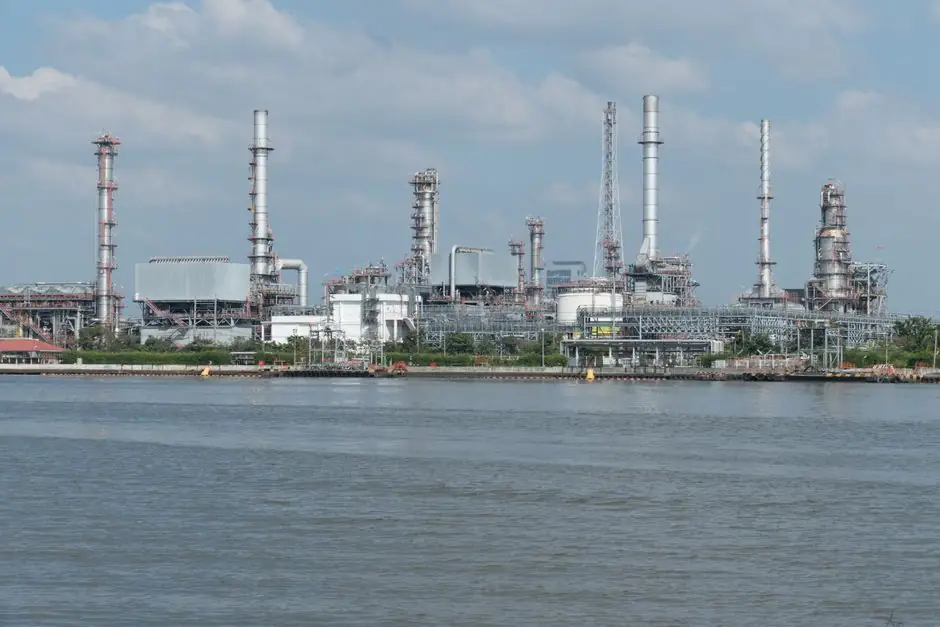
Common alloy families in oil and gas additive manufacturing map onto specific processes: Inconel 625/718 and 316L stainless are routinely processed by Powder Bed Fusion (PBF) for high-resolution parts, while super duplex 2507 and duplex 2205 stainless run through Wire Arc Additive Manufacturing (WAAM) for large subsea and structural builds [S3][S5].
Material choice is constrained less by printer availability than by the operating envelope: H₂S-containing sour service, subsea pressure, chloride-rich seawater, and temperatures spanning cryogenic LNG through downhole thermal service rule out alloys that pass the printability test but fail the qualification test [S1][S4].
Alloy families actually specified for upstream and midstream parts
PBF nickel alloys (Inconel 625, Inconel 718) are the workhorses for small, high-precision flow and burner components where creep strength and chloride pitting resistance matter, with 316L stainless covering less aggressive geometry [S3]. Super duplex 2507 is the default for subsea and sour service WAAM builds because of its PREN typically above 40, while duplex 2205 fills the manifolds and piping range where slightly lower alloy cost is acceptable and the strength-to-weight ratio still beats austenitic 316L [S5].
Material breadth in the academic and OEM literature spans polymers (PLA, PCL, starch, cellulose), ceramics (Al2O3, ZrO2-based), and metal composites, but only a subset of these, mostly the nickel and duplex stainless families, is actually run in field-deployed oil and gas parts [S1][S4]. Within powder bed fusion, the chemical composition of composite powders controls the as-built density, defect rate, and downstream fatigue behaviour, which is why chemistry and powder traceability dominate the qualification conversation [S4].
Process-to-alloy matching: PBF, DED, WAAM, FFF
PBF delivers fine surface finish and intricate geometry but is limited in build envelope, so it is the natural choice for valves, complex impeller blades, and heat-exchanger cores that fit inside a 400-500 mm envelope [S3][S5]. Directed Energy Deposition (DED) extends the build volume and supports on-part repair of eroded or corroded surfaces, at the cost of coarser surface finish, which is why it appears in the rebuild of pump housings and impeller tips rather than in finished flow-path parts [S2][S3].
WAAM uses an electric arc to melt wire feedstock, giving deposition rates an order of magnitude higher than PBF, and is the only metal AM route routinely specified for full-scale flanges, pressure-vessel shells, and large subsea fittings [S3][S5]. Fused Filament Fabrication (FFF) is restricted to polymer jigs, fixtures, and non-pressure-bound prototypes, since no oil and gas pressure-boundary code path accepts as-printed FFF parts without extensive qualification [S3].
Sour service, NACE MR0175, and the qualification wall

Sour-service qualification is the gating step, not printability. Alloys for H₂S-containing service must satisfy NACE MR0175 / ISO 15156 metallurgical limits, with hardness, microstructure, and chemistry controls applying to the as-deposited and post-processed condition, not just the wrought reference [S1][S4]. NACE MR0175 hardness limits are typically capped at 22 HRC for most carbon and low-alloy steels in sour service, with exceptions for specific alloy families, which is why as-built WAAM carbon-steel deposits often require controlled cooling and PWHT to land inside the cap.
Pressure-boundary components fall under ASME Boiler and Pressure Vessel Code Section VIII for the US market, with European operators referencing EN 13445 or PD 5500. DNV guidance frames AM parts as a qualification case-by-case exercise: each process, alloy, geometry, and post-processing route needs its own evidence package, because there is no generic "approved AM material" list for offshore service [S2]. The practical effect is that the same Inconel 718 build that passes an aerospace airworthiness envelope can still be rejected for a sour downhole application simply because the qualification envelope is narrower [S1][S4].
Comparison: process and alloy against 4 decision criteria
A four-axis comparison clarifies the trade-off for a specifier choosing between PBF-Inconel 625, PBF-316L, WAAM-duplex 2205, and WAAM-super duplex 2507: [S5]
1. Build envelope: PBF-Inconel 625 and PBF-316L are limited to roughly 400-500 mm; WAAM-duplex 2205 and WAAM-super duplex 2507 scale to multi-metre pressure-vessel shells and subsea manifolds [S3][S5].
2. Sour service: PBF-Inconel 625 is the cleanest path under NACE MR0175; PBF-316L is acceptable in less severe sour; WAAM-duplex 2205 and WAAM-super duplex 2507 are workable but require weld-procedure and hardness-cap evidence per deposit [S1][S4].
3. Corrosion in seawater / subsea: PBF-Inconel 625 wins on chloride pitting; WAAM-super duplex 2507 (PREN > 40) is the structural alternative at large scale; PBF-316L is borderline for hot, chloride-rich subsea exposure [S3][S5].
4. Lead time vs cost: PBF is slower per kg but cheaper per finished part for small components; WAAM is fast for large parts but adds post-machining, NDE, and PWHT steps that erode the headline deposition-rate advantage [S3][S5].
Where additive manufacturing actually displaces castings and forgings
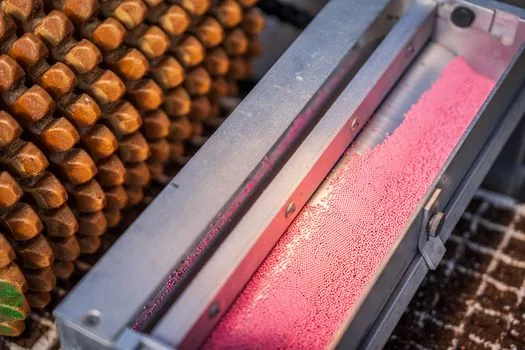
Legacy spare parts with multi-month cast or forge lead times are the highest-value AM target, since digital inventory can replace physical stock for low-frequency, high-consequence items like specific valve bodies and manifold sections [S3][S5]. Lead-time compression of roughly 90% and inventory reductions around 50% are quoted as typical, with the World Economic Forum estimating potential industry-wide savings up to $30 billion in cost and time once the supply-chain shift matures [S3].
Topology-optimized impellers, heat-exchanger cores with conformal internal channels, and subsea structural fittings that cannot be cast to net shape are the second tier, where AM unlocks geometry that simply is not producible by subtractive routes [S2][S3][S5]. On-site repair of eroded or corroded surfaces via DED, building up new layers of material on damaged areas, is a third application that is more about extending asset life than about replacing OEM parts [S2]. The downhole-tools segment, including wear-resistant alloy internals for flow control and logging tools, rounds out the live applications, with both PBF and WAAM routes documented [S3][S5].
Failure modes and constraints you inherit by choosing AM
Anisotropy is the first: as-built AM metals show directional mechanical properties along the build axis, so coupons oriented vertically and horizontally can differ by 10-20% in fatigue life without proper scan-strategy and HIP treatment [S1][S4]. Defect populations, lack of fusion, keyhole porosity, and residual stress, are the second; they only show up in CT scanning or in HIP-and-test cycles, which is why a non-AM QA regime is not portable to AM parts without modification [S4].
Post-processing burden is real: WAAM pressure-vessel shells typically need rough machining to net shape, PWHT for residual stress and hardness control, plus volumetric NDE that meets the same acceptance criteria as a forged equivalent, which is where most of the cycle-time savings erode [S3][S5]. Standards, supply chains, and traceability are flagged across the literature as the open problems, with no universal material-and-process approval list and a clear need for digital thread documentation that ties powder batch to build file to finished serial number [S1][S4]. Powder handling under ATEX / IEC 60079-classified zones is a separate constraint: reactive metal powders (titanium, aluminium alloys) demand inert-chamber printing and grounded powder-handling, which adds facility cost that has to be amortised across the part volume [S1].
Selection rule of thumb a process engineer can defend
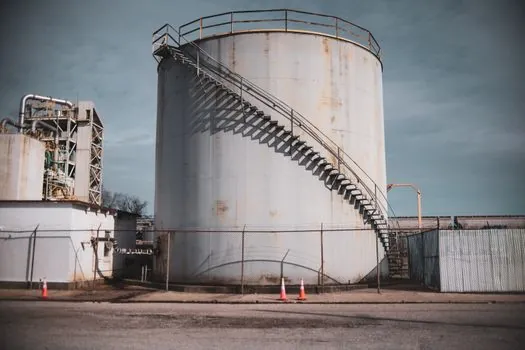
For sour-service subsea and pressure-boundary parts, default to PBF-Inconel 625 when the geometry fits inside a 400-500 mm envelope, and to WAAM-duplex 2205 or WAAM-super duplex 2507 when the part is larger than the PBF envelope, then qualify the chosen process-alloy pair against NACE MR0175 and the relevant ASME or EN pressure code before any production release [S1][S2][S4][S5].
For non-sour, non-pressure-boundary tooling, jigs, and prototypes, FFF polymer and PBF-316L cover the bulk of the demand without the cost of a full sour-service qualification package [S3]. Across all routes, the actual qualification envelope is narrower than the published printability envelope, so a process-alloy pair that prints cleanly is not the same as one that an operator can sign off for service.
Trackable signals for the next planning cycle: revision of NACE MR0175 / ISO 15156 to formally admit specific AM microstructures (no confirmed date in current research), DNV and class society publication of new AM-specific qualification guidelines, and OEM disclosures of powder-batch-to-serial-number traceability schemes for WAAM pressure-vessel builds [S2][S4].
For the relevant spec sheets and selection criteria, see additive manufacturing material, oil seal, and construction machinery and equipment.
See also our earlier report, Building stone selection for cold storage warehouses.