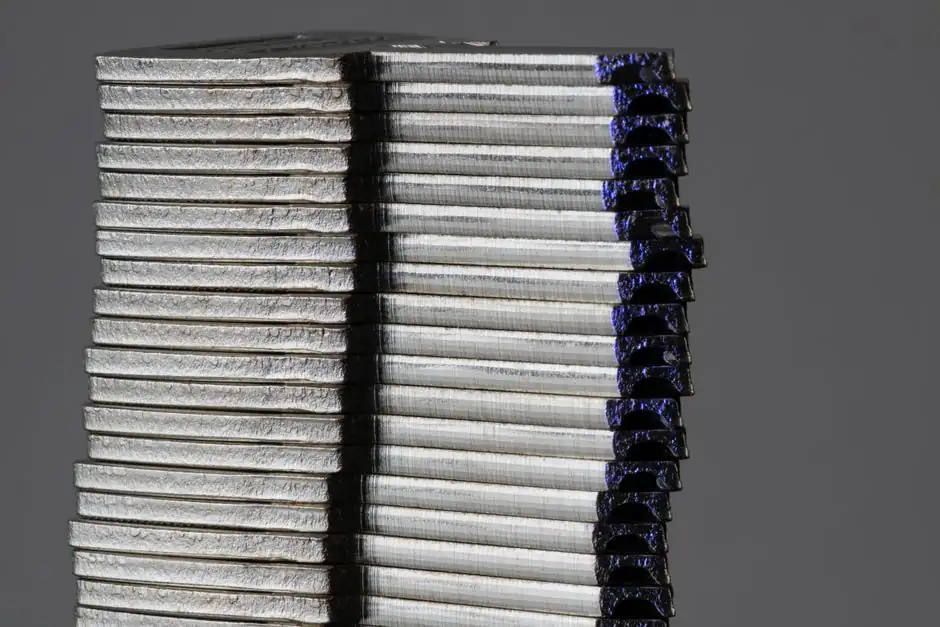
Additive manufacturing material supply in 2026 is structured around five core feedstock families (polymers, metals, ceramics, composites, and sand/casting media), each tied to a different process window and qualification regime [S3].
Procurement decisions on which additive manufacturing material supplier to qualify are no longer driven by printer count, but by documented material traceability, machine-specific process windows, and tolerance evidence on parts already in service [S1][S2].
The five material families that define every AM sourcing decision
Polymers, metals, ceramics, composites, and sand are the five commercial classes specifiers must choose from before any printer brand enters the discussion [S3]. Polymer powder bed fusion grades such as PA12, PA12GB, PA11, PP, TPU and TPA dominate HP Multi Jet Fusion quotes, while continuous-fiber reinforced filaments (Onyx, Onyx FR, Onyx FR A, Onyx ESD, plus carbon fiber, Kevlar, and HSHT fiberglass variants) define the Markforged FFF and CFR envelopes [S1]. On the metal side, suppliers such as Kennametal run powder-based binder jet and DMLS production of wear- and high-temperature alloys, and Colibrium Additive (the GE Aerospace business) operates simultaneously as a large captive user and a powder/machine supplier [S4][S5].
Sand and ceramic-bound binder-jetted media remain a separate procurement lane, used primarily for foundry patterns and high-temperature technical ceramics, and are not interchangeable with polymer or metal powder systems [S3].
Process tolerance: the data that actually separates suppliers
Published part tolerance is the most defensible number a sourcing engineer can demand on a print quote, and the 2026 dataset is concrete [S1]. Prototype HP Multi Jet Fusion on PA12/PA12GB/PA11/PP holds ±0.76 mm (±0.030 in) in X-Y and Z, with a Cpk of 1.00 referenced at 0-150 mm (6 in) nominal and 0.5% of total size above 150 mm; surface roughness lands in the 7-14 µm Ra band [S1]. Production-grade MJF on the same polyamide family tightens to ±0.38 mm (±0.015 in) on the same Cpk=1.00 envelope, with the >150 mm slope reduced to 0.25% [S1].
Prototype Markforged FFF base materials (Onyx, Onyx FR, Onyx FR A, Onyx ESD) are quoted at the greater of ±0.25 mm or 0.25% in X-Y and the greater of ±0.10 mm or 0.15% in Z, with 5-28 µm Ra; the Markforged CFR composite set inherits the same tolerance stack while gaining continuous fiber reinforcement [S1]. Stratasys FDM lines round out the polymer envelope with ABS, ABS-ESD7 and related engineering grades that have their own per-process tolerance tables on the same reference page [S1].
Who AM material supply is for, and where it falls short
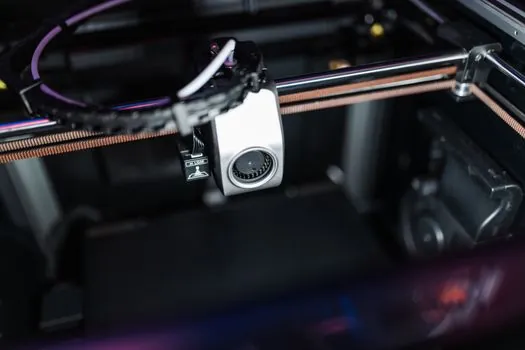
AM material supply is for buyers who need low-volume, geometrically complex parts, mass-customised parts, or parts that consolidate assemblies and would otherwise require multi-axis CNC, EDM or investment casting [S1][S2]. It is not a substitute for high-volume forming or stamping, and polymer MJF tolerances near ±0.38 mm cannot replace a finished metal sealing surface on a pressure-bound assembly.
Qualification gates buyers should expect from any advanced material supplier in 2026: documented powder lot traceability (heat number, particle size distribution, oxygen/nitrogen pickup for reactive alloys), a per-machine Cpk statement, and a published surface roughness window on the actual material the part will be built in, not a generic brochure figure [S1]. A quote that ships only a generic "±0.1 mm" with no Cpk and no material-specific roughness Ra range is not comparable across suppliers.
Comparing the leading process families on four decision criteria
HP MJF vs Markforged FFF vs Markforged CFR vs DMLS/SLS line up cleanly against four selection criteria taken from the 2026 reference dataset [S1]. On dimensional tolerance, production MJF holds ±0.38 mm, Markforged FFF and CFR hold ±0.25 mm or 0.25% (whichever is greater) in X-Y, and DMLS/SLS land in a similar metal-powder envelope tied to laser spot and layer thickness. On material coverage, MJF is a polymer story (PA12, PA11, PP, TPU, TPA), Markforged adds continuous fiber reinforcement for structural parts, and DMLS covers stainless, tool steel, titanium, Inconel and other alloys via Kennametal and EOS-class suppliers [S1][S5][S6].
On production volume, MJF is the established bridge from prototype to short-run production, with documented runs under 1,000 units; Markforged CFR is favored for low-volume structural parts needing fiber reinforcement; DMLS is the default for qualified metal parts where a casting or forging would be the conventional alternative [S1]. On lead time and post-processing, MJF parts require only bead blasting; DMLS parts typically need stress relief, HIP, and machining on critical interfaces, and that downstream chain, not the printer cycle time, often sets the actual delivery date [S1].
Real use cases and recent commercial milestones (2025-2026)
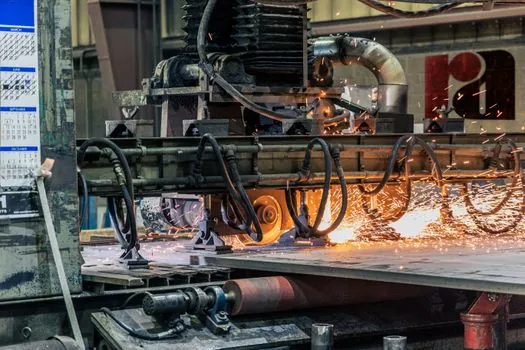
GE Additive (now operating as Colibrium Additive within GE Aerospace) remains one of the few suppliers that is simultaneously a heavy captive user and an external powder/machine vendor [S4]. Arkema's High Performance Polymers unit sells into powder bed fusion and filament-grade 3D-printing applications, signalling that material suppliers are now organising product lines by AM process rather than by legacy polymer family [S6]. Service-bureau capacity is anchored by 3D Systems, Stratasys, Materialise, EOS GmbH, Desktop Metal, Proto Labs and newer entrants such as Xact Metal (affordable metal powder bed fusion) and Uptive (online quoting across FDM, MJF, SLS, DMLS, SLA) [S1][S2][S7][S8].
Public-sector and defence adoption is also accelerating. The U.S. Navy issued Project Peculiar Document PPD 802-8436658 in 2026 to streamline substitution of legacy cast and wrought parts with additively manufactured metallic components on submarine construction, maintenance and combat-ready repair, which materially expands the qualified-vendor list for marine-grade metal powder [S3]. 3D Systems and Savannah River National Laboratory formalised a CRADA on 1 Sep 2026 covering materials development, AI/ML process optimisation, and scalable production for nuclear energy and national security missions [S3].
Limitations, sourcing signals and what to watch next
The dominant constraints in 2026 are not printer count, but powder lot consistency for reactive alloys, published per-material Cpk data, and whether a supplier can hold a tolerance on a part sized above the 150 mm breakpoint where percentage-based tolerance bands start to dominate [S1]. Buyers who only see a generic ±0.1 mm or ±0.2 mm number without a Cpk statement or a >150 mm slope are comparing brochure values, not production reality.
Trackable signals into Q4 2026: IMTS 2026's Additive Sector in the South Building, where six AM categories will be shown together for the first time on the same floor, and the rollout of the Navy PPD 802-8436658 framework into commercial marine and energy specifications beyond submarines [S3]. Suppliers being added to those approved-vendor lists, and powder suppliers publishing machine-specific Cpk tables rather than generic tolerance rows, are the most concrete near-term indicators of where chemical material and advanced material capacity is actually being qualified.