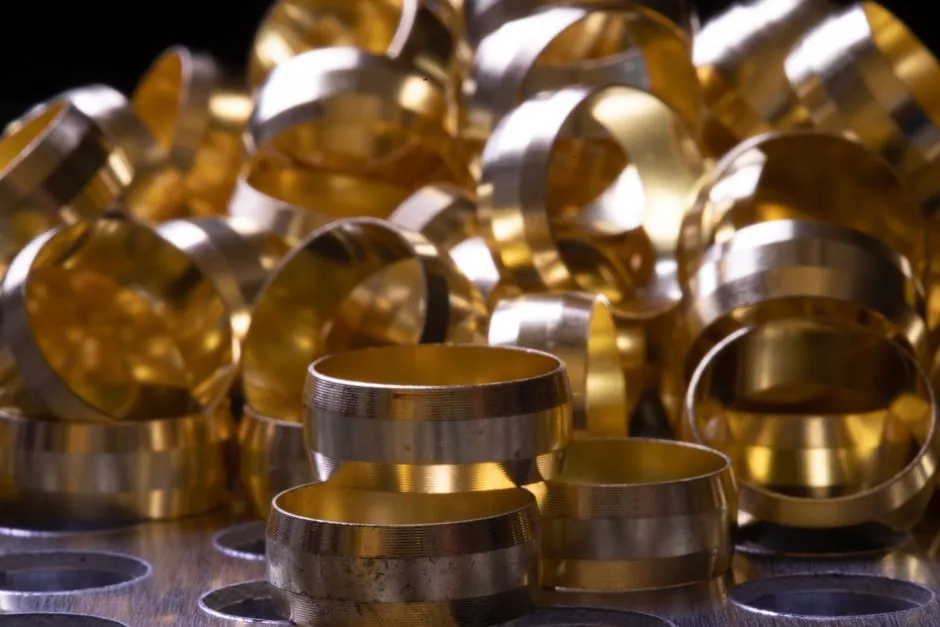
In laser powder bed fusion (L-PBF) the part density and microstructure are defined by the build, not by the mill, so material specification must be written as alloy + powder design + process window together, as detailed in Equispheres' 2024 engineering guidance [S4].
The 2010 ASTM F42 committee split the technology into seven categories, and that taxonomy still drives every meaningful material conversation; powder bed fusion, directed energy deposition, binder jetting, material extrusion, material jetting, vat photopolymerisation, and sheet lamination each impose a different set of feasible alloys or polymers [S2].
Bind Material Selection to the Process Category First
The first cut on any additive manufacturing material is the ASTM F42 process family, because the same alloy can behave very differently across categories; L-PBF, EBM, DMLS, SHS, SLM and SLS all sit under powder bed fusion but diverge on energy source, layer thickness and supported alloy range [S2]. Engineers who skip this step typically end up with a powder datasheet that has no relationship to the printer sitting in the cell.
Loughborough's AMRG classification also separates binder jetting (powder + liquid binder, print head moving on x and y axes) from directed energy deposition, which is the natural choice for repair and feature addition on existing parts [S2]. The Markforged technology guide adds the practical distinction: 3D printing is technically a subset of additive manufacturing, with the industrial term reserved for tooling, fixtures, prototyping, and low-volume end-use parts rather than novelty prints [S3].
For Metals: Alloy Family plus Powder Design plus Process Window
For metal AM, three variables determine the part: alloy selection, powder design, and process design, and engineers accustomed to subtractive thinking are often surprised by how much each lever matters [S4]. Equispheres' framing is blunt: in L-PBF the part is being welded millions of times during the build, so feedstock and melt-pool controls are not optional.
Practical metal shortlist for 2026 buyers: 316L and 17-4 PH stainless steels for corrosion and moderate-strength duties, Ti-6Al-4V for aerospace and medical weight-saving, AlSi10Mg for automotive thermal management, Inconel 718 for high-temperature service, and maraging steel for tooling inserts, with the alloy set varying further by printer OEM [S5]. Powder design considerations the buyer should write into the spec: end-use geometry, additive technology (L-PBF, DED or binder jet), machine specifications (laser power, spot size, gas flow), alloy-specific volatiles and reactivity, handling and storage, and the production rate target [S4]. Additive manufacturing material choices in metals live or die on those six lines, not on a generic datasheet.
For Polymers: Match Material to Mechanical Duty, Not to Marketing
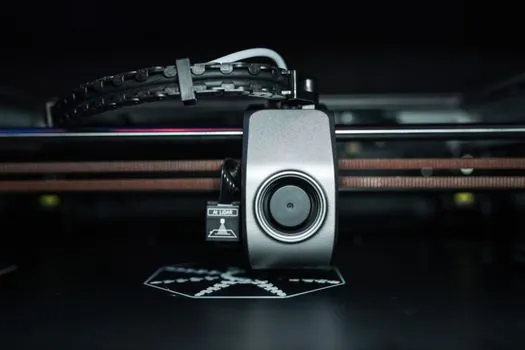
Polymer AM splits into commodity extrusion (PLA, PETG, ABS), engineering extrusion (nylon, PC, ASA, PEI/ULTEM family), and powder bed polymer (SLS nylon 11 and 12, TPU), with each tier supporting very different stress, thermal, and chemical envelopes [S5]. Markforged's professional guide notes that high-performance composites and reinforced polymers now extend the duty envelope, but the same warning applies: one or two material properties usually separate a viable candidate from a non-starter for any given part [S7].
For jigs, fixtures, and low-volume production parts in manufacturing cells, the realistic shortlist is glass-filled or carbon-filled nylon for stiffness, ULTEM (PEI) for thermal and chemical resistance, and TPU SLS for gaskets and ergonomic overmolds [S5]. Engineers who try to substitute commodity PLA into a shop-floor fixture learn the hard way that heat-deflection temperature, not tensile strength, is the first thing that fails. Advanced material grades built around continuous fibre reinforcement change that trade-off but cost substantially more per kg.
Service Conditions Drive the Final Decision, Not the Printer
Service conditions, including mechanical load, thermal environment, chemical exposure, electrical conductivity, surface finish, and any post-processing or finishing, should be written down before the alloy family is even discussed, because each of those conditions will rule out families of materials [S4]. Alloy selection only defines the possible performance range; powder design aligns the input to the additive process; process design then locks in density, microstructure, and any required heat treatment.
A simple worked comparison: for a 250 degC bracket in an aerospace bay, L-PBF Ti-6Al-4V delivers the best strength-to-weight ratio but costs the most per kg and needs inert-atmosphere build control; DED on Ti-6Al-4V is faster for large features but produces coarser surface roughness; machined 7075-T6 is cheaper at low volume but cannot match the geometry Ti-6Al-4V enables; binder-jetted stainless is competitive on cost but still trails L-PBF on density-critical fatigue duties [S1][S4][S5]. For a chemical-resistant pump housing, 316L L-PBF outperforms 17-4 PH on corrosion, and both outperform maraging steel and most aluminium alloys on the same axis [S5].
Qualification, Powder Supply, and Supplier Audit
Material qualification in AM is split into material qualification (MQ) and part qualification (PQ), and the buyer should expect the AM supplier to walk through documented data on density, chemistry, tensile properties, fatigue, and any relevant ISO/ASTM compliance rather than hand over a generic COA [S1][S4]. Powder lot traceability, atomisation process (gas-atomised vs plasma-atomised for reactive alloys), recycled-powder ageing policy, and storage under argon or nitrogen are all part of a defensible material specification [S1].
3Deo's supplier-selection guidance pushes the same point: look for ISO 9001, non-destructive testing (CT scanning or ultrasonic C-scan for critical metal parts), and third-party inspection arrangements; these are the minimum signals that a service bureau can actually deliver aerospace- or medical-grade output [S1]. For buyers building a 2026 metal powder supply chain, this metal powder sourcing map lays out the regional atomisation landscape by alloy family.
Who Should NOT Pick the Mainstream Option
If the duty is short-run, low-stress polymer fixtures, buying into L-PBF titanium is a budget error; the right move is SLS nylon or FDM engineering polymer, which cuts material cost by an order of magnitude [S5]. Conversely, if the duty is a fatigue-loaded aerospace fitting, binder-jetted metal is a mistake regardless of the cost advantage; L-PBF or DED with qualified powder is the only defensible path [S4].
Buyers who try to reuse a single specification across a polymer printer and a metal printer will fail: the chemical material families are not interchangeable, the process controls do not transfer, and the post-processing paths diverge completely. The pragmatic rule: pick the process family from the duty, pick the alloy or polymer from the process, then write the powder or feedstock specification last.
Build a Spec, Not a Shortlist

Concrete inputs the buyer should fix in writing before issuing an RFQ: target alloy or polymer grade with a standard reference (e.g. ASTM F3184 for AM Ti-6Al-4V, ASTM F3091 for PBF polymer), minimum part density (typically 99.5%+ for fatigue-loaded metal), required tensile and elongation values, surface roughness target, CT-scan or NDT requirement, and powder reuse policy including oxygen pick-up limits [S1][S4][S7].
The closing signal for 2026: watch for tighter ASTM F42 sub-standards around process-specific powder characterisation, and treat any supplier that cannot hand over MQ/PQ data on a per-alloy basis as a prototyping shop, not a serial-production partner. For tooling, fixtures, and low-volume production parts in 2026, industrial 3D printing material selection ultimately reduces to a documented three-way match between alloy, powder, and process window.