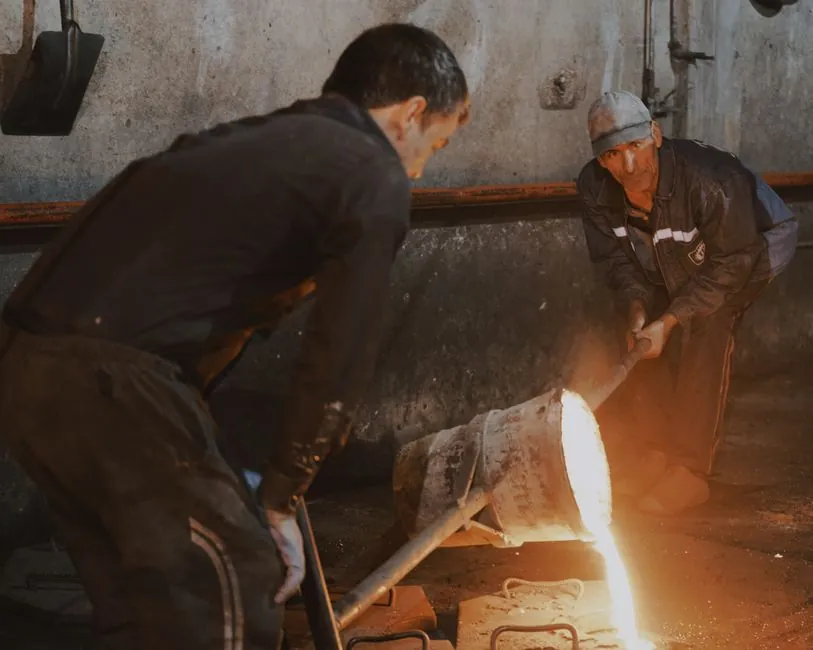
Metal powder supply in 2026 is dominated by atomization-route producers offering stainless, nickel, cobalt, iron, copper and titanium alloys, with ATI, CNPC Powder and AMETEK Specialty Metal Products appearing repeatedly in independent rankings [S4][S6][S7].
The buying decision is rarely about a single brand: process route (water vs gas vs VIGA), chemistry, particle size distribution and morphology drive specification, and only after that does the shortlist of metal powder suppliers narrow.
Production routes and what each supplier actually makes
Atomization is the dominant industrial route, with high-pressure water atomization common for stainless, nickel, bronze and tool steel powders; AMETEK SMP (formerly Powder Clad) cites "nearly 50 years" of water-atomization history and lists 303L, 304L, 316L, 409L, 410L, 430L, 434L stainless grades, plus Hastelloy B/C22/C276/X and 17-4 PH [S2].
Gas atomization, including Vacuum Induction Gas Atomization (VIGA), is the reference route for high-purity spherical powder used in additive manufacturing, and Linde AMT positions its VIGA process for "exceptional flowability and consistency" in powders sized from a few micrometers to several hundred micrometers [S5].
For broader metal material coverage, ATI markets powder alloys of nickel, cobalt, iron, copper, titanium and refractory families, supplied in long-product forms (ingot, billet, bar, rod, wire) and finished components, across 57 locations in 17 countries [S6].
Tiered supplier landscape: who supplies what
Three tiers are visible in the 2026 sourcing map. Tier 1: integrated materials majors such as ATI (Allegheny Technologies) with vertical atomization-to-finished-parts capability [S4][S6].
Tier 2: atomization specialists and exporters, including CNPC Powder (claims exports to 40+ countries, with iron powder as a core line), AMETEK SMP (water-atomized stainless/nickel/bronze/tool steel), and Atlantic Equipment Engineers (high-purity metals and compounds for laboratory and specialty use) [S2][S7][S8].
Tier 3: regional PM-part fabricators and distributors catalogued in industry directories, such as the Powdered Metal Parts directory listing Advance Products (IL), American Metal Coatings (IN), Baxter Machine & Tool (MI), Bestmetal Corporation (IL) and Burgess-Norton Manufacturing (IL) among many others [S1].
IMARC Group's analyst list also names Advanced Technology & Materials Co. Ltd. (AT&M, Beijing, established 1998) as a top global metal powder manufacturer serving strategic emerging industries [S4].
Selection criteria: chemistry, PSD, morphology, and standard
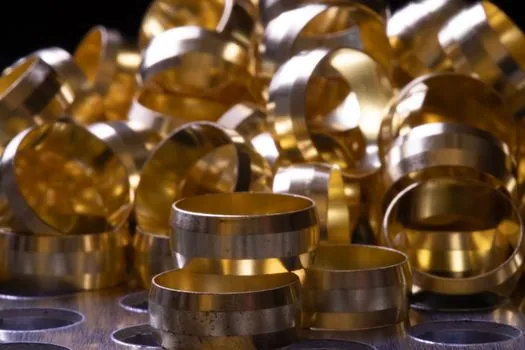
Selection starts with alloy chemistry: stainless 316L for corrosion, 17-4 PH for strength-plus-corrosion, Hastelloy C276 for hot acid service, and tool steel grades for wear resistance, each with defined composition limits per ASTM powder specifications. [S2]
Particle size distribution (PSD) is the second gate: water-atomized powder typically spans tens to hundreds of micrometers, while VIGA gas-atomized AM feedstock is commonly specified in narrow bands such as 15-45 µm or 45-105 µm depending on the AM process (LPBF, EBM, DED).
Morphology matters: spherical powder is required for laser powder bed fusion to keep flow rate and layer density stable, while irregular water-atomized particles give higher green strength in press-and-sinter, which is why AMETEK SMP markets a dedicated High Green Strength stainless grade [S2].
Standards anchor the comparison: PM and AM parts are typically specified to MPIF material designations, with property data accessible via the MPIF Global PM Property Database, and powder itself to ASTM B-series test methods (e.g. apparent density, flow rate, PSD) [S3].
Comparison of main production routes
Water atomization delivers high green-strength irregular powder at lower cost, favored for press-and-sinter PM parts and metal injection molding feedstock; AMETEK SMP uses this route for stainless, nickel, bronze and tool steel grades [S2].
Gas atomization (including VIGA) delivers spherical, high-flowability powder favored for additive manufacturing, with Linde AMT explicitly positioning VIGA for AM-grade consistency [S5].
Mechanical milling produces irregular powder across a wide PSD range and can create alloys via mechanical alloying, but risks media contamination and work-hardening, making it a secondary route for most bulk stainless/nickel supply [S5].
Chemical reduction (hydrogen or CO reduction of oxides) yields ultra-fine, high-purity powders well suited to reactive metals that are hard to atomize cleanly, and is the route behind many high-purity laboratory-grade offerings from suppliers like Atlantic Equipment Engineers [S5][S8].
Real use cases and the specs behind them
For press-and-sinter structural parts, water-atomized iron and stainless powders dominate; CNPC Powder lists iron powder as a main product line exported globally [S7].
For metal injection molding of small complex parts, fine spherical or near-spherical stainless feedstock (often 316L or 17-4 PH) is specified, matching AMETEK SMP's stainless and 17-4 PH alloy offering [S2].
For laser powder bed fusion in aerospace and medical, gas-atomized nickel superalloys and titanium are specified, which is why ATI's High-Performance Materials and Components segment targets aerospace, defense and other demanding markets [S6].
For surface coating and hardfacing, the same suppliers offer Tribaloy T-400/T-800 and related grades, with AMETEK SMP listing T-400/T-800 (Tribaloy) under specialty surface-coating powders [S2].
Limits, failure modes and what the directory does not show
Atomized powder quality is sensitive to oxygen pickup, satellite content, and PSD drift between batches; Linde AMT explicitly calls out "precise control over parameters like particle size, shape, purity, and chemical composition" as the manufacturing requirement [S5].
Supplier directories such as Powdered Metal Parts list fabricators and distributors by region but do not certify powder chemistry or PSD against ASTM/MPIF limits, so a directory hit is only a candidate, not a qualified source [S1].
Mechanical milling can leave trace media contamination that disqualifies powder for medical or aerospace use, narrowing the practical supplier list for those sectors back to atomization-route specialists [S5].
Water-atomized powder is generally not drop-in for laser powder bed fusion because irregular morphology hurts flow and layer packing, which is why AM and PM buyers usually source from different producers even when the alloy family overlaps [S2][S5].
Standards, institutions and verification channels
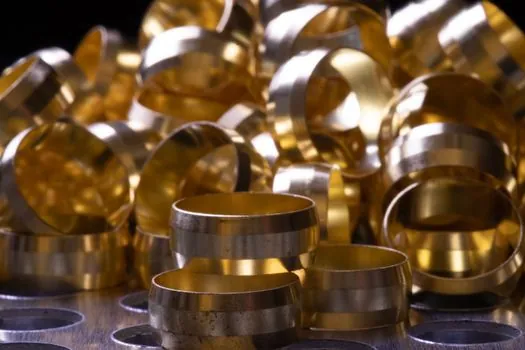
The Metal Powder Industries Federation (MPIF) acts as the industry's trade body, federating six PM associations and providing the Global PM Property Database, the PM Microstructures guide, and conference proceedings back to 1946 [S3].
For powder itself, ASTM B-series test methods (e.g. B212 for apparent density, B213 for flow rate, B214 for PSD, B822 for laser diffraction PSD) are the typical reference points, and end-part properties are usually quoted against MPIF material designations via the Global PM Property Database [S3].
For sourcing, MPIF's PickPM.com is the searchable fabricator directory, while the Powdered Metal Parts directory is broader but region-grouped and unscreened for chemistry [S1][S3].
Engineers should still validate each candidate against the buyer's own ASTM/MPIF specification sheet, since being listed on a directory page does not in itself certify conformance to a particular powder grade.
For a deeper look at AM-specific PSD windows, the article on Metal Powder Sizing and Selection Guide for Additive Manufacturing maps common sieve and laser-diffraction cuts to LPBF and EBM process limits. Food-grade stainless selection between 304, 316L and aluminium is laid out in Best Metal Powder for Food and Beverage: 304 vs 316L vs Aluminium Spec Map. For demand-side context, the Abrasives Demand 2026-2030: Segment Growth, EV Pull, and Spec Implications brief covers how EV and energy-storage pull-through is reshaping the upstream metals feed.
For component-level specifications, see construction machinery and equipment.