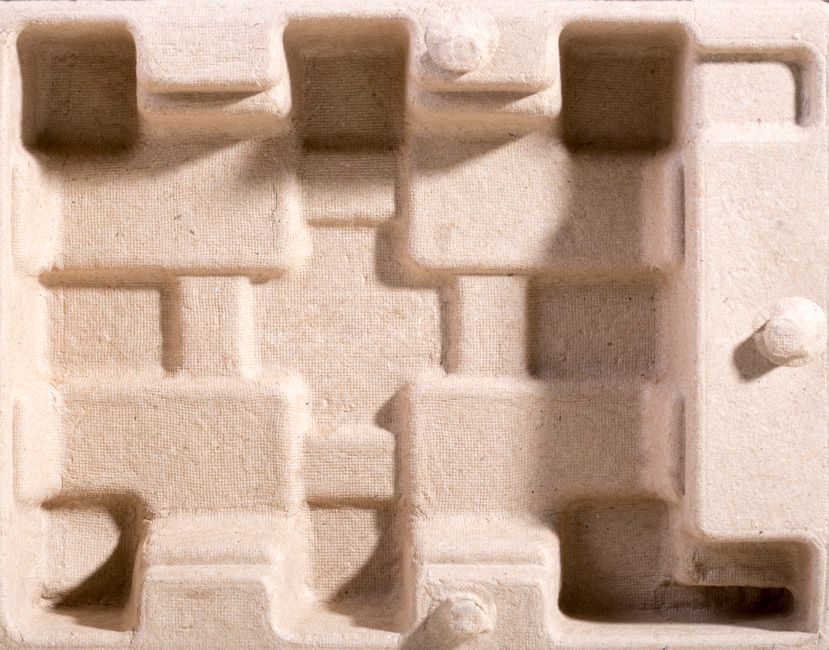
Additive manufacturing (AM) builds a part by adding material layer-by-layer from feedstocks such as cement, metal alloys, thermoplastics, thermoset polymers, and composites in liquid, filament, wire, or powder form, and covers vat photopolymerisation, material extrusion, and powder bed fusion as the three dominant process families [S3].
The headline trade-off is unambiguous: AM saves raw-material waste and enables geometries that are uneconomic to cut, but it is repeatedly flagged as energy-intensive per kilogram of feedstock, slow in build rate, and limited in repeatable processable materials compared with conventional manufacturing (CM) [S1]. Dental and medical custom implants, aerospace end-use parts, oil-and-gas components, and on-demand spares are the segments where the trade moves firmly toward AM [S2][S3].
Feedstock families and what each one actually delivers
AM feedstocks split into five physical forms, and each form governs both the achievable tolerance and the post-processing burden. Liquid resins (photopolymers), metal and polymer powders, thermoplastic filaments, thermoplastic and metal wires, and cured composite prepregs cover roughly the full commercial process map [S3].
Powder bed fusion of metal alloys (typically stainless, titanium, Inconel, and aluminium grades) is the path to dense structural parts but requires inert build chambers and powder-recovery handling; material extrusion of thermoplastic filament is the lowest-capex route and dominates the polymer prototype market [S3][S4]. Vat photopolymerisation remains the resolution leader for fine-feature parts, with dental aligner moulds and hearing-aid shells as volume examples [S2]. Polymer-composite AM (continuous or short fibre reinforced) extends the property envelope but inherits the same disadvantages the parent polymer process carries, including anisotropy and limited build volume [S4].
Advantages that hold up under engineering scrutiny
AM compresses product-development and time-to-market by collapsing tooling, fixturing, and lead-time steps, which is the single most cited benefit across both process reviews and equipment-vendor literature [S1][S3]. Material utilisation in powder bed fusion routinely exceeds 90 percent of the metal charged into the build envelope because unmelted powder is recovered and reused, versus the much lower buy-to-fly ratio of subtractive machining [S3].
AM also consolidates assemblies: multi-part weldments and bolted joints that previously required 8 to 20 individual pieces can be redesigned as a single printed component, which removes tolerance stack-up, fasteners, and leak paths [S3]. Small production runs (low-volume, high-mix) are typically faster and cheaper than injection moulding or die casting once tooling amortisation is included, and complex internal features — lattice structures, conformal cooling channels, patient-specific bone geometry — are economically unreachable by subtractive methods [S2][S3]. Custom dental implants made by AM match patient alveolar bone geometry directly from CT data, which is a clinical-fit benefit conventional stock implants cannot deliver [S2].
Disadvantages and failure modes to design around
AM is energy-intensive per kilogram of feedstock processed, and the literature treats the question of net energy savings as unresolved: AM itself consumes more process energy than CNC machining, but downstream savings from reduced scrap, transport, and inventory may or may not offset that deficit depending on part geometry and batch size [S1]. Build rates are slow; large structural parts commonly require 24 to 72 hours of unattended machine time plus heat treatment and support removal, which is acceptable for low-volume or high-value parts but disqualifies AM for high-volume commodity runs [S1].
Repeatability and qualification are the second real problem. Lack of repeatability between builds, between machines, and between material lots is repeatedly cited, and that variability is why AM parts in regulated sectors (aerospace, medical, oil-and-gas) require part-by-part or batch-by-batch inspection rather than the statistical process control applied to CNC or casting [S1]. The processable-materials catalogue is narrower than for subtractive routes, especially for high-temperature alloys and certified corrosion-resistant grades, and the same AM-built part can show anisotropy, residual stress, and surface-roughness penalties that demand machining, HIP, or surface finishing on critical features [S1][S4].
Process-to-criterion comparison: which AM route fits which job
Across the three dominant process families, the decision drivers are tolerance, build volume, material cost, and the need for post-processing. Powder bed fusion (laser or electron beam) leads on metal density and on part complexity, but ties with the longest post-processing chain; material extrusion leads on capex and on office-friendly polymer prototyping but lags on tolerance and isotropy; vat photopolymerisation leads on resolution and surface finish but restricts the user to photopolymer resins [S3][S4].
The five-item benefit list commonly seen in vendor literature — faster time-to-market, lower material and energy waste per part, lower prototyping cost, assembly consolidation, and faster small-batch production — all collapse back onto the same constraint: AM wins when part complexity is high, volume is low, and tooling cost is otherwise prohibitive [S3]. For the underlying material science, the additive manufacturing material reference page maps feedstock form against typical part-property limits and is the right first stop for spec work; for parts that depend on electrical or thermal conductivity, the copper material and magnetic material encyclopedia entries cover the relevant conductivity and permeability benchmarks used to compare AM versus wrought grades.
Standards, sourcing, and the signals worth tracking
AM does not replace the underlying material standards (ASTM/ISO powder specifications, AWS/NACE welding-equivalence clauses for critical service) — it adds layer-level process and post-processing controls on top, which is why the same alloy bought for a wrought part and for an AM build carries different certificates. For buyers comparing total cost of ownership against conventional options, the SPC flooring installation guide is a useful parallel case of how spec-driven buying, not headline price, controls landed cost; the lithium carbonate 2026 sourcing update covers the same spec-versus-price discipline applied to a feed material that AM and battery supply chains both depend on. [S1]
Two signals are worth tracking over the next two quarters: tighter powder-lot certification from metal AM powder producers (driven by aerospace repeatability findings), and the first published performance data from multi-laser powder bed fusion machines running production rather than pilot batches. Either of those will move the repeatability and build-rate disadvantages that today still keep AM out of the high-volume commodity tier.