
Commercial-aerospace production, defense sustainment budgets, sustainable aviation fuel (SAF) uptake and the LEO broadband buildout are the four data points separating 2026 aerospace strategy from 2024 baseline assumptions [S2][S3].
Deloitte's 2026 outlook frames the year as "a new era of growth" with AI and digital sustainment named as the primary value levers, while BIS Research tracks commercial, defense and space as three distinct, separately-budgeted sub-markets inside the same vertical [S2][S3]. For process engineers used to single-driver industrial verticals, the spread is unusually wide: a single OEM program office in 2026 may be contracting across jet-fuel chemistry, flight-control firmware, satellite ground terminals and composite layup automation in parallel.
Commercial backlog, SAF uptake and propulsion retooling
Commercial-aerospace output remains the single largest cost lever inside the vertical, and 2026 is the first year that SAF-offtake clauses are materially reshaping fuel-system, fuel-tank seal and engine-combustion-liner specifications on new airframes [S2][S3]. SAF blends raise aromatic-content variability, which in turn drives elastomer swell, fuel-system pressure-bleed limits and filter-media change intervals — all of which feed directly into pressure transmitter and flow meter sizing on aircraft refuelers, hydrant carts and depot test stands.
Pratt & Whitney, CFM, Rolls-Royce and IAE all have open geared-turbofan and ultra-fan upgrade programs in 2026, each requiring revalidated sensor calibrations against higher-pressure-ratio compressor sections and higher turbine-inlet temperatures [S2]. On the engine-health-monitoring side, AI-driven digital sustainment — using fleet-wide sensor data, borescope imagery and on-wing vibration traces — is moving from a pilot program at two or three large carriers in 2022 to a stated default in Deloitte's 2026 outlook for both commercial and defense fleets [S2].
eVTOL certification, autonomy stack and the 2026 type-certificate window
Type certification for piloted eVTOL aircraft is the most date-sensitive regulatory event in the 2026 aerospace calendar, with FAA, EASA and CAAC each running parallel powered-lift special-condition tracks; 2026 is widely cited as the year the first piloted eVTOL type certificate becomes a hard document rather than a stated intent [S2][S3]. Each type-certificate milestone cascades into propulsion, battery, flight-control and avionics sub-supplier qualification cycles.
The 2026 eVTOL hardware envelope is dominated by four- to eight-rotor distributed-electric configurations, 400–800 V DC battery buses, and fly-by-wire flight controls with triple-redundant actuator stacks — closely tracked on our lithium battery production technology 2026 coverage of the cell formats and process gates behind those packs.
Defense sustainment, AI sustainment and the Pentagon R&D-facility gap
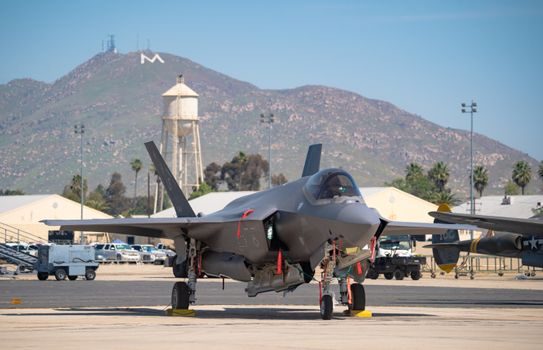
The defense sub-market is being reshaped by the Pentagon's 2026 statement that U.S. defense research facilities are "deteriorating" and need funding reform, a candid public framing that will redirect sustainment, depot and digital-twin dollars through the remainder of FY2026 [S5]. Combined with AI-driven sustainment programs at Lockheed Martin, Northrop Grumman, RTX and Boeing, the practical 2026 effect is a sharp rise in flight-hours-per-airframe contracts (performance-based logistics) and a corresponding drop in pure-procurement buy.
For industrial sub-suppliers, the 2026 defense implication is that the specification envelope now includes FAR Part 21/Part 25 sustainment provisions, MIL-STD-810H environmental test profiles and ITAR-controlled data exchange; suppliers without AS9100D / AS13100 quality systems are increasingly excluded from tier-1 RFPs [S1][S3]. BSI's 2026 aerospace standards portfolio lists AS9100, AS9145 (APQP/PPAP for aerospace), AS6081 (counterfeit electronic parts) and NADCAP special-process accreditation as the four most-requested conformity assessments from tier-2 suppliers [S1].
LEO broadband, flat-panel terminals and HTS ground systems
Low-earth-orbit (LEO) broadband constellations remain the highest-capex space line item in 2026, with SpaceX Starlink, Amazon Project Kuiper, Eutelsat-OneWeb and Guowang all in active buildout — each driving a parallel demand curve for flat-panel user terminals, gateway earth stations and high-throughput-satellite (HTS) Ka/Ku-band ground hardware [S3]. The 2026 terminal baseline has settled on electronically-steered flat-panel antennas (ESAs) sized 30–90 cm, with GaN SSPA block upconverters and phased-array ICs as the most constrained component categories.
The ground segment is where the aerospace vertical bleeds into conventional industrial automation: a single gateway site in 2026 typically carries 8–12 high-power pressure sensor loops on its liquid-cooled SSPA cabinets, 4–6 Coriolis flow meter channels on its feed system, and PLC-based site controllers specified to IEC 61131-3 — see our LEO, flat-panel terminals and HTS reshape 2026 satellite industry article for the terminal-side breakdown.
Materials, composites and additive-manufacturing inflection

Composite layup, additive-manufactured titanium and nickel-superalloy hot-section parts, and resin systems qualified to higher service temperatures are three material themes that BIS Research flags as the 2026 aerospace inflection points [S3]. Additive-manufactured bracketry and housing components are now specified in serial production on at least two narrow-body airframe programs, with LPBF (laser powder-bed fusion) as the dominant 2026 process route and electron-beam melting (EBM) holding a smaller but growing share in titanium airframe ribs and brackets.
For procurement engineers, the practical 2026 cost curve runs roughly: conventional machined titanium at $200–400/kg part-weight, additive titanium at $80–150/kg in series production, and CFRP layups at $120–250/kg depending on qualification status and resin class — bracketed in our FRP composite 2026 price & cost guide. Each route has a different AS9100 and NADCAP audit footprint, and the 2026 buyer-side spec must lock the inspection regime before the part number freezes.
Supply chain, rare earths and electric-motor content
Rare-earth and permanent-magnet supply risk is the single most cited 2026 procurement concern for flight-control actuators, IFE motors, and the electric-propulsion units (EPUs) in eVTOL and STOL programs [S2][S3]. Dysprosium and terbium content in sintered NdFeB magnets directly governs high-temperature demagnetization behavior, and 2026 magnet price volatility has pushed OEMs and tier-1s to qualify two-source magnet supply and to spec heavy-rare-earth-reduced or heavy-rare-earth-free grades for less-demanding actuator positions.
The 2026 electric-motor supply chain is also the meeting point of three previously separate industrial sub-markets — SiC inverter devices, axial-flux stator topologies and rare-earth-substituted magnet chemistries — covered in our electric motor supply chain 2026 analysis. For aerospace, the practical 2026 spec is a defense-grade axial-flux motor with a samarium-cobalt or heavy-rare-earth-reduced NdFeB magnet set, an integrated SiC inverter section, and a position-feedback resolver that survives a 200°C ambient underhood envelope.
Standards landscape and 2026 conformity assessment

AS9100D, AS9145, AS6081, AS6496, NADCAP AC7000-series, MIL-STD-810H, MIL-STD-461G, DO-178C, DO-254, DO-326A/356A, EASA SC-VTOL-01 and the FAA powered-lift special condition are the most-cited 2026 aerospace conformity-assessment references in BSI's industrial aerospace client portfolio [S1]. On the airworthiness side, FAR Part 21 subparts E and G, EASA Part-21 subparts E and G, and the equivalent CAAC CCAR-21 subpart E remain the structural certification anchors for production parts in 2026.
The 2026 buyer-side sequencing that BSI's aerospace team is enforcing most often: AS9100D (or AS13100) quality-system audit → AS9145 APQP/PPAP project plan → NADCAP special-process audit → first-article inspection → DO-178C / DO-254 software & complex-electronics evidence package — see BSI's 2026 aerospace industry standards brief for the full conformance map [S1]. The order matters: skipping APQP to chase first-article cost is the single most common reason 2026 aerospace supplier-qualification cycles blow past 12 months.
Trackable 2026 signals: (1) the first FAA or EASA type certificate issued for a piloted eVTOL aircraft, which sets the propulsion / battery / flight-control precedent the rest of the industry copies; (2) the Pentagon's FY2027 defense R&D-facility funding line, which will reveal whether the June 2026 "deteriorating" assessment translates into actual appropriations [S5]; (3) AS9100 revision D-to-E transition milestones, which will re-baseline tier-2 supplier audit schedules through 2027 [S1].