LEO connectivity is driving the 2026 satellite equipment market: satellite network equipment is projected to reach USD 42.6 billion by 2026 at a 7.4% CAGR (2021–2026), fueled by High Throughput Satellite (HTS) and LEO deployments [S5]. Flat-panel user antennas are the visible edge of the same wave — a 2026-06-25 industry note flags accelerating adoption as LEO capacity reaches more markets [S1].
Upstream, the satellite antenna market is forecast to reach USD 10.5 billion by 2026 across land-fixed, land-mobile, airborne, maritime and space platforms, segmented by reflector, feed horn, feed network and low-noise converter componentry [S4]. Downstream, satellite internet is being sliced into two-way satellite-only, one-way receive, and one-way broadcast products across C-, X-, Ku-, Ka- and L-band, with commercial, residential, military and industrial end-user segments competing for the same orbital capacity [S6].
Orbit architecture: GEO holds, LEO adds the volume
Three orbit regimes are carrying the 2026 build-out. GEO HTS still provides wide-beam, broadcast-style coverage favored by broadcast, aero and maritime VSAT, and remains the throughput workhorse for trunking and video distribution [S5]. LEO mega-constellations, by contrast, trade higher capex per bit of capacity for sub-100 ms round-trip latency — the property that is now pulling flat-panel user terminals into consumer broadband and into mobility use cases [S1].
Mid-Earth orbit (MEO) sits between them for GNSS and a small set of communications payloads. The practical 2026 buying question is no longer "GEO or LEO" but "which traffic class goes to which orbit": broadcast and trunked backhaul stays on GEO HTS, latency-sensitive enterprise VPN and mobility classes move to LEO, and C/X/L-band resiliency remains a GEO specialty for government and industrial SCADA-style traffic [S1][S5]. Antenna selection mirrors that split: parabolic reflectors remain the default for fixed gateway and VSAT, while electronically steered flat panels address on-the-move land, aero and maritime terminals [S4].
Frequency band allocation: C/X/Ka are now a four- or five-band problem
Band selection in 2026 is no longer a one-line spec. C-band (4–8 GHz) keeps its role in broadcast, weather radar and resilient tropical-zone links because of lower rain fade; X-band (8–12 GHz) is dominated by military and government users and is capacity-constrained by allocation; Ku-band (12–18 GHz) is the traditional VSAT band and remains heavily used for broadcast contribution and in-flight connectivity; Ka-band (26–40 GHz) carries most HTS and LEO user-beam capacity at the cost of higher rain attenuation, which is the engineering reason gateways are over-built with diversity sites [S6]. L-band (1–2 GHz) survives for MSS voice, narrowband IoT and safety services where link robustness matters more than throughput.
For a 2026 spec sheet, the practical gate is to lock the band first, then choose a terminal that supports it natively. A flat-panel terminal sold as "Ka-only" will not serve a C-band broadcast customer, and a Ku-band VSAT will not match HTS Ka throughput per MHz of allocation [S6]. Industry reporting on the LEO ramp treats band agility — multi-band gateway antennas and software-defined radios — as a primary lever for new-build ground segment [S1][S5].
Ground segment: flat-panel user terminals become a product category

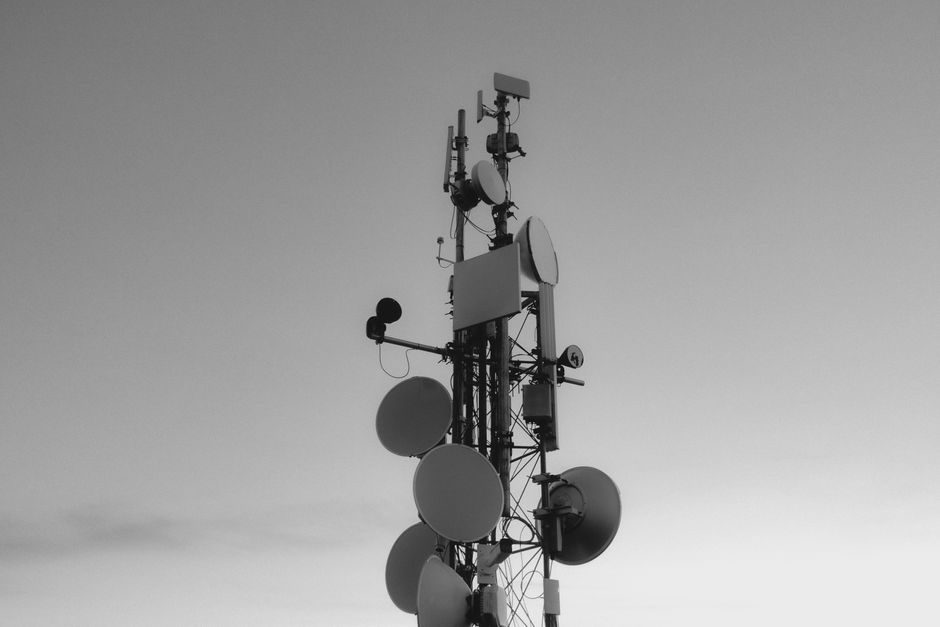
Ground hardware is where most of the 2026 product-level change is visible. Reflector antennas (parabolic, Gregorian, Cassegrain variants) are still the high-efficiency default for gateways and fixed VSAT, with feed horns, feed networks and LNB/LNA blocks treated as separable component groups [S4]. Flat-panel phased arrays — both active electronically scanned arrays (AESA) and hybrid mechanical-electronic designs — have moved from prototype to shipping product for land-mobile, aero and maritime use, and the 2026-06-25 industry note specifically calls out flat-panel antennas as the segment to watch alongside LEO adoption [S1].
Component integration is the second quiet shift. Modern terminals increasingly combine feed network, BUC, modem and router in a single outdoor unit, with the indoor unit shrinking to a power-over-Ethernet appliance. For an industrial buyer, the consequence is that procurement is shifting from "dish + RF chain + indoor modem" line items to a single terminal SKU, which changes both spares philosophy and EMC conformance paperwork [S4][S1].
Selection criteria: orbit, band, terminal class, then SLA
Four gates decide a 2026 satellite link. Gate one is orbit: GEO for broadcast and trunk, LEO for latency-sensitive IP, MEO mostly for GNSS and a small set of comms payloads. Gate two is band, driven by rain climate and regulatory access — Ka for HTS throughput, Ku for VSAT ubiquity, C for resilience, X for government allocation, L for MSS/IoT [S6]. Gate three is terminal class: fixed parabolic, transportable flyaway, land-mobile flat panel, aero phased array, or maritime stabilized unit, with antenna gain and EIRP dictated by that choice [S4].
Gate four is service-level agreement. HTS and LEO providers increasingly sell by committed information rate (CIR) rather than best-effort, with contention ratios quoted in the spec sheet. For industrial SCADA-style traffic, the relevant numbers are latency, jitter, CIR and the failover behavior on blockage or rain fade — not raw peak throughput [S1][S5]. A side-by-side reading makes the trade clear: GEO HTS gives the lowest cost per bit for trunked traffic, LEO gives the lowest latency for IP, C-band GEO gives the most weather-resilient narrowband link, and Ku-band VSAT sits in the middle on both axes.
Standards, sourcing and 2026 risk surface

Standards discipline matters more than headline throughput. Antenna and terminal conformance falls under ITU-R radio regulations, with regional add-ons (FCC in the US, ETSI EN 302 series in the EU, and equivalent national regulators) governing out-of-band emission, pointing accuracy and EIRP limits — these are the actual gates a 2026 buyer should verify on the datasheet, alongside any explosion-proof or ingress-protection rating for hazardous or marine sites. Satellite network equipment's projected 7.4% CAGR to 2026 implies sustained vendor churn, and the 2026 satellite internet market is being segmented into two-way satellite-only, one-way receive and one-way broadcast product classes [S5][S6].
Sourcing signals are also visible. The SIA (Satellite Industry Association) remains the US policy and statistics clearing house for the segment [S2], and 2026 industry reports continue to track operator and ground-segment market structure as a single stack [S1][S3]. For an industrial buyer the 2026 risk surface is concentrated at the terminal — flat-panel AESA supply is still capacity-constrained, gateway RF chains remain long-lead, and band-specific RF components (BUC, LNB, feed network) are the items most likely to slip a project schedule. The trackable signals for the second half of 2026 are the next LEO constellation launch cadence, the next flat-panel terminal price-points for sub-USD 1,000 consumer SKUs, and any HTS capacity additions in Ka over the Atlantic and Pacific corridors [S1][S4][S5]. Related industrial spec context on adjacent buys is tracked in our VFD Buying Guide 2026 and Industrial Shock Absorber Buying Guide 2026 for the broader plant-engineering sourcing picture.
For component-level specifications, see pressure transmitter, flow meter, and industrial valve.