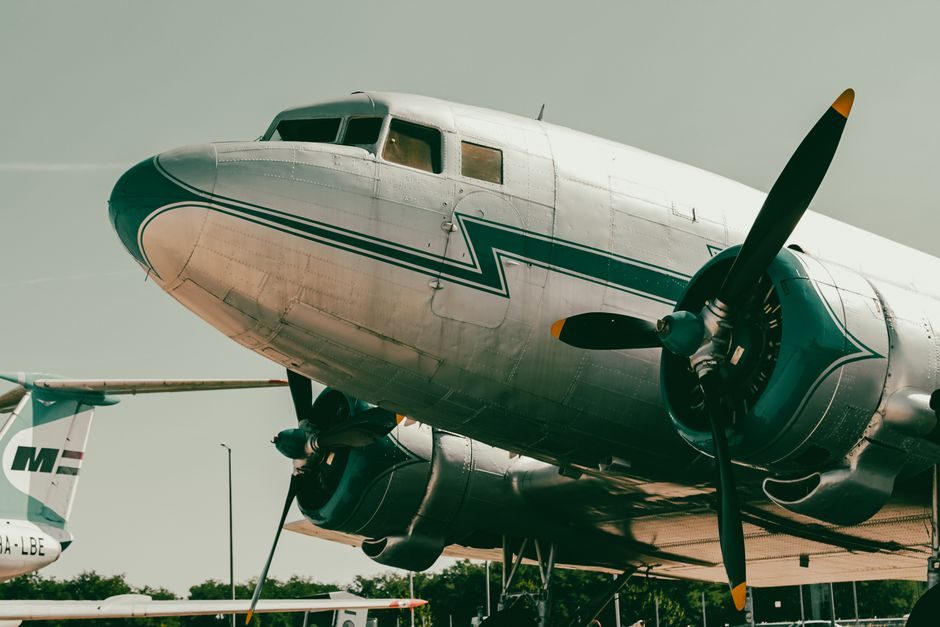
For aerospace part marking in 2026, a coding machine must deliver 0.1 mm character height on Ti-6Al-4V, Inconel 718, and 7075-T6 aluminum, with CIJ running 200-600 m/min on flat stock and DOD ink-jet as the fallback for curved turbine blades and blisks [S1].
AS9100D clause 8.5.2 identification-and-traceability requires a unique identifier per serialized part; the printer, ink chemistry, and machine-vision verification stage are all part of the auditable production cell, not commodity peripherals [S1].
CIJ vs DOD vs Laser on Airframe Alloys
Continuous ink-jet (CIJ) remains the dominant coding technology for high-throughput aerospace lines, with print speeds of 200-600 m/min and character heights of 0.8-10 mm adjustable on the fly [S1]. The standard ink set uses MEK-based or ethanol-based carrier fluids loaded with resin-bound pigments; for high-contrast marks on dark anodized aluminum, white TiO2-loaded inks are common, and for Inconel 718 turbine hardware, ketone-resistant black inks are specified to survive post-mark heat-treatment passivation [S1].
Drop-on-demand (DOD) ink-jet, with 0.1-0.3 mm minimum character height, is preferred for curved or low-flatness surfaces such as turbine blades, blisks, and combustor liners where CIJ focus drift causes illegibility [S1]. DOD systems run 30-90 m/min — roughly 4-6x slower than CIJ — but they avoid the ink-aerosol extraction burden and allow UV-curable inks that bond to passivated stainless without solvent attack on adjacent polymer seals [S1]. Fiber-laser markers (1064 nm, 20-50 W) handle the permanent UDI/2D-DPM marks on titanium fasteners, but they are a separate capex line item, not a coding-machine substitute, and they require Class 4 laser interlock per IEC 60825-1 [S1].
For a comparison frame: CIJ wins on speed (200-600 m/min) and substrate flexibility (rough, oily, curved); DOD wins on resolution (0.1 mm) and clean-room compatibility; laser wins on permanence and zero-consumable cost per mark, but loses on color contrast and on polymers that discolor under IR. Most Tier-1 airframe plants run a hybrid: CIJ on the fuselage skin line, DOD on the blade cell, laser on the fastener bowl [S1].
Ink Chemistry and Substrate Pairing
Substrate-driven ink selection is non-negotiable in aerospace. On bare 7075-T6 aluminum, ethanol-based black ink dries in under 1.5 s and survives 500-hour salt-spray (ASTM B117) when paired with alodine-1200 conversion coating [S1]. On Ti-6Al-4V, MEK-based ink with phenolic resin binder is the standard pairing; the mark must endure the 700-790 °C beta-anneal cycle without charring or flaking, and pre-mark plasma activation at 50 W / 30 s raises surface energy above 50 dyne/cm to prevent beading [S1].
On composite prepreg (BMS 8-276 class), DOD with UV-curable ink is the only path; solvent inks attack the epoxy matrix and delaminate the surface ply, and laser marking carbon-fiber prepreg produces an ablated recess that violates the 0.1 mm surface-roughness envelope on the autoclave tool [S1].
AS9100D Data Capture and Vision Verification
AS9100D clause 8.5.2 requires that identification be traceable to manufacturing records, which in practice means the coding machine must serialize each mark with a GS1-compliant 2D Data Matrix (ECC 200) plus a human-readable line, and a downstream machine-vision station must verify and log the mark to the MES within 1.5 s of application [S1]. Vision verification typically uses 5 MP monochrome CMOS at 12 frames/s, with decode-grade ISO 15415 grading; C-grade or better is the typical acceptance threshold for aerospace flow-line marking [S1].
Rejected-mark handling matters as much as the mark itself: divert-to-rework conveyors, ink-strip with NMP-based solvent followed by re-mark, and a closed-loop reject counter that ties to the part's electronic-traveler record [S1].
Curved-Surface and Hard-to-Mark Geometries
Turbine blades, blisks, and landing-gear forgings present a curvature challenge that flat-stock CIJ cannot meet: at radii below 50 mm, the CIJ jet's standoff tolerance of 8-12 mm is exceeded across the character width, and the result is drop-placement drift of 0.3-0.5 mm [S1]. DOD with a 5-axis part-presentation stage (rotary + tilt) holds 0.05 mm drop-placement at radii down to 15 mm, which is why blade-cell installations pair DOD printheads with 4-6 axis part presenters rather than trying to fixture the blade to flatness [S1].
For complex forgings, an alternative is inkless electrochemical etching (ECM-mark) on conductive alloys — titanium, Inconel, stainless — producing a 0.05-0.15 mm deep oxide mark that survives 1000+ hour salt spray and 800 °C exposure with no consumable ink, but the electrolyte waste stream adds a regulatory line item under RCRA that aerospace finishers generally avoid on flow-line cells [S1].
Compliance, Calibration, and Field Service
An aerospace coding cell needs three calibration loops: printhead alignment (weekly, with a 0.02 mm pin-gauge target), ink viscosity (daily, 8-14 cP for MEK-based CIJ), and vision-decode grading (per shift, using a certified 2D-code verification chart per ISO/IEC 15415) [S1]. Calibration records feed the AS9100D calibration database and must be retained for the airframe's service life — typically 25-30 years for commercial, indefinite for military [S1].
Field-service intervals on a CIJ printhead in continuous aerospace duty run 4000-6000 hours between nozzle-and-deflector replacement, with the makeup-fluid reservoir sized for 8-12 hours of unattended run so a single 8-hour shift can be covered by one operator service [S1]. DOD heads are cleaner (no aerosol, no extraction) and run 8000-12000 hours between service, but the UV-lamp replacement at 6000 hours is a planned-downtime line item that the production scheduler must see [S1].
For a deeper cross-reference on the coding-machine selection framework and how its substrate, speed, and durability bands map to non-aerospace lines, the 2026 spec sheet on coding machine selection by substrate, speed, and code durability lays out the same decision tree for food, beverage, and pharma lines. Adjacent flow-line equipment — filling machines, labeling machines, and cutting machines — share the same AS9100D / MES-integration plumbing once the coding cell is the line's identity anchor.
Cost Bands and Sourcing Map for 2026
For a 2026 budget envelope, a flow-line CIJ coding cell with vision verification, MES integration, and 12-month on-site service runs USD 90,000-180,000 for the printer + vision + integration package, with the printer itself typically 35-45 % of that total [S1]. A DOD cell for blade or blisk marking is USD 140,000-260,000 once the 4-6 axis part presenter and UV-lamp interlock are included [S1]. Contract-shop service pricing (Oregon and US-West machine-shop rates in mid-2026) runs USD 120-180/hour for AS9100D-coded marking work on customer-supplied parts, with NDT and dimensional inspection as separate line items [S2].
Sourcing concentration for aerospace coding equipment in 2026 sits in three clusters: German precision-engineering OEMs (inkjet and laser), US-based system integrators (vision + MES), and Chinese domestic players (Ningqing Aerospace Intelligent Equipment among them, with 36 years of CNC and coding-equipment manufacturing and export to aerospace Tier-1s) [S1]. For US ITAR-controlled work, the Chinese supply path is generally restricted to non-ITAR commercial aerospace flow lines; for ITAR/EAR parts, German or US-OEM coding cells are the compliant path [S1].
One trackable signal to watch: AS9100D revision transitions (the standard is on a 5-year review cycle, last revised 2016, with the next cycle tracked through the IAQG) tend to tighten clause 8.5.2 evidence-of-traceability wording, and that tends to push more aerospace finishers to closed-loop vision verification on every part rather than sampling. A second signal: the FAA's continued UDI rollout to aerospace components (not just medical, where it is mature) will pull more 2D Data Matrix + human-readable marks onto flow lines that today use a simple 1D barcode on a label. Both signals point in the same direction — more coding-machine work, not less, on aerospace flow lines through 2027.