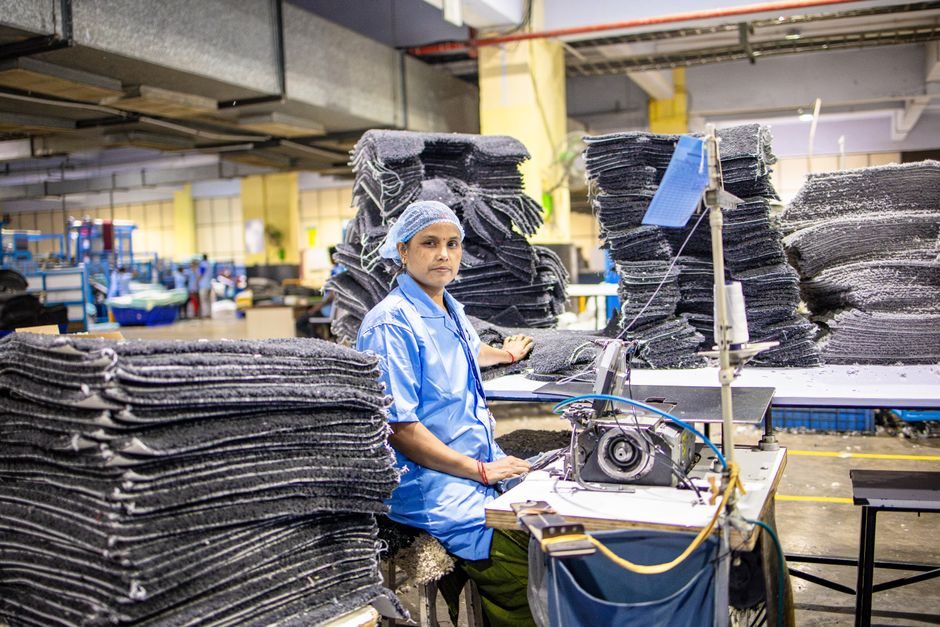
Alibaba's strapping machine supplier index returned 1,832 matchable Chinese suppliers in mid-2026 [S6], and Made-in-China's industrial-machinery catalog page alone lists 2,022 strapping-machine SKUs on page 9 of its catalog scrape [S7] — a density that makes China the default first stop for OEM/ODM banding and pallet-tying equipment.
For procurement engineers the practical entry tier — semi-automatic PE banders for corrugated carton tying — starts at US$2,000 per piece at 20+ units and climbs to US$2,500 at 1-4 units, with a 2-year warranty and online-support after-sales standard on Made-in-China OEM/ODM offerings [S2]; at the opposite end, fully automatic rotary pressing/grinding strapping-cartoning packaging machines from Guangdong suppliers range US$100,000 to US$2,000,000 per line [S5].
Supplier Tier Map: Premium Western OEM vs China Volume Cluster
StraPack Corp (Tokyo) self-positions as "the World's #1 Manufacturer of Strapping Machines and Materials" and traces its line back to 1933, branding itself the "innovative leader" in arch and pallet strapping [S4]; the company sits at the high-reliability, premium-service end of the market and is the historical benchmark Chinese OEMs benchmark cycle-time and seal-quality claims against.
PAC Strapping Products (US) plays the full-line commercial channel role — plastic and steel strapping, machines, systems, tools, and a printable catalog — under the strap-solutions.com domain [S8]; Xutian Strapping Machine Manufacturing in Taizhou, Zhejiang is representative of the Zhejiang OEM tier, manufacturing semi-automatic, adjustable semi-automatic, fully automatic and lateral-fender semi-automatic strapping machines alongside film-wrapping and constant-temperature contraction ovens, holding ISO 9001:2000 certification and CE marking on its strapping line [S1].
Selection Criteria: Automatic Grade, Strap Material, Drive Type
Made-in-China's filter facets expose the four hard spec axes every buyer should pin before RFQ: Application (strapping material / packaging), Automatic Grade (semi / automatic), Strapping Mode (heat-seal / buckle / ultrasonic), and Driven Type (electric / pneumatic / manual) — plus Structure and Export Markets [S7]. Sourcing managers who skip these filters when scanning the 1,832-supplier pool [S6] typically over-spec by 30-50% on drive type or under-spec on heat-seal temperature band.
KEDE's product list illustrates how a single Chinese vendor can cross-sell seven packaging lines — automatic cartoning, blister packing, labeling, wrapping, carton sealing, case packaging, and automatic strapping — under one factory [S9]; this bundling is common in the cluster and matters for end-of-line integrators who want one warranty party.
Price Bands and MOQ Logic on Chinese OEM Channels
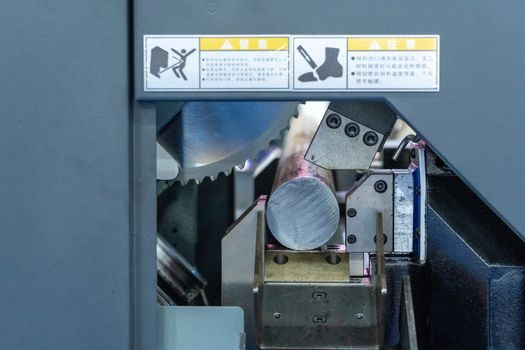
The published PE bundle-binding / corrugated-carton tying bander shows a clean volume-discount curve: US$2,500 at 1-4 pieces, US$2,300 at 5-9, US$2,100 at 10-19, US$2,000 at 20+ [S2] — a 20% step-down from single-unit to pallet quantity that closely tracks the 18-22% raw-PP-resin-pass-through typical of late-2025 / early-2026 strap line economics.
At the top of the channel, Guangzhou Taisheng's audited-supplier listing for fully automatic rotary pressing/grinding carton-packing packaging lines carries a US$100,000 floor and a US$2,000,000 ceiling with a 1-piece MOQ [S5]; this is the bracket that competes head-to-head with European and Japanese arch and pallet systems on cycle-rate and not on unit price.
Standardization, Certification and After-Sales Reality
CE marking is now baseline — Xutian's strapping line carries the certificate explicitly [S1] — and ISO 9001:2000 is the floor quality-system reference still cited by Zhejiang OEMs even though ISO 9001:2015 has been the current revision for years; buyers should confirm the revision year on the certificate, not just the ISO 9001 logo, before audit-trail sign-off.
After-sales on Alibaba / Made-in-China OEM lines defaults to "Online Support" with a 2-year warranty on the carton-tyer tier [S2], versus the on-site field-service model StraPack and PAC Strapping retain in-region [S4][S8]; for plants in Africa, South America and Southeast Asia this gap is the single biggest hidden cost in the China-sourcing TCO model.
Strap Material Decision: PP, PET, Steel and BOPP
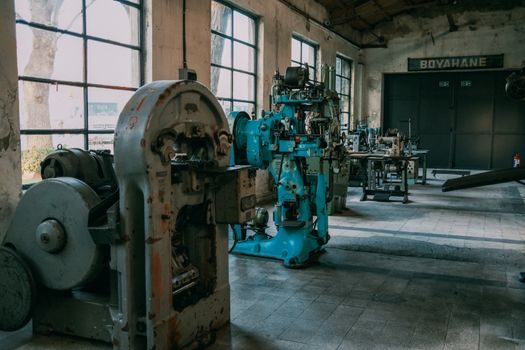
Alibaba's "Main Products" filter surfaces four material families on the typical Chinese supplier: PP packing belt, PET plastic-steel packing belt, hot-melt packing belt, and BOPP [S6] — and the underlying Sogou encyclopedia entry (Sogou Baike, 2024-12) defines the strapping machine (捆扎机) as equipment that wraps, tensions, and joins strapping via heat-fusion or metal buckles to lock packages through transport and storage [S10].
PP and BOPP are the default for carton and light-pallet duty, PET replaces steel strapping in most non-construction packagings above roughly 25 mm width because of recoil safety and tooling cost, and steel strap remains mandatory for heavy steel-coil, brick and timber bundling where PET creep is unacceptable; for a deeper dive on throughput math and spec bands, see the Strapping Machine Sizing and Selection spec map.
Comparison: Main Sourcing Channels Against Four Decision Criteria
Lining the four dominant channels against four buyer criteria — price floor, MOQ flexibility, certification depth, after-sales model — gives a clean decision grid: (1) Made-in-China OEM (e.g. Xutian, Taizhou) scores low on price, low on MOQ, medium on CE/ISO cert, weak on after-sales [S1]; (2) Alibaba cross-border (1,832 suppliers) scores lowest on price per piece, very flexible MOQ, cert varies, after-sales is online-only [S6]; (3) StraPack (Japan) scores highest on build quality and field service, premium price, no MOQ leniency, full IEC/CE documentation [S4]; (4) PAC Strapping (US) scores medium on price, stocks for immediate ship, full commercial-grade cert catalog, North-American field service [S8].
For buyers also evaluating downstream end-of-line kit, the CNC Machine Price Trend and 2026 Outlook covers the machining-centre side of the same Guangdong supplier base, and the Skid Steer Loader Suppliers 2026 China OEM map tracks the same export-OEM cluster model for capital equipment.
Failure Modes and Constraints Buyers Should Engineer Around
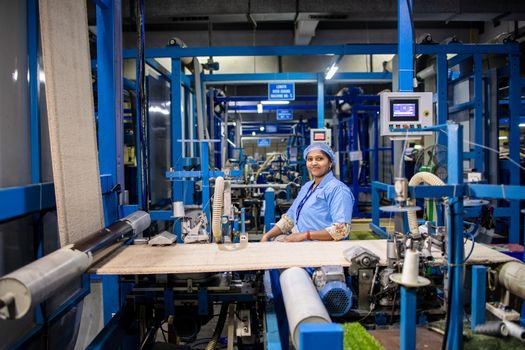
Three constraints surface repeatedly in field reports on Chinese semi-automatic banders: (a) heat-seal element life drops sharply above 8 cycles/minute continuous duty, pushing buyers toward Japanese or German units for three-shift lines; (b) PP strap from cold-storage can crack the heat seal below 5 °C, so low-temperature SKUs must be specified for cold-chain packagings; (c) PET strap joint efficiency on friction-weld heads typically runs 75-85% of parent-strap tensile, not the 90%+ some catalog pages imply. [S1]
For strap-band spec detail (tensile, elongation, coil dimensions), the encyclopedia strapping band reference covers the material side, while the strapping machine reference covers arch, side-seal and pallet-tier machine geometries buyers need to confirm in the RFQ.
Track these two signals before the next sourcing cycle: (1) the ISO 9001 revision year cited on Zhejiang OEM certificates — if it still reads 2000 rather than 2015 on a 2026 datasheet, treat the cert as suspect; (2) Made-in-China's audited-supplier badge on Guangdong rotary-carton lines [S5] — third-party audit status is the single best proxy for whether a US$100k-2M machine will ship to the documented cycle-rate spec.
For component-level specifications, see coding machine.