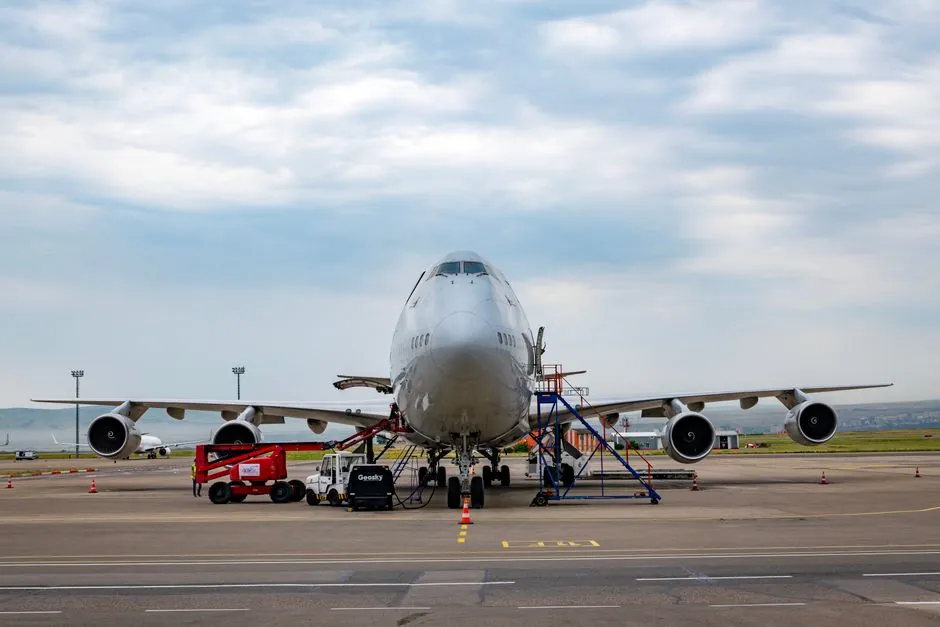
Investment casting capacity is the binding constraint on commercial and defense aerospace build rates in 2026, with 12+ week quoted lead times, two major vertical-integration moves, and a market sized between USD 18.45 B and USD 20.52 B in 2026 depending on the forecaster [S1][S3][S4].
Aerospace and defense held a 36.07% share of the 2025 investment casting market in one segmentation, and a USD 7.22 B revenue base in another, making it the single largest end-use pool in the segment [S1][S4]. The 1-10 kg component weight band, where most flight-critical structural and turbine hardware sits, captured 51.94% of 2025 volume, and silica-sol shell systems, the dominant high-tolerance process, held 47.3-50.78% of revenue depending on the dataset [S1][S4].
Lead Times and the Geometry of the Shortage
Investment casting lead times dropped from 12+ weeks to as little as 2-3 weeks in 2026, but the 2-3 week number is conditional on foundry engineering engagement and DFM concessions, and the 12+ week baseline is the norm for aerospace and defense programs with full qualification [S5].
Capacity is slow and expensive to add because investment casting relies on batch production: furnaces, mold and core production systems, and heat treat assets are not modular, and qualified aerospace foundries must hold Nadcap and OEM-specific process approvals before any new cell can ship flight hardware [S6]. The same article frames casting as the hidden bottleneck behind gas turbine output, a position reinforced by the September 2026 GE Aerospace acquisition of Consolidated Precision Products (CPP) for USD 11.75 B and SpaceX's confirmation, one week earlier, that it will cast gas turbine blades in-house [S6][S8].
Where the Bottleneck Hits the Bill of Materials
Superalloys are the second-fastest-growing material at a 5.76% CAGR through 2031, behind only stainless steel in 2025 share at 32.98%, and they are the alloy family most exposed to vacuum-melt and hot-section capacity limits [S1].
Titanium and vacuum-melt capacity expansion is named as the first of three opportunity areas in the 2026-2035 outlook, alongside digital pattern workflows and emerging-market qualification, with GE Aerospace publicly committing over USD 1 billion to advanced manufacturing and materials capacity across its US plants through 2026 [S4]. The US Department of Defense Industrial Base Analysis and Sustainment program has directed more than USD 220 million toward domestic castings and forgings capacity since 2021, a meaningful but not sufficient counterweight to commercial demand [S4]. One 2026 forecast values the global investment casting market at USD 19.76 B with a 5.60% CAGR to 2035, while a tighter-scoped 2026 model puts it at USD 9.59 B growing to USD 15.05 B by 2035 at 5.1% CAGR; the spread reflects definitional differences, not disagreement on direction [S4][S7].
Who's Inside the Demand Pull
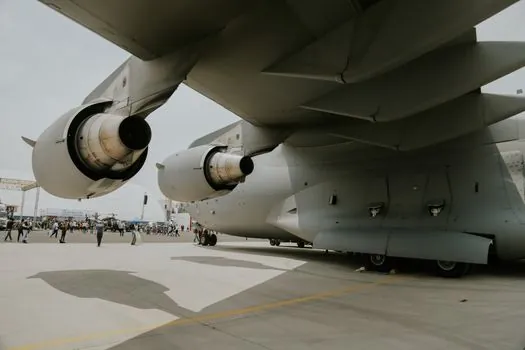
Aerospace and defense is the largest end-use pool with a 36.07% share in 2025, and energy and power is the fastest-growing end-use at 5.58-5.97% CAGR through 2031-2035 on the back of gas turbine retrofits and nuclear component demand [S1][S4].
Commercial engine build-rate recovery and an MRO backlog are the first of three named trends in the 2026-2035 outlook, paired with defense re-armament and gas turbine retrofit demand; Boeing's Commercial Market Outlook projects 43,600 new aircraft deliveries through 2044, which fixes the demand-side floor for the next two decades [S4]. Asia-Pacific holds 43.97-47.0% of 2025 revenue on Chinese and Indian foundry capacity, while North America is the fastest-growing region at 5.36-6.10% CAGR, sustained by re-localization incentives and DoD funding [S1][S4].
Comparison: How the Main Casting Routes Stack Up for Aerospace
For flight-critical hardware, the three realistic options are silica-sol investment casting, hybrid shell investment casting, and forging + machining, and the 2026 decision is dominated by geometry, alloy, and qualification status rather than unit cost [S1][S4][S5].
Silica-sol is the default for high-tolerance aerospace and medical work, and its 47.3-50.78% share reflects that dominance; hybrid shells are the cost-balanced challenger with a 5.30-5.68% CAGR, while forging + machining remains the fallback where grain-flow requirements override geometry freedom [S1][S4][S5]. Draft angles of 0.5-1 degree per side, structural wall thicknesses above 0.060 inch (1.5 mm), and minimum internal radii of 0.030 inch (0.75 mm) are the 2026 DFM baselines that keep castings on the fast lead-time track [S5].
Limitations and Failure Modes

Casting is slow and expensive to scale because foundries are batch-bound on furnaces, mold and core production, and heat treat, and they cannot ramp a new cell without re-running OEM-specific process qualification, which is the real reason 12+ week lead times persist in 2026 [S6].
Raw material volatility, refractory supply pressure, skilled labor shortages, and emissions compliance are named as real constraints in 2026, and they are concentrated in the same superalloy and vacuum-melt capacity that the market needs most [S1]. The 2022 US military parts shortage, which drove one Michigan foundry to double its casting and machining capacity using 3D-printed patterns, illustrates the response playbook: capital expenditure on equipment plus additive pattern workflows that compress first-article lead time from months to 8 weeks [S2]. The same playbook is now the basis of GE Aerospace's USD 1 billion advanced-manufacturing commitment and its USD 11.75 B CPP acquisition, both moves designed to internalize the bottleneck rather than wait for merchant capacity to arrive [S4][S8].
Applicable Standards and Sourcing Anchors
Aerospace investment castings are sourced against Nadcap special process approvals and OEM-specific material and process specifications; howmet Aerospace, Precision Castparts Corp., Consolidated Precision Products, Doncasters Group, Impro Precision Industries, and Signicast are the named key players in the 2026 market [S4].
Production practice is shifting from water-glass shells to silica-sol and hybrid shell chemistries for tighter tolerance and better as-cast finish, and from conventional wax tooling (still 80.4-86.47% of pattern volume in 2025) to 3D-printed and rapid-prototype patterns at a 5.74% CAGR through 2031 [S1][S4]. For engineers sizing a 2026 program, the investment casting process overview is the starting point for shell-system selection, while the casting tooling and pattern workflow governs DFM concessions that decide whether a part lands on the 2-3 week or the 12+ week queue [S5][S6]. Foundries that pair in-house additive pattern printing with disciplined DFM, as documented in the casting auxiliaries and shell-build workflow, are the ones delivering the 30% faster cycle times cited in 2026 buyer guides [S5].
Trackable signals through the rest of 2026: the integration timeline for CPP under GE Aerospace, SpaceX's in-house turbine blade foundry commissioning, and any DoD Industrial Base Analysis and Sustainment follow-on awards beyond the USD 220 million baseline already committed since 2021 [S4][S8]. Related coverage on the alloy side tracks the same pressure in titanium and nickel-alloy aerospace fastener lead times for 2026, and on the downstream side in aeroderivative gas turbine lead times for data center power in 2026, both of which sit on the same constrained superalloy and vacuum-melt base.