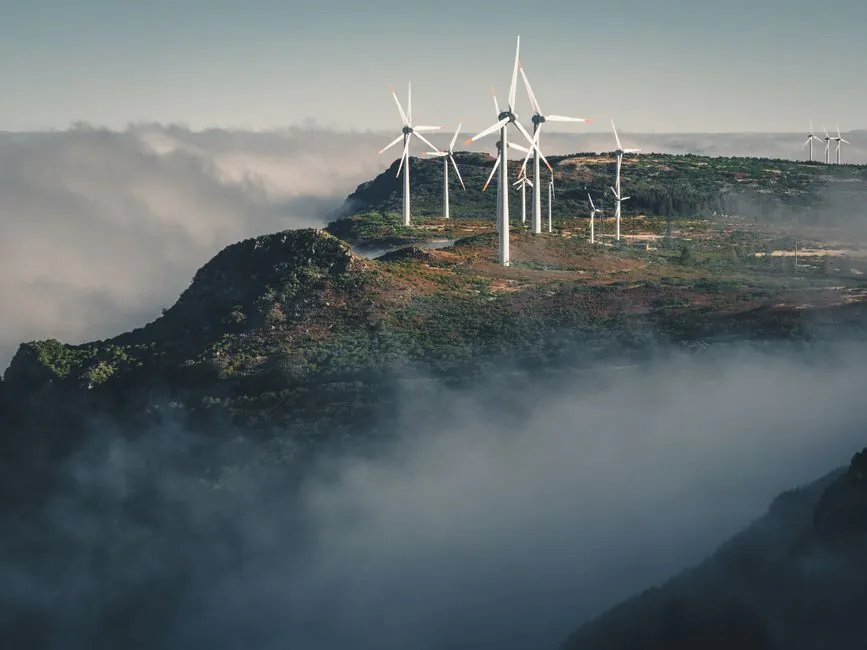
Aeroderivative gas turbines ordered from GE Vernova, Siemens Energy, or Solar Turbines carry 24 to 36 month lead times from purchase order to first power, while heavy-duty combined-cycle frames now run 36 to 84 months [S4][S7]. For U.S. data center developers staring down a 36 to 84 month grid-interconnection queue, the aeroderivative is the only rotating machine class that still fits an 18 month AI deployment window [S1].
Behind-the-meter gas capacity proposed for U.S. data centers grew from 31 GW to 67 GW of engine-based projects in the first half of 2026, a near-doubling in six months, as developers tried to bypass the heavy-duty turbine queue entirely [S5]. The total U.S. gas-fired pipeline, including turbines, engines, and combined-cycle, jumped 50 percent in the same window, from 252 GW to 378 GW, of which 189 GW sits in announced, pre-construction, or construction phases tied to data center load [S5].
Aeroderivative vs Heavy-Duty vs Reciprocating Engine: Lead Time and Fit
Aeroderivative units built on aircraft-engine cores deliver 30 MW to 100 MW per trailerized package, hot-start to full load in roughly 5 minutes, and roughly 99.9 percent reliability per OEM data, which aligns with Tier III and Tier IV data center uptime targets [S2]. The trade-off is fuel cost per MWh: simple-cycle aeroderivatives run less efficiently than combined-cycle plants and carry higher CO2 per kWh, a constraint that is now showing up in permit reviews and ESG scoring [S3][S5].
Heavy-duty gas turbines in combined-cycle configuration are the cheapest MWh once running, but new orders are now quoting 36 to 84 month lead times, with the worst cases pushing past 7 years for utility-scale frames [S1][S7]. Reciprocating gas engines (Wartsila, Caterpillar, INNIO Jenbacher class) sit at the fast end of the spectrum, with 12 to 24 month delivery and module-level scalability, which is why engine-based behind-the-meter capacity for data centers tripled to 45 GW in H1 2026 [S5].
Why the Aeroderivative Slot Opened in 2026
Hyperscale project size jumped from 100 to 300 MW to at least 1 GW in 15 months, a scale that crosses into baseload power plant territory, and the U.S. grid-interconnection process was never designed for it [S1]. In Columbus, Ohio, the interconnection queue runs 84 months (7 years); in Silicon Valley, Sacramento, and Portland, 72 months; in Phoenix and Atlanta, 60 months; the best markets (Pittsburgh, Chicago, Houston, Dallas) still need 36 months minimum [S1].
U.S. data center electricity consumption hit 200 TWh in 2023, roughly 4 percent of total U.S. power, and the IEA projects global data center demand could reach 1,000 TWh annually by 2026, more than double the 2023 figure [S4]. With that load growth, the three leading turbine OEMs are reporting rising order backlogs and multi-year lead times, which is exactly the signal that pushes procurement teams toward aeroderivative and engine packages [S5]. The supply squeeze is not limited to gas: diesel data center generator capacity reached 55 GW with 72 to 104 week lead times, which makes the gas aeroderivative's 24 to 36 month window look relatively healthy by 2026 standards [S8].
Spec-Level Selection Criteria for an Aeroderivative Behind-the-Meter Plant
For a 100 MW to 500 MW hyperscale AI campus, the typical captive plant spec is 4 to 8 aeroderivative units running in N+1 configuration, with battery energy storage sized for ride-through and a data logger layer capturing per-unit telemetry for emissions reporting and predictive maintenance. The aeroderivative advantage is module-level scalability: a single trailerized 30 MW unit can be added every 3 to 6 months once the first unit is commissioned, which matches the 12 to 18 month AI deployment cadence that hyperscalers are budgeting against [S1][S3].
Fuel flexibility is the other spec-level lever. Most new aeroderivative frames are specified H2-capable (blends up to 30 to 50 percent by volume depending on combustor) and carbon-capture-configurable, which lets the same unit transition to lower-carbon fuel as supply chains mature [S2]. For projects that need automatic grid islanding and re-synchronization, look for turbine governors and excitation systems that ride through a 100 percent load rejection and resync within 30 seconds; the time relay coordination on the protection side needs to match the turbine's restart envelope or the site will trip on the first grid disturbance.
Permitting, Noise, and Emissions Constraints That Bite in 2026
Trailerized modular aeroderivative packages install fast, but they do not bypass air permitting. NOx and CO limits on simple-cycle gas units typically run 25 to 50 ppmvd at 15 percent O2 depending on the non-attainment status of the county, and the trend across 2025 to 2026 has been toward tighter limits, not looser [S3]. Noise is the constraint that surprises first-time developers: a single 30 MW aeroderivative at full load produces 90 to 105 dBA at 1 meter, and a typical hyperscale site with 6 to 10 units will trigger residential noise limits at the property line unless acoustic enclosures and stack silencers are specified at the order stage [S3].
For projects that need continuous emissions monitoring, a gas analyzer rack on each stack (NOx, CO, O2, NH3 if SCR is fitted, and flow) is now standard scope, and the data is fed into the same data logger tier that handles turbine telemetry. A gas cabinet for H2-blend fuel or natural gas pressure-regulation is also typical scope for any new aeroderivative installation; these are not optional, they are line items on the EPC bill of materials.
Supply Chain Signals Worth Tracking Through 2026 and 2027

Two signals are worth watching. First, the share of U.S. data-center gas proposals that name a turbine or engine OEM: in H1 2026, two-thirds of gas-fired capacity in development globally and more than half of projects tied to data centers still had no named manufacturer, and nearly a quarter of data-center earmarked projects had no start year at all [S5]. When that "no-OEM" share drops below 30 percent, it will mean the OEMs have opened new capacity and lead times should soften.
Second, the diesel generator queue: at 55 GW of capacity and 72 to 104 week lead times, diesel is the bellwether for short-cycle power equipment, and any movement in diesel lead times tends to lead gas turbine movement by 3 to 6 months [S8]. If diesel lead times fall back below 52 weeks by mid-2027, expect aeroderivative lead times to compress from the current 24 to 36 month band toward 18 to 24 months, which would reset the math for a lot of paused hyperscale builds. Until then, an aeroderivative spec locked in Q4 2026 is the realistic path to first power in late 2028 or 2029, with the grid bypass economics driven by that 36 to 84 month interconnection queue [S1].