
Aerospace aluminum plate lead times in 2026 split into two clear bands: 3-7 days for stock gauges from service-center inventory and 20-40 days for custom mill orders, with DFARS-compliant 7075-T6 plate often pushing the upper end [S1][S2]. On a real first-article defense build the realistic fabrication window is several weeks once AS9102 Rev C first-article inspection, weld procedure qualification, and NDT routing are layered on top of material acquisition [S1].
Market context frames the squeeze: the aerospace plates market reached USD 3.1 billion in 2026, up 9.0% over 2025, with North America holding more than 45% share and commercial aircraft driving primary-structure demand [S4]. Within that, the 7075 T6 aluminum market alone is valued at USD 12.57 billion in 2026, growing at a 6.5% CAGR to 2036, and sheets-and-plates command 33% of form share with aerospace and defense at 46% of application share [S5]. For procurement teams this combination, tight plate capacity plus a 7075-heavy spec mix, is the supply backdrop shaping every quote on the desk.
Where the Lead-Time Clock Actually Starts
The clock on an aerospace aluminum plate order starts the moment a purchase order crosses the desk, but the binding constraint is rarely cutting or forming. For 2026 aerospace and defense sheet metal programs, lead time is dominated by DFARS material sourcing, ITAR registration, AS9102 first-article inspection documentation, and secondary process queues, not raw fabrication speed [S1]. That distinction matters because two identical 7075-T6 cut-to-size parts can land in 5 days or 35 days depending purely on whether the mill heat is already DFARS-traceable in the service-center rack.
Prototype orders are the fastest path: simple flat geometries, in-stock DFARS plate, no special processes, and no FAI scope can move through a sheet metal shop in a handful of working days [S1]. First-article and rate-production orders carry the longest per-unit schedule burden because material allocation, weld qualification, outside special processes, and a full AS9102 Rev C FAI package all sit in series [S1]. Vendors quoting a first-article in under two weeks are typically assuming pre-staged material and a partial FAI scope, which is rarely acceptable on a flight-critical part.
Stock vs. Custom Plate: The 3-Day vs. 40-Day Split
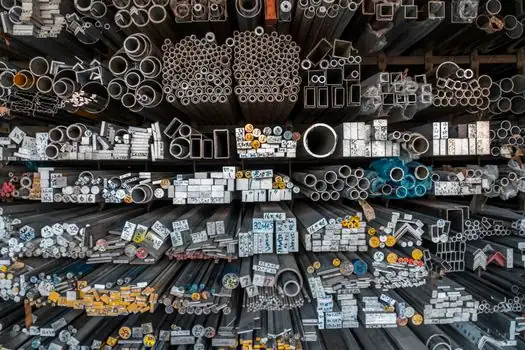
Service-center inventory defines the floor. Stock aluminum plate in common 2024-T3, 6061-T6, and 7075-T6 gauges ships in 3-7 days because the mill heat, certs, and DFARS paperwork already exist [S2]. Once the order drops into custom territory, non-stock thickness, unusual width, special temper, or a mill-direct heat, the window stretches to 20-40 days depending on plate size, quantity, and downstream processing such as sawing, heat treatment, or ultrasonic inspection [S2].
The 7075-T6 spec stack amplifies the spread. Plate form commands 33% of 7075 T6 market share in 2026, and aerospace and defense absorbs 46% of total application share, so the highest-strength tempers are also the most contested [S5]. For context on how 7075-T6 competes against tool-steel alternatives in prototyping work, see 7075 Aluminum vs P20 Steel for Prototype Molds: A Spec-First Decision. On tight-alloy builds, an integrated AS9100D supplier that consolidates machining, fabrication, welding, finishing, and FAI documentation under one roof removes inter-vendor handoffs and compresses the critical path [S1].
DFARS, ITAR, and AS9102: The Compliance Stack
DFARS 225.7003-2 prohibits DoD acquisition of covered systems unless specialty metals are melted or produced in the United States, and that single clause is the largest schedule variable on most defense sheet metal programs [S1]. ITAR registration adds gate-keeping on the supplier side, and AS9102 Rev C governs the first-article documentation package, including characteristic accountability, design intent traceability, and sub-tier evidence for special processes [S1]. A 7075-T6 plate order that looks like a 7-day stock pull can stretch to 30+ days if the heat melt source cannot be verified as DFARS-compliant or if the mill test report does not trace cleanly to a U.S. melt.
AS9100D quality systems embed FAI requirements from RFQ intake, so late discovery of missing records is the schedule risk to avoid [S1]. A practical gate: any aerospace plate quote worth taking should arrive with a stated melt country, an MTR snippet, and a clear FAI scope, not a generic "DFARS available on request" line.
Market Pull vs. Plate Supply in 2026
Demand is climbing faster than the mill base. The aerospace plates market grew 9.0% in 2026 to USD 3.1 billion and is projected to reach USD 4.5 billion by 2034 at a 5.0% CAGR, generating a cumulative USD 35.2 billion sales opportunity over 2026-2034 [S4]. North America held more than 45% of 2025 demand, the top 10 countries commanded more than 85% of 2025 value, and the top 10 suppliers controlled 60-70% of 2025 revenue [S4]. Hot-rolled plate leads by shape, titanium and alloys lead by metal, and commercial aircraft lead by application, with wing and primary-structure demand doing most of the volume work [S4].
The narrower aerospace aluminum plates segment tells the same story: USD 1.65 billion in 2026, scaling to USD 2.408 billion by 2034 at a 4.8% CAGR, with North America as the largest region and the Asia Pacific region as the fastest-growing, fueled by expanding fleets in China and India [S3]. For 7075-T6 specifically, 2026 industry size is USD 12.57 billion against an absolute dollar opportunity of USD 11.02 billion across 2026-2036 [S5]. Aluminum supply itself is tightening in 2026 with limited spot availability and longer lead times, driven by global disruption and rising prices [S7].
How to Shorten Lead Time Without Cutting Corners

The 2026 playbook for compressing aerospace plate lead times is unglamorous and well-defined. Submit complete RFQ packages, apply DFM reviews early, and specify standard-gauge DFARS materials already held in service-center inventory [S1]. On the supplier side, look for AS9100D/ITAR-certified shops that run multi-shift production and consolidate machining, fabrication, welding, finishing, and FAI documentation in one facility, since each handoff between vendors adds measurable schedule risk [S1].
For programs where 7075-T6 plate availability is the binding constraint, a couple of substitutions are worth evaluating with the stress engineer rather than the buyer. 2024-T3 remains the workhorse for formed fuselage and wing skins, 6061-T6 covers most secondary structure and tooling, and 7050-T7451 takes over for thick-section high-strength parts where 7075-T6's SCC sensitivity becomes a concern. None of these is a drop-in replacement, but each can pull a program back inside a workable lead-time band when 7075-T6 plate is queued. For related spec work on aluminum form versus ferrous tooling, see H13 Die Soldering in Aluminum HPDC: Mechanism, Hardness Window, and Mitigation.
Decision Criteria: Picking a Plate Supplier in 2026
For aerospace plate programs the supplier shortlist usually comes down to four criteria: mill traceability, FAI scope, secondary-process integration, and quoted lead time against a defined scope. The service-center quick-quote path (Ryerson, OnlineMetals-class distributors) wins on stock 7075-T6 plate with full MTR at 3-7 days, but typically does not hold AS9100D or run FAI in-house [S2][S7]. Integrated aerospace job shops with AS9100D/ITAR and in-house finishing win on first-article-to-rate continuity but quote in weeks, not days, once the FAI package is scoped [S1]. Mill-direct relationships (Alcoa, Constellium, Kaiser, Arconic, Novelis class producers) win on custom thickness, temper, and DFARS melt guarantee, but lead time sits in the 20-40 day band even before any cutting or forming [S2][S5].
A practical decision rule: if the part is a prototype with standard gauge, in-stock DFARS plate, and no FAI, go service-center. If the part is first-article or rate production with AS9102 scope, integrated finishing, and ITAR flow-down, go AS9100D job shop. If the spec demands non-stock thickness, special temper, or a guaranteed U.S. melt, mill-direct is the only honest answer, and the 20-40 day clock is what it is.
Trackable Signals Going Into Q4 2026
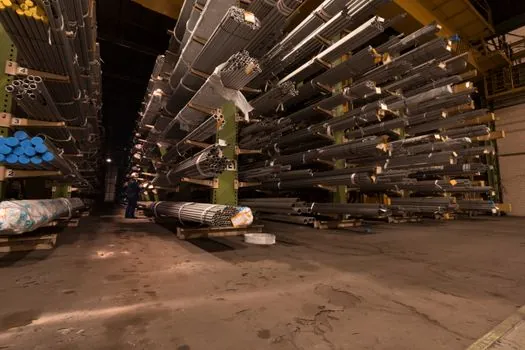
Three signals are worth watching as Q4 2026 opens. First, the 7075 T6 market is moving at a 6.5% CAGR to 2036 with an absolute dollar opportunity of USD 11.02 billion, so any quarter that prints materially above trend will tighten stock plate faster than service centers can replenish [S5]. Second, the aerospace plates market is on a 5.0% CAGR to USD 4.5 billion by 2034 with hot-rolled plate dominant and titanium gaining share, which means secondary-process queues at machine shops will stay full as defense and commercial build rates overlap [S4]. Third, primary aluminum supply remains tight in 2026 with rising prices and limited spot availability, so any new mill allocation policy or export control update from China, India, or the GCC will move lead times within weeks, not months [S7]. For a deeper read on related forming and process integration topics in the same supply environment, see Lights-Out AM Cells: Closing the Post-Print Loop in 2026.
For the relevant spec sheets and selection criteria, see lead screw, time relay, and steel plate.