
Aerospace part price is not a single number, it is the sum of five cost buckets: raw material, qualified labor, cycle time on tight-tolerance equipment, certification overhead, and tooling amortization spread across the run size [S2][S5].
Tier-2 and tier-3 suppliers in the US market in August 2026 quote on those buckets separately, because each one moves differently with material choice, tolerance stack-up, and whether the work is a blue-streak prototype, one-off, production run, or long-term agreement (LTA) [S2]. For an engineer cutting an RFQ, the line item that hides the most margin is almost always tooling and NRE, not the piece price.
Raw material: titanium, Inconel, and engineered resin pricing
Material is typically the first cost driver a buyer sees on an aerospace RFQ, and the spread between grades is wider than in any other manufacturing sector [S2]. Titanium and nickel-based superalloys (Inconel 718, Waspaloy) carry a per-kilogram cost several multiples of aluminum 7075 or 2024, and certified mill test reports (MTRs) for aerospace-grade bar/billet add a separate surcharge per heat lot.
For molded components, Precise Aerospace Manufacturing (PAM) runs both thermoset and thermoplastic engineered resins for tight-tolerance aerospace and defense work, and resin selection is a primary cost lever because high-temperature polymers (PEEK, PEI, PPS) cost multiples of standard grades [S5]. A buyer who can accept a lower-temperature polymer (qualified against the actual service environment, not a generic spec) typically sees a double-digit-percent piece-price reduction.
Qualified labor and AS9100D/NADCAP overhead
AS9100D-certified shops carry recurring audit, training, and documentation cost that non-certified shops do not, and that overhead is recovered through labor rates, not piece price [S2]. Agape Precision Manufacturing markets itself as a Woman-Owned AS9100D-certified shop with rapid RFQ response and short lead times, a positioning that signals a higher loaded labor rate in exchange for first-article and inspection documentation a non-certified shop cannot sign off on [S2].
NADCAP accreditation for special processes (heat treat, NDT, chemical processing, welding) is the second layer of overhead, and any part that touches an NADCAP-controlled process inherits that process's audit cost whether or not the part itself is high-value. For a buyer comparing two RFQs, a lower piece price from a non-NADCAP source is often a false saving once the part has to be routed through an approved sub-tier processor for heat treat or surface treatment.
Cycle time: tight-tolerance machining, 5-axis, and FSW

Cycle time on tight-tolerance aerospace work is dominated by tool change, in-process inspection, and fixturing time, not the roughing cut [S5]. PAM runs CNC machining alongside injection, compression, and transfer molding, and its low-volume tight-tolerance positioning means each setup is amortized over a small lot, which inflates the per-piece price [S5].
Process selection is itself a cost driver: 5-axis CNC, friction stir welding (FSW), and automated composite layup each have very different cycle-time profiles, and a buyer who specifies a process instead of a geometry often pays for capability they do not need. A useful internal sanity check is to ask the shop to quote the same part on two different processes before locking the print; the delta is usually larger than the material delta.
Certification, first article, and recurring audit cost
AS9102 first-article inspection, PPAP-style documentation packages, and material/process certifications are line items, not freebies, on an aerospace RFQ [S2]. For a one-off or prototype (a "Blue Streak" in Agape's terminology), the documentation burden can exceed the machining cost; for a production run, the per-piece share of that same documentation drops sharply [S2].
Long-term agreements (LTAs) rebalance this: the supplier recovers NRE and documentation cost through a higher piece price in exchange for volume visibility, which is why LTA pricing on the same print is typically lower than spot-market pricing once the run size crosses the supplier's break-even threshold. For a related view on how spec gates cascade from equipment selection into recurring cost, see this aerospace manufacturing equipment guide.
Tooling, NRE, and run-size amortization
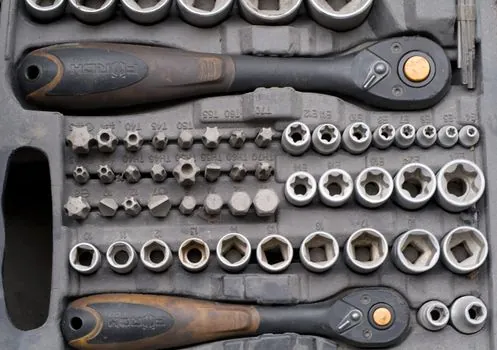
Tooling and NRE are the line items most often underestimated by buyers, because quotes frequently blend them into a single NRE charge rather than breaking out die, fixture, and inspection gauge cost [S2][S5]. For molded parts, a single-cavity hard tool can dominate the program cost at low volume; for machined parts, soft jaws, custom fixtures, and inspection gauges perform the same role [S5].
The amortization math is simple: divide total tooling/NRE by the committed run size, and that is the per-piece burden. At 50 pieces, tooling can exceed 100% of piece price; at 5,000 pieces, it is usually below 5%. A buyer who has genuine volume visibility should ask the supplier to price the tooling as amortized into the piece price, and a buyer whose volume is uncertain should ask for a separately billed NRE so the tooling decision is transparent.
Comparison: prototype vs production run vs LTA cost profile
The three quote types a tier-2 supplier will offer in 2026 behave very differently across the five cost buckets, and a direct comparison makes the trade-off visible [S2]. On a prototype/one-off, material and labor dominate, documentation is a large share of total cost, and tooling is usually minimal (soft fixtures only). On a production run, cycle time and material start to dominate, and per-piece documentation drops, but inspection and gauge cost rise. On an LTA, the supplier discounts piece price in exchange for volume commitment, tooling is amortized (or fully paid by the buyer and refunded on volume tiers), and the supplier's risk shifts from order-by-order order book to forecast accuracy.
A useful rule of thumb when comparing two RFQs at different run sizes: normalize to total program cost (piece price x quantity + NRE + tooling), not piece price. Two quotes that differ by 15% on piece price can be within 2% on total program cost once tooling and NRE are loaded, and the inverse is also true.
Hidden cost: supply-chain tier depth and sub-tier routing

A tier-2 shop rarely does every operation in-house, and the sub-tier routing (heat treat, surface finish, NDT, special processing) is a cost driver that does not appear on the face of the RFQ [S2][S5]. Each sub-tier handoff adds a markup, a lead-time day, and a documentation transfer step, and on a tight-tolerance part the handoff risk (damage, rework, missed NADCAP window) is a real line item even if it is not priced explicitly.
Shops that control more of the process chain in-house, like PAM with molding, machining, and value-added assembly under one roof, can compress both cost and lead time because they eliminate the sub-tier markup and the inter-process handoff [S5]. For buyers, the practical signal is to ask any shortlist supplier for a process-flow breakdown, then price the same part at a shop that owns fewer versus more of those steps, and compare.
What a 2026 buyer should track on every RFQ
Three signals move aerospace piece price most in 2026: certified raw-material surcharge per heat lot (driven by titanium and nickel superalloy spot pricing), NADCAP-controlled special-process capacity (tight when defense and space demand overlap), and the supplier's RFQ response time, which on tight-tolerance work correlates with whether the supplier has actually costed the part or is pricing to win the order and recovering on change orders [S2][S3]. Asil Aerospace, an ISO 9001-certified woman-owned shop running sheet metal, precision machining, plastic vacuum forming, and kitting, is one of several mid-market suppliers competing on that RFQ-speed axis [S3].
Two more signals to track on the next RFQ cycle: ask the supplier to break out the five cost buckets separately (material, labor, cycle time, certification, tooling/NRE), and ask for the per-piece burden of tooling at your actual run size, not a nominal volume. For a wider view of how equipment selection feeds into these same buckets, the 5-axis CNC, FSW, and dispensing choices guide covers the upstream spec gates, and the line-frequency furnace selection piece covers the heat-treat sub-tier specifically.
For the relevant spec sheets and selection criteria, see additive manufacturing material, pressure transmitter, and flow meter.