
AS9100D, layered on ISO 9001:2015, is the dominant aerospace QMS standard cited by tier-1 suppliers, with NADCAP handling process-specific accreditation for heat treat, NDT, and plating lines [S3][S5].
Updated certification pages published between 2026-07-18 and 2026-08-08 confirm that AS9100:2016, ISO 9001:2015, and ITAR registration remain the baseline document set on supplier qualification audits, with a measurable emphasis on AS9102 First Article Inspection Reports and CMM-driven dimensional conformance [S1][S5].
What the three core standards actually cover
AS9100D is the SAE-managed aerospace QMS that adds configuration management, FAI, and risk-based thinking on top of ISO 9001:2015 [S3]. ISO 9001:2015 alone is necessary but not sufficient for flight hardware, as it lacks aerospace-specific clauses for design assurance, counterfeit-parts prevention, and product safety. NADCAP (National Aerospace and Defense Contractors Accreditation Program) sits beneath the QMS layer and accredits individual special processes, so a shop certified to AS9100D still needs NADCAP accreditation on each heat-treat, welding, NDT, or coating line that touches a part [S3].
For a tier-3 machine shop, the typical document pack is AS9100D, ISO 9001:2015, customer-driven AS9102 FAIRs, and a flow-down of customer NADCAP scope. The supplier also registers under ITAR for any US-defense work, as seen on Bishop Aviation's published credentials [S1]. Pressure and flow measurement on qualification test stands typically uses calibrated pressure transmitters and flow meters traceable to NIST, since AS9100D clause 7.1.5.2 demands measurement traceability on verification equipment.
How suppliers map clauses to shop-floor practice
AS9100D clause 8.5.1.1 requires control of production through process validation, qualified operators, and calibrated tooling, which is why CMM inspection with documented gage R&R is so prevalent on aerospace inspection plans [S1][S3]. Plastic injection molding shops specify materials per AS9100D clause 8.4.1, listing approved resins (Nylon, Polycarbonate, Polyester, ABS, Acrylic) and tying each to a C of C on shipment [S1].
Clause 8.5.1.2 drives the AS9102 First Article Inspection report, which includes 18 standard characteristics plus any customer-added features, and is generated using CMM or surface-plate data. Bishop Aviation reports a 98% minimum product conformance and 98% minimum on-time delivery figure in its published KPIs, a level tied to AS9100D corrective-action discipline and AS9102 FAIR closure [S1]. For inspection cells, air quality monitors and power quality analyzers support controlled-environment compliance for Class 100,000 or better clean zones used in satellite and avionics subassembly.
Which certifications matter by buyer type

Commercial aviation primes (Airbus, Boeing, Embraer) require AS9100D at every tier, with NADCAP for any special process and AS9102 FAIRs for each new part number [S3]. Defense primes (Lockheed, Raytheon, BAE) layer on ITAR, CMMC for cyber, and frequently DFARS sourcing for raw stock, which a tier-3 shop meets through flow-down clauses rather than holding those certifications itself [S1]. Space hardware (NASA, ESA, SpaceX) typically requires AS9100D plus NASA-STD-8739 or ECSS soldering qualifications on top, which is why satellite OEM/ODM selection logic depends heavily on documented process maturity, not just part price.
PCB fabrication for avionics, discussed in 2026-07-24 industry guidance, requires AS9100D plus IPC-A-600 and IPC-6012 class 3 acceptance, with NADCAP covering any conformal coating, underfill, or wire-bond process [S6]. Additive-manufactured flight parts add a further layer: producers of structural metal AM hardware generally hold AS9100D and a customer-specific process qualification for each alloy-powder combination, with additive manufacturing material traceability from powder lot through HIP cycles.
Comparing the three frameworks on decision criteria
AS9100D, ISO 9001:2015, and NADCAP are not substitutes; they stack. AS9100D covers the full QMS plus aerospace-specific clauses (configuration, FAI, risk, safety), ISO 9001:2015 is the foundation, and NADCAP is the most process-specific, accreting process lines one at a time (NDT, heat treat, welding, plating, chemical processing) [S3][S5].
Decision criteria side by side: (1) Scope: ISO 9001 = generic QMS, AS9100D = aerospace QMS, NADCAP = individual process accreditation. (2) Audit cadence: ISO 9001 and AS9100D use triennial surveillance by an accredited CB, NADCAP is typically 12-18 month cycle. (3) Cost to maintain: ISO/AS surveillance runs in the $10k-30k/yr range for small suppliers based on 2026 fee schedules observed at Microchip-published supplier pages [S5], while NADCAP adds per-process audit fees. (4) Customer acceptance: commercial aerospace buyers accept AS9100D for tier-2/3 and demand NADCAP for any special process; defense buyers add ITAR [S1]. Holding AS9100D without NADCAP is acceptable for machining-only tier-3s; holding NADCAP without AS9100D is rare and usually not accepted by primes.
Failure modes that surface during audits
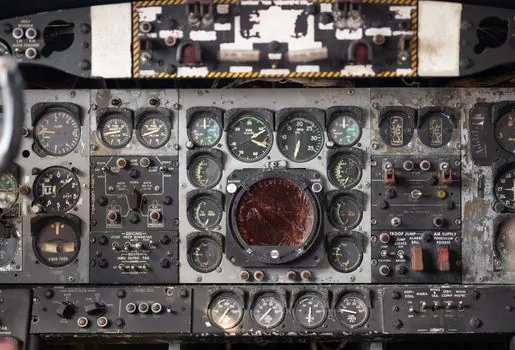
Common AS9100D major non-conformances from 2026 industry write-ups include: outdated calibration certificates on inspection gages, missing AS9102 FAIRs on part-number changes, and lapsed internal audit cycles [S3]. On the NADCAP side, the most cited issues are operator-qualification expirations, uncalibrated thermocouples on heat-treat furnaces, and FPI processes run without the required NADCAP-accredited line.
The most damaging failure is a counterfeit-parts escape. AS9100D clause 8.4.1 requires risk-based control of externally provided processes, products, and services, including counterfeit-parts prevention. Adherence to AS6081 for electronic parts and AS6496 for distributors is the usual path, and Microchip's published 2026 quality pages list AS9100D/ISO 9001:2015 site certifications to flow that requirement down through their supply chain [S5]. For a fluid-systems supplier like Aero Fluid Products, the same clause drives incoming industrial valve traceability and supplier-approval files, which is where 2026-07-18 published aerospace fluid-control catalogs show API 6D and ASME B16.34 valve references [S7].
What changed in the past six months for supplier qualification
Supplier-qualification pages updated between 2026-07-12 and 2026-08-08 reinforce that AS9100D, ISO 9001:2015, and ITAR remain the universal minimum, with no major published standard revisions within the period [S1][S5][S7]. Aerospace manufacturing software for 2026 (per July 2026 buyer guides) emphasizes digital AS9102 generation, electronic First Article records, and direct ERP-MES linkage for FAI closure, reducing paper-FAR errors in audits [S2][S8].
Microchip's Microsemi Power Management site page, refreshed on 2026-07-31, publishes AS9100D/ISO 9001:2015 status as a baseline trust signal for any avionics buyer evaluating a semiconductor source [S5]. For procurement teams doing supplier audits, the verifiable next nodes are: (1) confirm the certification scope statement on the issuing CB's directory rather than the supplier's own marketing page, (2) request the latest surveillance-audit executive summary, and (3) check NADCAP scope and audit-cycle currency for each special process touching the part. The most recent third-party coverage of the broader aerospace capacity-planning cycle, including the RRP-RCCP-CRP chain that AS9100D clause 8.5.1 ties into, can be reviewed at aerospace capacity planning decision gates.