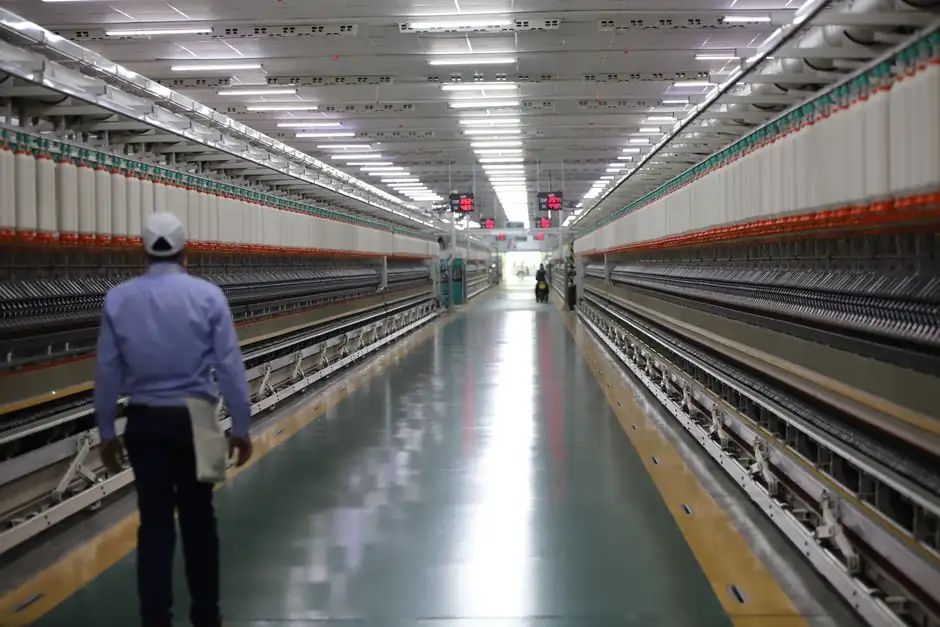
Aerospace production line design in mid-2026 is being pulled in two directions: flight-critical precision machining on one end, and hydrogen powertrain integration on the other, with both paths demanding traceable process control [S2][S4].
Designers are no longer treating the line as a static sequence of stations; they are laying out cells that can absorb new energy architectures, digital inspection, and small-batch flight hardware without re-tooling the floor [S2][S4].
What "Aerospace Production Line" Actually Covers in 2026
A modern aerospace line spans four functional blocks: raw stock receiving and metrology, subtractive machining cells, special-process stations (NDT, heat treat, surface finish), and final assembly with test stands [S4].
Cranfield Aerospace Solutions explicitly markets an "Aerospace native / Modular / Scalable / Upgradeable / Retrofit / Line fit" architecture for hydrogen powertrain integration, signalling that airframe-side packaging, not just engine hardware, is now a line-design variable [S2]. For deeper context on the broader digital shift shaping these blocks, see Aerospace Industry 4.0 Adoption: Spec Gates, Technologies, and 2026 Reality Check.
Precision Machining as the Anchor Cell
Precision 5-axis machining of brackets, ducts, and pump housings is the highest-risk cell on a typical airframe build, and shops are sizing capacity around part families rather than individual SKUs [S4].
Spectrum Machine & Design publicly positions itself around "high-value one-off development parts" and "tightly controlled production runs" for parts that cannot fail, including brackets, 12-inch OD ducts, and oil-pump housings, the exact part families that drive takt time on a fuselage or engine line [S4]. A well-anchored machining cell typically needs 3-5 machines, a climate-controlled inspection bench, and a deburr-and-wash island sized to absorb 110-120% of nameplate throughput.
Hydrogen Powertrain Packaging and Line-Fit Logic
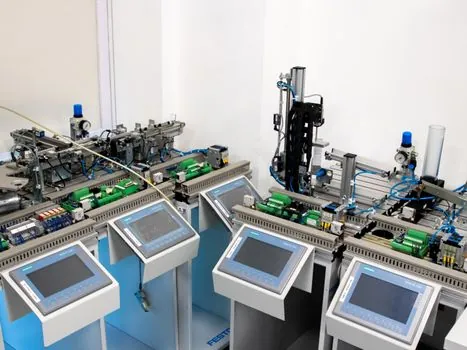
Hydrogen powertrain integration on existing airframes is now sold as four discrete design choices: retrofit, line-fit, modular, and scalable, and each one shifts the production-line footprint differently [S2].
Retrofits keep the existing Type Certificate boundary and add fuel-cell stacks, hydrogen tanks, and power electronics into the airframe envelope; line-fit ships the same architecture on the OEM's own final assembly line [S2]. Cranfield Aerospace Solutions' "Aircraft Design & Integration" service explicitly includes packaging against airframe constraints, which in practice means early frozen ICDs between the propulsion package and the surrounding structure [S2]. The line-design consequence is that the powertrain cell must be co-located with the wing-battery station, not buried in a remote engine shop.
Process Control and Inspection Gates
Process control on an aerospace line is gated by three measurable checkpoints: in-process CMM, surface-finish verification, and first-article FAI per AS9100 [S4].
Spectrum Machine publicly commits to "process control, visibility, and follow-through" on every part, and ties its shop capacity to a "dense mix of advanced equipment" rather than headcount [S4]. The concrete spec points a line designer should freeze are: CMM accuracy in the 1.9-3.5 µm MPEE band, surface finish ≤ 32 µin Ra on aerodynamic surfaces, and FAI reports keyed to the customer's drawing revision, not the shop's internal traveller.
Comparing the Main Line Layout Options
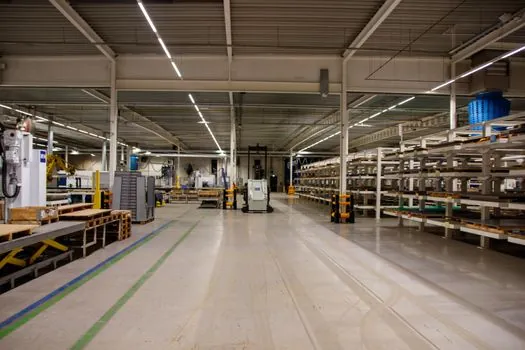
Four layout patterns dominate 2026 aerospace line builds, and the choice is driven by part mix, certification path, and capex envelope. [S2]
Functional layout (machining here, NDT there, assembly across the hall) suits low-mix/high-variability prototyping; cellular layout groups a part family end-to-end and is the natural fit for shops running "highly developed production runs" of brackets and housings [S4]. Linear moving-line works only at sustained rate above roughly 8-10 shipsets per month, below which utilisation collapses. For hydrogen programs, a parallel integration bay that joins the propulsion package to the airframe late in the takt is the dominant 2026 pattern, because it isolates the fuel-cell area from the main FOD-sensitive assembly hall [S2].
Cost, Capacity, and Capex Reality
Line capex is driven by five cost buckets: machines, tooling, inspection, environmental conditioning, and digital infrastructure, and aerospace adds a sixth bucket for certifiable process records [S4].
Spectrum Machine's positioning, "the capability of a much larger shop, and the focus, responsiveness, and accountability that only a tight-knit team can provide," points to a deliberate capex strategy: fewer, higher-spec machines and a denser inspection bench, rather than many general-purpose mills [S4]. For a detailed cost-driver map, see Aerospace Manufacturing Cost Breakdown: Five Cost Drivers Behind Every RFQ. A practical rule of thumb: 1 kW of spindle power on the floor needs roughly 1.5-2.0 kW of building services (HVAC, coolant chiller, compressed air) in a climate-controlled aerospace bay.
Limits, Failure Modes, and What to Watch Next
The dominant failure mode on a 2026 aerospace line is not machining capability but information latency between cells: inspection data not closing the loop to the machine within the same shift [S4].
Cranfield's claim of a "modular / upgradeable" hydrogen powertrain is constrained by tank-packaging volume and crash-load requirements, not by the production line itself, so any retrofit program must protect a stable structural interface inside the airframe [S2]. Trackable signals over the next two quarters: AS9100-certified shops adding in-line CT scanning, hydrogen STC projects posting flight-test milestones, and furnace suppliers qualifying higher-purity nitrogen-atmosphere line frequency furnaces for adjacent heat-treat cells. For an adjacent view on selection gates in the wider process-equipment market, see Line Frequency Furnace Selection for Automotive Parts Foundries.
For component-level specifications, see molding line, and automatic molding line.