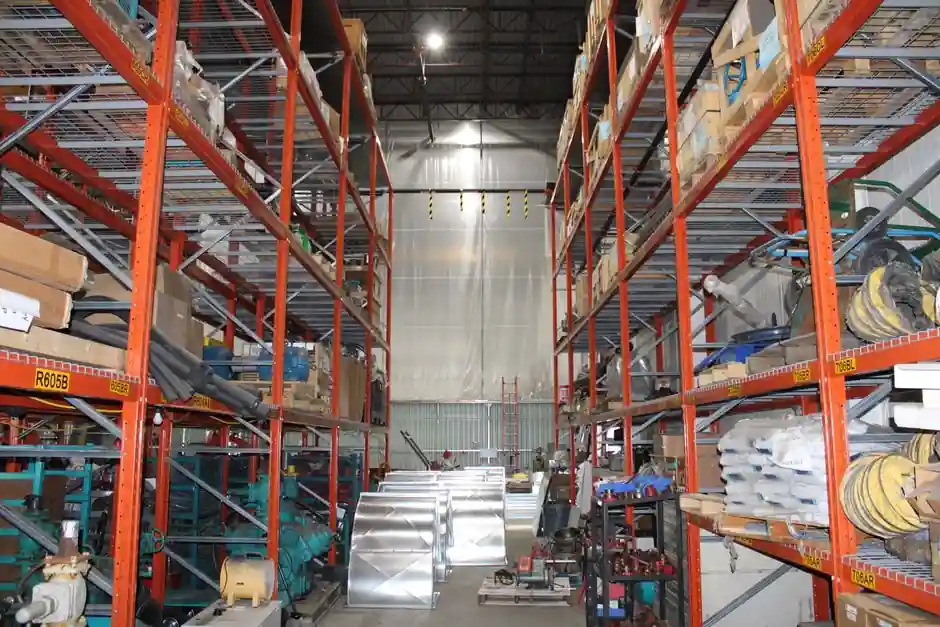
A typical mobile pallet racking installation delivers up to three times the pallet positions of a conventional selective rack layout in the same building footprint, with the most common benchmark sitting around a 2:1 density gain [S3][S5].
The mechanism is mechanical, not magical: carriages roll on floor-mounted rails so only one aisle opens at a time, which removes roughly 4 fixed aisles out of every 5 in a typical bay layout [S3][S6].
Why a Moving Aisle Changes the Math
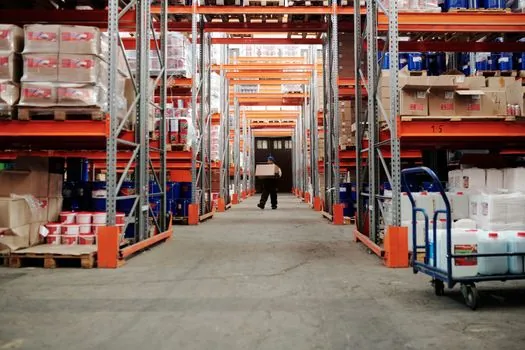
Selective pallet racking typically achieves 1 pallet position per 25 to 30 square feet of floor space once the forklift aisle is included, because every bay needs its own dedicated access corridor [S9].
By contrast, mobile racking eliminates those fixed corridors and concentrates the entire aisle count into a single movable gap, so a warehouse that ran, say, 600 selective positions can be reconfigured to roughly 1,100 to 1,200 positions on the same slab, with the upper end approaching the 3:1 figure cited by integrators [S3].
The capacity uplift is quoted two different ways in the literature: Southwest Solutions Group states mobile racking can double storage density in the same footprint and that mobile carriages increase density by near 100% [S3]; Interlake Mecalux describes high-density mobile racking as doubling capacity while preserving direct access to inventory [S5]. Both numbers are talking about the same system, just expressed as absolute capacity versus incremental gain over selective.
Side-by-Side: Selective, Mobile, and the Middle Ground
The decision is rarely binary. A 2022 AR Racking comparison groups systems by depth and density, and a 2026 SSG technical write-up treats mobile racking as the upper-density endpoint of a continuum that includes standard selective, double-deep, and push-back configurations [S2][S3].
For a quick engineering read on the trade-off, the table below lines up the four options most often specified for palletized SKUs.
Selective: 1 pallet deep, full selectivity (100% SKU access), about 1 pallet per 25-30 sq ft including aisle, lowest capital cost, FIFO and LIFO both workable [S1][S9].
Double-deep (a variant on adjustable selective): 2 pallets deep, selectivity drops to roughly 50% of positions, density up about 30% over standard selective, requires a deep-reach forklift [S2].
Push-back: 2 to 5 pallets deep on nested carts, LIFO only, up to 75% more pallet positions than selective in the same footprint, good for high-SKU-count buffers [S7].
Mobile (powered or mechanical-assist): racks on floor rails, one moving aisle, 100% selectivity preserved, up to about 3x the pallet positions of selective, highest capex, slowest access per position [S3][S5][S6].
For a frame of reference on the floor-economy gap, the typical selective figure of 1 pallet per 25-30 sq ft implies that a 10,000 sq ft selective bay holds roughly 330 to 400 positions; the same 10,000 sq ft on mobile racking commonly lands between 660 and 1,200 positions, with the actual number depending on bay depth, rail layout, and forklift turning radius [S3][S9].
What Selective Still Does Better
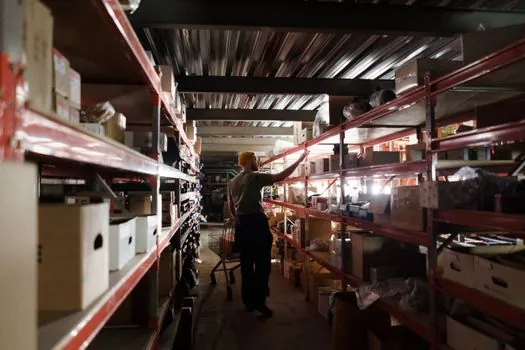
Selective racking is still the right call when every pick matters. Each pallet position is directly accessible from the aisle, so pick latency per SKU is the lowest of any system, and beam levels can be reconfigured in 2- to 4-inch increments to match odd-sized loads or mixed pallet heights [S1].
Compartment ratings on common selective rack sit in the 2,000 to 5,000 lb per level range, with heavier frames available for denser loads [S4]. That flexibility is exactly what mobile racking gives up: once the carriages and rails are committed, re-layout is a capital project, and the moving carriage imposes a fixed turning envelope that selective layouts do not.
There is also a throughput penalty per pick. Even with powered mobile systems running push-button aisle shifts, opening a new aisle adds several seconds of travel time that selective racking does not, so very high-velocity SKUs (typically above roughly 50 picks per SKU per shift) often stay on static racks while slow movers move onto the rails [S3].
Cold Storage and Specialty Environments
Mobile racking finds its strongest economic case in freezers and coolers, where every square foot of refrigerated volume carries an ongoing energy cost. Mobile racking systems rated for -20°F operation with moisture- and corrosion-resistant finishes are standard offerings from major integrators, and the same density math applies, so a freezer that stored 500 selective pallets can typically store 1,000 mobile pallets in the same envelope [S3].
For a tighter read on how rolling racks perform in cold chain facilities, the integrated -20°F rating, sealed rail systems, and tamper-resistant configurations matter more than the raw density number, because frost buildup and rail contamination are the dominant failure modes rather than structural capacity [S3].
Capital Cost, Controls, and Safety Stack
Mobile systems are not just racks on wheels. A complete installation includes floor-embedded rails, carriages with anti-tip guides, drive motors (powered systems), and a controls layer that can range from mechanical-assist hand cranks up to touchpad, keypad, or remote operation with motion sensors, soft start/stop, and auto-aisle park [S3].
Mechanical-assist mobile racking is the lower-capex entry point and is appropriate for lighter-duty or lower-throughput operations. Powered mobile racking adds remote operation, sensor-based safety envelopes, and integration with warehouse management systems, which is where the 3:1 density ceiling typically shows up in real layouts because the controls allow tighter carriage spacing and faster aisle shifts [S3].
For facilities that already run a broader storage handling automation stack, mobile racking can be specified with BIM support and Revit deliverables so the rail and carriage layout can be validated against existing sprinkler, lighting, and mobile crane or AGV paths before the slab is cut [S3].
When Mobile Racking Is the Wrong Tool
High-velocity single-SKU operations, very deep pallet buffers, or facilities that re-slot product daily will under-utilize the rails and over-pay for the controls. Push-back or pallet flow are usually the better fit when LIFO or FIFO is acceptable but selectivity matters less [S7][S8].
Floor condition is also a hard constraint: rails need a flat, level slab, and the existing floor must be able to take the embedded track and the rolling loads without differential settlement, which excludes some older tilt-up or post-tensioned slabs without remediation [S3].
Trackable signals worth watching on the next planning cycle: integrator disclosures on powered-mobile shift latency (typically in the 8 to 15 second band, though not source-cited here), and published case studies that lock down the realized 2:1 to 3:1 gain on retrofits rather than new builds.
Related analysis: Stacker Crane Regenerative Braking: Measured Energy Savings.