
Global data center accelerator spend is forecast to grow from a 2025 base to USD 372.68 billion by 2030, a 16.9% compound annual rate per the MarketsandMarkets 2025-2030 outlook [S4]. The same report segments the market by processor type (GPU, CPU, ASIC, FPGA), deployment (cloud data center, HPC data center), and workload (deep learning training, enterprise inference) [S4].
That demand is being pulled in two directions: hyperscaler training clusters running large language models, and on-prem enterprise inference nodes for agentic AI workflows flagged in Google Cloud's AI Agent Trends 2026 report, where 88% of early agentic AI adopters already report positive ROI on at least one production use case [S1]. Hardware selection now hinges on price/performance per accelerator socket and on-board networking scale-out, not raw FLOPS alone.
Processor type matrix: where GPU, ASIC, and FPGA actually fit
GPU parts remain the default for large-batch training of foundation models, while ASIC-class accelerators target fixed-function inference where unit economics dominate [S4]. FPGA cards such as the AMD Alveo V70 use the AMD XDNA architecture with AI Engines and are tuned for video analytics and natural language processing inference at low power and small form factor, with native compilation from TensorFlow and PyTorch models [S6].
For training specifically, Intel positions the Gaudi 2 accelerator as an Nvidia H100 alternative for GPT-3-class workloads, citing MLPerf GPT-3 results from December 2023 as the comparison baseline [S3]. The Gaudi line integrates 24 ports of 200 GbE per accelerator for near-linear scale-out across training pods, which removes a discrete NIC tier from the bill of materials for many cluster builds [S3].
Decision shortcut for buyers: pick GPU when model architecture changes quarterly and software ecosystem maturity matters; pick ASIC when the model is frozen and per-query cost is the binding constraint; pick FPGA when latency, power, or form factor at the edge dominates, as the Alveo V70 use cases illustrate [S6][S4].
Price-performance: the Gaudi 40% claim and what it actually compares
Intel's published figure is up to 40% better price/performance for Gaudi architecture on Amazon EC2 instances versus the GPU baseline it benchmarks against, with the comparison framed at the EC2 instance level rather than bare silicon [S3]. That distinction matters for procurement: per-instance cost includes host CPU, memory, storage, and egress, so the accelerator's contribution to the 40% delta is not isolated on the vendor page.
Buyers should request the underlying instance SKU, region, and utilization curve before treating 40% as a portable number across cloud providers. For on-prem builds, the same Gaudi architecture's 24 integrated 200 GbE ports reduce switch port spend, which is a real line-item effect that bare accelerator pricing does not capture [S3].
Power delivery: the hidden bottleneck for AI accelerator deployments
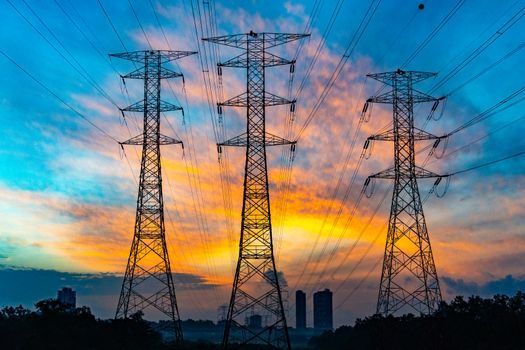
Analog Devices markets a complete power tree for AI accelerators spanning data center to edge, organized around three functions: high-efficiency conversion via multiphase and point-of-load (POL) regulators for high power density on AI/ML processors; ultralow EMI step-down conversion using Silent Switcher topology and coupled inductors; and precision monitoring through power monitors and temperature sensors for fuel gauging and system telemetry [S5].
The practical floor on accelerator rack density is set by the POL stage, not the die. Multipoint load-step response, hold-up capacitance, and per-rail telemetry are the specs that determine whether a 600 W or 1000 W accelerator card can be fed from a standard 54 V bus or requires a custom shelf. Specifying the power section in parallel with the accelerator shortens integration cycles and avoids the rework that hits teams who treat power as a commodity.
Software and protocol stack: A2A, MCP, and what they mean for accelerator sizing
Google Cloud's 2026 agentic AI framing centers on two open protocols: Agent2Agent (A2A) for inter-agent communication across frameworks and vendors, and Model Context Protocol (MCP) for connecting agents to live enterprise data sources and external systems [S1]. Once agents can call tools and other agents, inference request volume per user session rises sharply, which shifts the sizing problem from peak tokens-per-second to tokens-per-session and concurrent sessions per accelerator.
This is the bridge between the AI agent trends report and the accelerator market sizing. Each additional protocol-enabled tool a model can invoke adds latency, and agentic workflows compound tool calls; procurement teams that still size accelerators on a single-prompt basis will under-provision by 3-5x once A2A and MCP are wired into production [S1].
Deployment split: cloud data center vs HPC data center vs edge
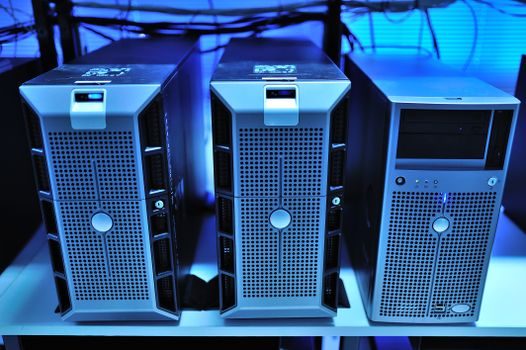
MarketsandMarkets splits deployment into cloud data center and HPC data center, with the cloud segment driven by hyperscaler training and enterprise inference tenants, and HPC by scientific and industrial simulation workloads [S4]. End-user verticals are segmented as IT and telecom, healthcare, and energy, each with different accelerator mix preferences [S4].
For IT and telecom, the GPU-dominant cloud pattern holds. For healthcare, inference-heavy workloads on agentic clinical workflows and medical imaging favor ASIC and FPGA form factors where the Alveo V70's low-power, small-form-factor profile is a direct fit [S6][S4]. For energy and industrial HPC, training of physics-informed models sits on GPU, but real-time inferencing on sensor streams is increasingly FPGA-class at the edge.
Standards and ecosystem: MLPerf as the only portable benchmark right now
The Gaudi 2 vs H100 claim is anchored to the MLPerf GPT-3 benchmark from December 2023, which is the closest thing to a portable training-performance number across vendors [S3]. MLPerf Inference results cover image classification, object detection, natural language processing, and recommendation, which aligns with the workload mix AMD targets for the Alveo V70 [S6].
Buyers comparing accelerator quotes should pin each line item to a named MLPerf submission, version, and result version date, not to vendor press releases. The same discipline applies to agentic AI: the 88% positive ROI figure for early adopters is a survey aggregate across use cases, not a per-workload guarantee, and the underlying Google Cloud report draws on 3,466 enterprise decision-maker responses [S1].
What to watch through the rest of 2026

Trackable indicators for the next two quarters: (1) MLPerf Training v4.x submissions and any new H100 successor entries, since the current comparison baseline is the December 2023 GPT-3 result; (2) the 2026 event calendar from the AI Accelerator Institute, which lists AIAI Los Angeles on August 26, AIAI Berlin on September 15, and the Agentic AI in Financial Services Summit NYC on October 1, where reference architectures typically surface [S2].
For sourcing teams building chiplet-packaged accelerator modules, the chiplet packaging supply chain 2026 capacity map tracks advanced-packaging lead times that feed directly into accelerator delivery slots, and the wafer fab equipment supply chain 2026 view covers the FEOL concentration that sets accelerator wafer availability.
Spec-level background on the components involved: pressure transmitter, flow meter, and industrial valve.