Chinese refiners set the 2026 lithium hydroxide supply map: battery-grade monohydrate (LiOH·H2O, CAS 1310-66-3) priced around $1.30/kg on 9 July 2026 [S8], with anhydrous LiOH (CAS 1310-65-2, MW 23.948) at ≥56.5% assay the dominant cell-feed grade for NMC cathode synthesis [S1][S8].
For a process engineer, the 2026 shortlist is a spec question first and a brand question second: assay, moisture, magnetic impurity, particle size, and shipping form decide which top lithium hydroxide companies 2026 belong on an RFQ. The molecule is a strong alkali, soluble to 12.8 g/100 g H2O at 20 °C, density 1.51 g/cm^3, mp 471 °C, decomposition ~925 °C, pH ~14 at 1 mol/L [S2].
Battery-grade LiOH·H2O vs anhydrous LiOH: spec axes
CAS 1310-66-3 (monohydrate, BioUltra ≥99.0% T) is the lab and pilot reference, with assay referenced against TraceSELECT-style certificates [S7]. CAS 1310-65-2 (anhydrous, MW 23.948) is the standard NIST SRD 69 entry, gas-phase ΔfH° −55.999 kcal/mol, S°gas 50.351 cal/mol·K (Chase, 1998, last reviewed June 1971) [S1]. For cathode precursor pH control, the alkali strength is the deciding factor, and a 1 mol/L solution tests pH ≈ 14 [S2].
Commercial battery-grade monohydrate trades at ~$1.30/kg for ≥99% LiOH·H2O on Chinese spot as of 9 July 2026, MOQ 1 kg [S8]. ECHEMI tracks the China domestic curve against battery-grade CIF bands [S5], and CBCIE maintains the international battery-grade LiOH price summary updated through 1 June 2026 [S3].
Producer concentration and capacity signals 2026
Chinese refining capacity continues to anchor global supply: Greatpower Technology publishes a LiOH product page listing molecular weight 23.94, mp 471 °C, bp 925 °C (decomposition), density 1.51 g/cm^3, classified as inorganic base, end-use "Power Battery Materials" [S2]. ChemNet indexes multiple LiOH suppliers with the same CAS 1310-65-2 anchor and synonyms including "lithium hydrate" and "lithium hydroxide hydrate (1:1:1)" [S4].
Industrial-grade LiOH remains controlled for corrosivity — "highly corrosive, can burn eyes, skin and upper respiratory tract", storage "sealed dry" because the product absorbs CO2 and H2O from air [S2]. That handling line is a hard RFQ exclusion for vendors who ship non-hermetic drums, regardless of assay.
Selection criteria for a 2026 battery-grade RFQ
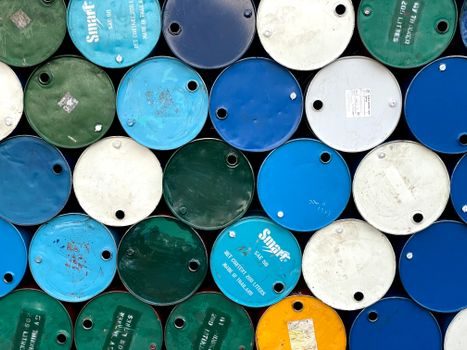
Five gates filter a LiOH vendor shortlist in 2026. (1) Assay: LiOH·H2O ≥56.5% (battery-grade) or LiOH ≥99.0% T (BioUltra / analytical) [S7][S8]. (2) Form: monohydrate fine white monoclinic crystals vs anhydrous powder, density ~1.51 g/cm^3 [S2]. (3) CAS declared: 1310-66-3 for monohydrate, 1310-65-2 for anhydrous [S1][S4][S7]. (4) Shipping: sealed dry packaging, CO2-scavenged, hazard class 8 corrosive [S2]. (5) Document trail: NIST-traceable MW (23.948) and thermodynamic data on the CoA where synthesis QA demands it [S1].
For broader battery-materials sourcing, the upstream carbonate market sets the conversion-feasibility ceiling — see Lithium Carbonate 2026: Demand Inflection, Regional Price Bands, and Sourcing Gates for the precursor-feed band that drives LiOH conversion line utilisation.
Application fit: who LiOH is FOR vs NOT for
FOR: NMC/NCA cathode precursor co-precipitation (battery-grade monohydrate, ≥56.5% LiOH·H2O) [S2][S8]; high-purity Li salts for electrolytes and laboratory reagents (BioUltra ≥99.0%) [S7]; CO2 scrubbing in closed-loop breathing systems for submarines, spacecraft, and rebreathers (anhydrous LiOH, CO2 + 2 LiOH → Li2CO3 + H2O) [S2].
NOT for: LFP-only cathode lines that can use Li2CO3 with no penalty (carbonate is cheaper per mole of Li for LFP stoichiometry) [S2]; any use case sensitive to strong-alkali pH (≈14 at 1 mol/L) without stainless / PTFE wetted parts [S2]; moisture-sensitive formulations that cannot tolerate the CO2/H2O absorption behaviour of standard LiOH grades [S2].
Comparison axes for a vendor shortlist
Decision criteria lined against producer type: (a) Assay ceiling — Chinese battery-grade refiners offer ≥56.5% LiOH·H2O at scale, while BioUltra-style labs offer ≥99.0% T at small pack [S7][S8]. (b) Price — Chinese domestic battery-grade monohydrate at ~$1.30/kg on 9 July 2026 spot [S8], against a 2023-vintage industry forecast baseline that framed the multi-year demand curve through 2027 [S6]. (c) Form factor — fine white monoclinic crystal monohydrate, or powder anhydrous, both at density 1.51 g/cm^3 [S2]. (d) Document depth — vendor pages carry MW 23.94 / mp 471 °C / bp 925 °C (dec.) [S2]; SRD 69 carries the underlying gas-phase thermochemistry (ΔfH° −55.999 kcal/mol, S° 50.351 cal/mol·K) for QA traceability [S1].
For adjacent materials engineering context, see Magnetic Material Types and Classifications: A Spec-Driven Engineering Map, which lays out the magnet-grade spec pattern that LiOH-derived cathode-active materials feed into.
Limitations, failure modes, and standards posture
Three hard failure modes show up in 2026 LiOH RFQ returns. (i) CO2 pickup during sea freight — unstabilised monohydrate reports lower assay on arrival; insist on sealed dry containers and CO2-scavenged headspace [S2]. (ii) Mis-declared CAS — some vendor pages list 1310-66-3 for monohydrate and 18433 / "lithium hydroxide anhydrous" synonyms under 1310-65-2, so the CoA must be cross-checked against the NIST SRD 69 MW 23.948 anchor [S1][S4]. (iii) pH overshoot in precipitation — at 1 mol/L pH ≈ 14, stainless 316L wetted parts and PTFE-lined reactors are the safe default; carbon-steel reactors fail fast [S2].
Standards posture for LiOH itself is not the same as for process instruments: battery-grade assay, moisture, magnetic impurity, and particle-size are typically governed by cathode-maker internal specs, with vendor CoA references back to the NIST-JANAF gas-phase thermochemistry (Chase 1998) for QA traceability [S1]. For the production-line process side, industrial valve selection on LiOH·H2O transfer lines should follow the same strong-alkali handling logic as any NaOH/KOH service, with material compatibility and sealed packaging as the controlling gates [S2].
Sourcing map and producer shortlist signals
Producer shortlist for 2026 splits into three buckets. (1) Vertically integrated Chinese LiOH refiners tied to lepidolite/spodumene conversion: Greatpower Technology is a documented example publishing a LiOH product page with the full property stack (MW 23.94, mp 471 °C, bp 925 °C dec., density 1.51 g/cm^3) and end-use "Power Battery Materials" [S2]. (2) Trading and distribution desks indexed on ChemNet under CAS 1310-65-2 with multiple synonym matches [S4]. (3) Lab/reagent suppliers: Sigma-Aldrich BioUltra ≥99.0% T, 1310-66-3, used as the analytical benchmark [S7].
Price signals: A China supplier/manufacturer listing for battery-grade LiOH·H2O shows a price of $1.30/kg (CAS 1310-66-3, purity 0.99, MOQ 1 kg) on 9 July 2026 [S8]. ECHEMI tracks the China domestic price curve and the change curve on the same SKU window [S5]. CBCIE publishes the international battery-grade LiOH price summary through 1 June 2026 with WhatsApp/WeChat/email contact channels for spot inquiry [S3].
Trackable next-node signals: (1) CAS 1310-66-3 / 1310-65-2 CoA audit trail back to NIST SRD 69 MW 23.948 and Chase 1998 thermochemistry [S1]; (2) Chinese domestic battery-grade LiOH·H2O spot around $1.30/kg on the 9 July 2026 ChemicalBook print [S8], with ECHEMI's curve and CBCIE's 1 June 2026 international summary as the cross-checks [S3][S5]. For a deeper read on the same chemistry, see Lithium Hydroxide 2026: Capacity, Pricing Tracks, and Sourcing Specs.
Spec-level background on the components involved: pressure transmitter.