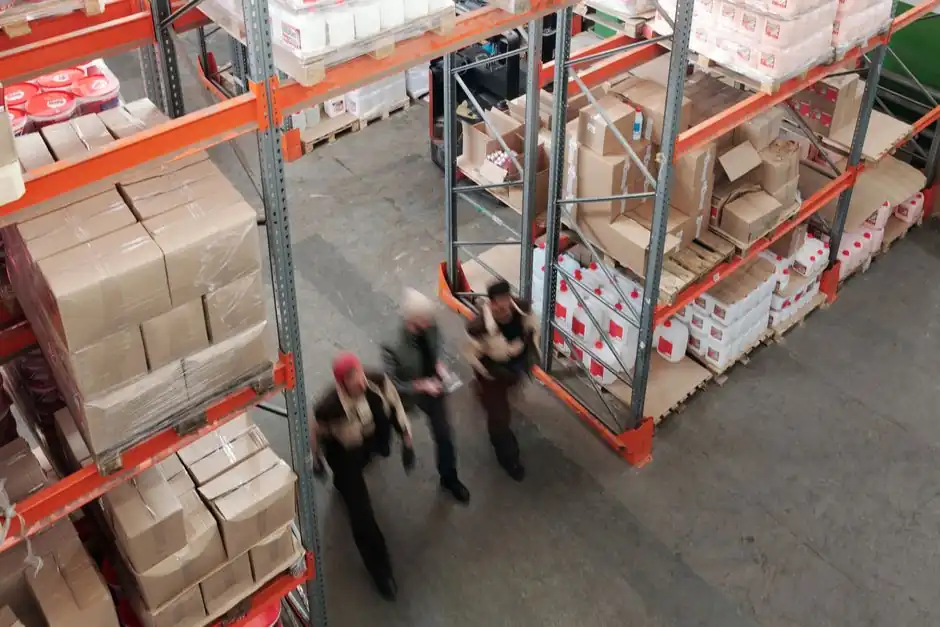
Air-cargo pallet stacker selection is dictated by three hard numbers: rated load 600-2000 kg, lift height matched to ULD contour limits, and a straddle or counterbalance chassis narrow enough for the bonded cargo aisle [S1].
Selection also has to absorb the wider IATA cargo growth track, with global air cargo volume expected to grow roughly 2.6 percent year-on-year through the 2026 cycle, which raises the bar on uptime and battery availability for ground support equipment (GSE) fleets [S2].
Capacity and Lift Height Band for Air-Cargo Pallets
Standard warehouse stackers cover 600-2000 kg at lifts commonly between 1.6 m and 5.5 m, which is the realistic envelope for civil air-cargo ULD staging rather than engine or AOG loads [S1]. Operators should match the rated capacity to the heaviest single ULD (AKE/AAK containers on PRK pallets typically run 1200-1600 kg gross) and keep a 10-15 percent safety margin above that figure. For narrow-body freighters, a 2.5-3.5 m lift keeps stackers clear of overhead services and jet-blast clearance cones in apron sheds. Where ceiling height is constrained, a straddle leg stacker with a 1.6-2.0 m collapsed mast preserves aisle maneuverability without surrendering lift. Battery life becomes the second constraint: lithium-ion packs on modern electric pallet stackers sustain 6-8 hour shift profiles on opportunity charging, which matches the dwell time of outbound cargo build-up.
Manual, Semi-Electric, and Electric: Which Drivetrain Fits Ramp Operations
Manual hydraulic stackers remain the cheapest path for under-800 kg loads in static import sheds, but electric pallet stackers dominate new GSE procurement because they cut operator fatigue, lower noise below the 75 dB ramp limit, and integrate with telematics [S1]. A semi-electric stacker (electric lift, manual travel) is the cost-efficient midpoint for small-bonded-store operations where travel distance stays under 30 m. Full electric stackers with AC drive motors and proportional lift/lower valves are the right answer for high-throughput export terminals and automated baggage/cargo convoys that interface with tow tractors in the 3-35 t towing class [S2]. The drivetrain choice is closely tied to fleet data systems: a web-based portal that displays vehicle location, in-use status, and battery state of charge is now standard on premium GSE fleets, and it is what enables operations to schedule opportunity charging around aircraft turnarounds [S2].
Pallet Type, Tare Weight, and Air-Freight Cost Trade-Off
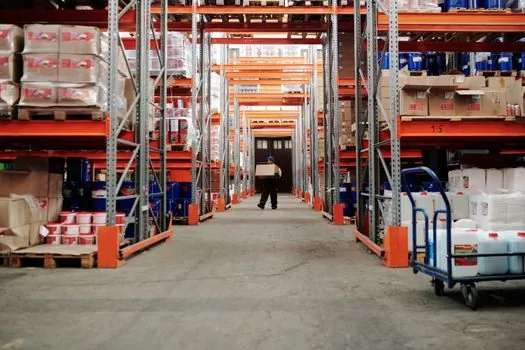
Pallet choice is the single largest tare lever on an air-cargo move, and it directly governs the stacker spec because fork dimensions, pocket spacing, and dynamic deflection all shift with the pallet material [S3]. Paper and corrugated cardboard pallets drop tare by 60-80 percent versus standard GMA wooden pallets, which translates to roughly 15-25 kg saved per ULD base, a material figure when multiplied by an export build-up of 80-120 positions. Plastic pallets sit in the middle: tougher than cardboard, lighter than wood, and consistent in fork-pocket geometry for automated stackers. Wooden pallets remain the default for heavy or odd-size cargo because the deck stiffness tolerates rougher forklift handling at the ramp. Whatever the deck, the stacker spec must list compatible pallet footprints (EUR 800x1200, ISO 1000x1200, US 1067x1219) and confirm that fork length spans at least 80 percent of the deck length to prevent tip-overs on tall stacks.
Aisle Width, Straddle vs Counterbalance, and Bonded-Store Geometry
Aisle width drives the chassis decision more than any other geometric input [S1]. Straddle stackers need a working aisle roughly 2.4-2.8 m wide, and they support the pallet on outboard legs, which lets the mast stay slim and keeps the load centered for tall ULD stacks. Counterbalance stackers need 3.0-3.5 m aisles but carry heavier loads and handle non-palletized ULD dollies. Mini stackers with tilting forks are useful in transit sheds where 600-1000 kg air-freight mailbags and small-parcel cages need to be tipped onto build-up stations. For export terminals served by automated tow-tractor convoys, the stacker charging bay and parking lane should be co-located with the tow path, and a telematics layer should expose every stacker's location and state of charge to the dispatcher [S2]. Related guidance for the parallel port environment is collected in the port logistics spec map, and the same chassis logic applied to garment DCs is mapped in the apparel distribution selection map. The general pallet stacker encyclopedia entry covers drivetrain and mast families in more detail.
Failure Modes, Standards, and Sourcing Constraints
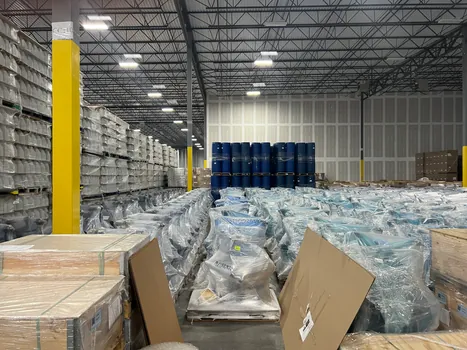
The two failure modes that show up most in ramp service are mast deflection under off-center loads and battery depletion mid-shift, both of which are spec-driven rather than maintenance-driven [S1]. Mast deflection is controlled by selecting a stacker whose rated capacity at maximum lift is at least 1.25x the heaviest anticipated ULD, and by keeping load center within the rated distance. Battery depletion is controlled by lithium-ion packs with opportunity charging and a fleet portal that surfaces state of charge per vehicle, since GSE uptime is the dominant variable when a wide-body freighter is on a 90-minute turnaround [S2]. For procurement, IATA AHM 633 (aircraft ground handling) and ISO 5053-1 (industrial truck safety) are the standard references for GSE specification, while the pallet deck itself should comply with ISO 6780 for interline dimensions or the equivalent IATA ULD contour rules. Lead times on purpose-built airport stackers commonly run 12-20 weeks, so any 2026 fleet expansion for the projected 2.6 percent cargo growth should be ordered two quarters ahead of peak season [S2].
Watch three signals through Q4 2026: the GSE Expo Lisbon (15-17 September 2026) announcements on automated airport tow tractors and telematics portals, IATA's quarterly cargo growth revision against the 2.6 percent baseline, and any new ULD tare-weight rules from IATA's Cargo Industry Affairs that would shift the cost case for paper pallets [S2].
Spec-level background on the components involved: stacker crane, and air pick.