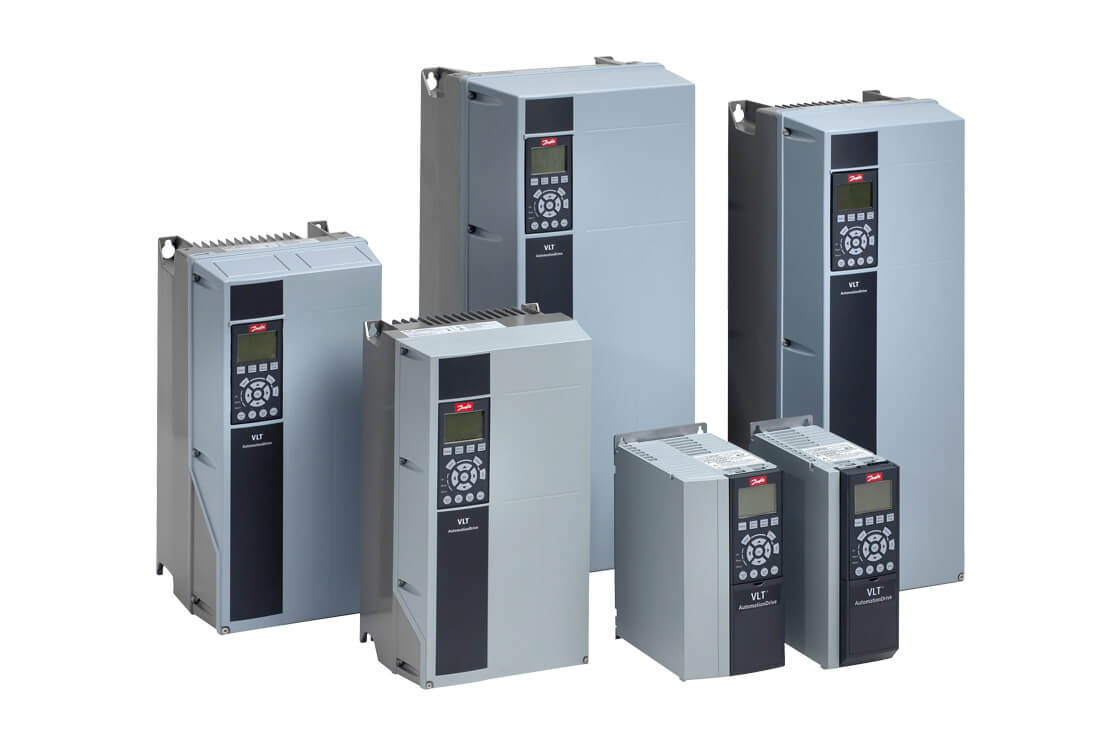
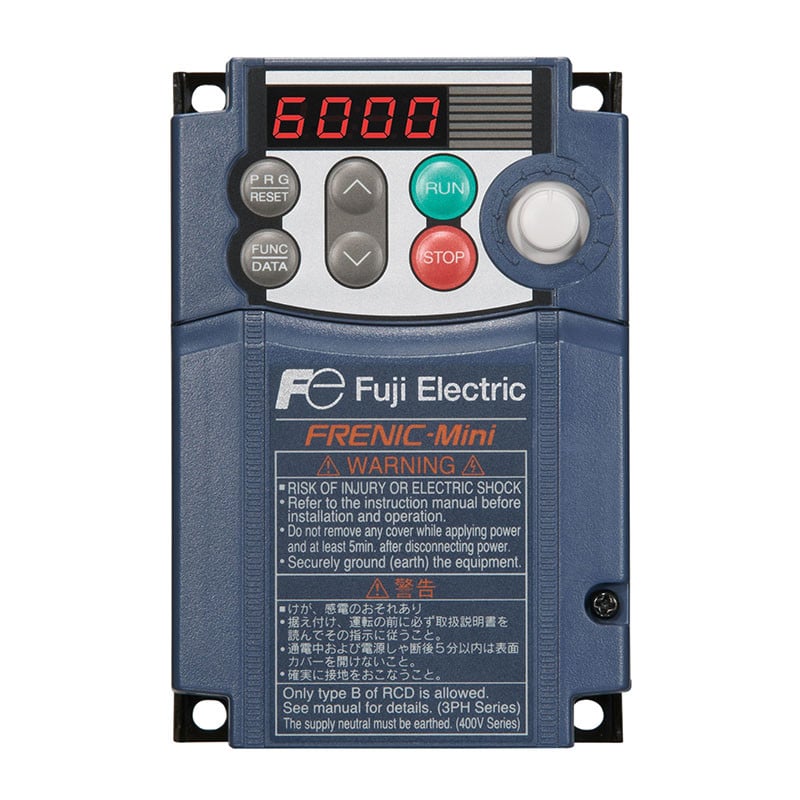
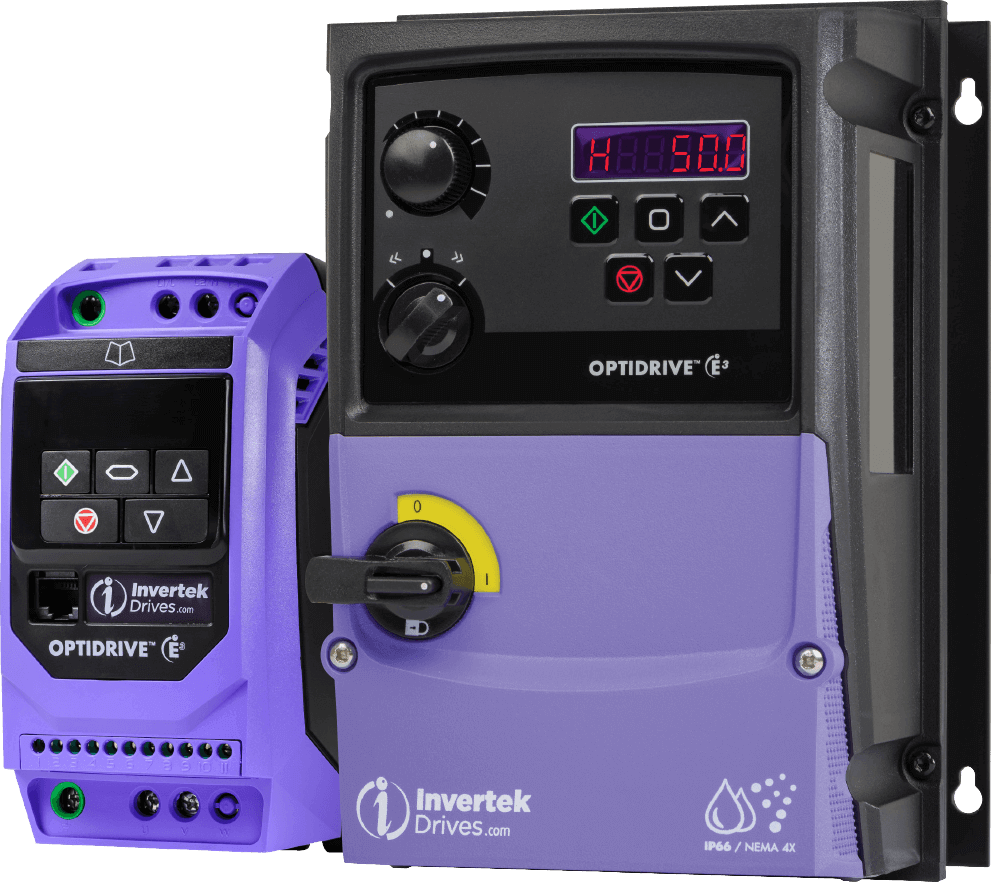
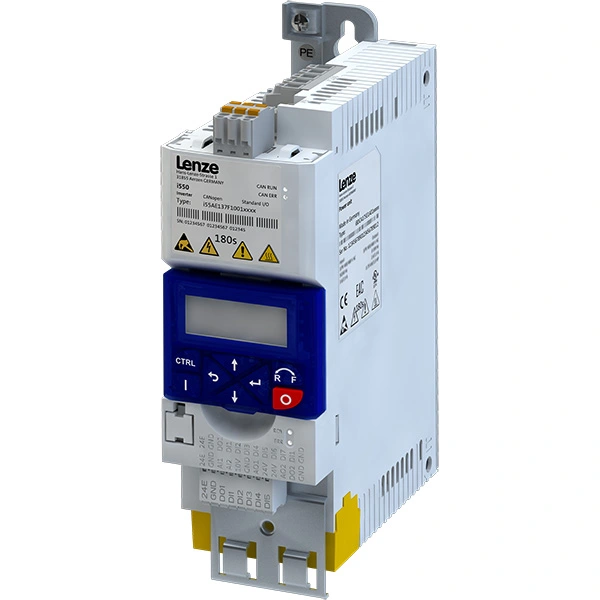
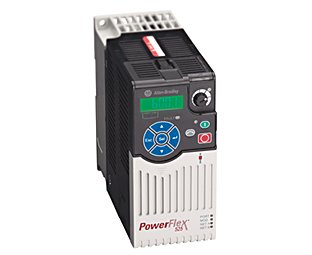
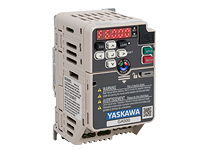
A variable frequency drive (VFD), also called an AC drive, adjustable speed drive, or frequency converter, is a power electronic converter that controls the speed and torque of an AC induction or permanent magnet motor by varying the frequency and voltage of the power supplied to it. By replacing fixed-speed across-the-line operation with continuous speed control, a VFD turns a constant-speed motor into a precisely regulated, energy-efficient process actuator.
VFDs are among the highest-impact energy-saving devices in industry because shaft power on a centrifugal fan or pump falls with the cube of speed. The same drive that trims energy bills also delivers soft starting, controlled deceleration, four-quadrant torque, and integrated protection, which is why drives now appear on a large share of the world's industrial motors.
This guide is aimed at industrial purchasing engineers and design engineers. It covers 6 chapters from converter architecture, control methods, voltage and power ratings, harmonics and EMC, to spec-sheet decoding and selection decisions, with 7 selection FAQs and manufacturer comparisons, helping you build a complete drives knowledge framework. All parameters reference the IEC 61800 series (61800-2 ratings, 61800-3 EMC, 61800-5-1 safety, 61800-9 efficiency), IEEE 519 harmonics, and NEMA MG1 / IEC 60034 motor standards.
Chapter 1 / 06
What is a Variable Frequency Drive
A variable frequency drive is a power electronic converter placed between the fixed-frequency AC supply and an electric motor. Its job is to synthesize an AC output of adjustable frequency and voltage so the motor runs at any commanded speed and torque. Because the synchronous speed of an AC motor is set by supply frequency and pole count (n = 120 f / p for a 50 or 60 Hz line), changing the frequency is the direct, lossless way to change motor speed, in contrast to throttling, gearing, or mechanical variators that waste energy as heat or wear.
Almost every general-purpose low-voltage VFD uses the same three-stage voltage-source architecture. First, a rectifier (converter) stage turns incoming AC into DC, classically a six-pulse diode bridge. Second, a DC bus (DC link) with a capacitor bank, typically several hundred to a few thousand microfarads, plus an optional inductor, smooths and stores the DC, holding bus ripple low. Third, an inverter stage built from IGBT (insulated-gate bipolar transistor) switches chops the DC bus into a pulse-width-modulated (PWM) waveform whose averaged fundamental is a clean adjustable-frequency sine wave delivered to the motor. The control board running the PWM and the motor model is the fourth, equally important, part.
The distinction among the terms matters on purchase orders. Strictly, the inverter is only the DC-to-AC output stage, but in everyday industrial speech, in solar PV, and in UPS systems, the word inverter is used loosely for the whole unit. Variable frequency drive and AC drive denote the complete converter as sold, while the IEC term is power drive system (PDS) when the drive and motor are considered together. A soft starter, by contrast, only ramps voltage at fixed line frequency during start and stop, then bypasses, and gives no running speed control.
The technology has a long lineage. Adjustable speed before power electronics meant Ward Leonard motor-generator sets (early 1900s) or wound-rotor resistance control. Thyristor (SCR) drives arrived in the 1960s and 1970s for DC motors and early AC drives, but the modern era began when the bipolar transistor and then the IGBT, commercialized in the mid 1980s, made fast, efficient PWM practical. Field-oriented (vector) control, formulated by Blaschke and Hasse around 1971 to 1972, and direct torque control, introduced commercially by ABB in 1995, gave AC drives the dynamic performance once reserved for DC machines. Today silicon carbide (SiC) and gallium nitride (GaN) wide-bandgap switches are pushing efficiency and switching frequency higher still.
The application scale is enormous. Drives range from sub-kilowatt units on conveyors and HVAC fans to multi-megawatt medium-voltage systems on mine hoists, ship propulsion, rolling mills, and large compressors. Electric motors consume roughly 45 percent of the world's electricity, and a large fraction of that drives variable-torque fans and pumps that historically ran wide open against a throttle. Fitting VFDs to these loads is one of the single largest available industrial efficiency opportunities, which is why energy regulators now mandate minimum drive efficiency classes alongside motor efficiency classes.
Chapter 2 / 06
VFD Types and Topologies
VFDs are classified along several independent axes: the DC-link energy form (voltage source versus current source), the front-end topology that sets harmonics and regeneration capability, the voltage class (low versus medium voltage), and the target motor type. The table below summarizes the main front-end and topology families, since this is the choice that most affects size, cost, harmonics, and braking behavior.
Topology / front end
Input current THD
Regeneration
Relative cost
Typical use
6-pulse diode VSI
30 to 40%
No (needs brake chopper)
Baseline
Fans, pumps, conveyors
12-pulse diode VSI
10 to 15%
No
+30 to 50%
Larger drives, weak grids
18-pulse diode VSI
3 to 5%
No
+60 to 100%
IEEE 519 sensitive sites
Active front end (AFE)
< 5%
Yes (line regen)
+80 to 120%
Hoists, test rigs, lifts
Current source (CSI/LCI)
10 to 15%
Yes
High
MV compressors, large fans
Voltage source inverter (VSI) is by far the dominant architecture for low-voltage drives. A capacitor-stiffened DC bus presents a near-constant voltage, and the IGBT inverter modulates it into the motor. VSI drives are compact, dynamic, and inexpensive, and almost every general-purpose drive you specify is a VSI. The trade-off is that the standard diode front end only conducts power one way: braking energy must be burned in an external brake resistor through a chopper, or you must upgrade the front end to regenerate.
Current source inverter (CSI) uses a large DC-link inductor to hold current constant rather than voltage, switching thyristors or symmetrical-gate devices to steer that current to the motor. CSI and the related load-commutated inverter (LCI) are inherently four-quadrant and rugged, which keeps them relevant for medium-voltage, multi-megawatt synchronous loads such as large compressors and pumps, but they are bulkier and less common at low voltage.
Front-end choice is the practical lever for two problems: harmonics and braking. A plain 6-pulse drive is cheapest but injects the most line harmonics and cannot regenerate. Multi-pulse (12 or 18) front ends use phase-shifting transformers to cancel low-order harmonics. An active front end (AFE) replaces the diode bridge with a second IGBT bridge that draws near-sinusoidal current and pushes braking energy back into the line, ideal for hoisting, downhill conveyors, centrifuges, and lifts where the motor spends real time generating. The AFE roughly doubles the active-component count and cost.
Voltage class splits the market sharply. Low-voltage drives cover roughly 200 to 690 V and the majority of motors up to a few hundred kilowatts. Medium-voltage (MV) drives serve about 2.3 to 13.8 kV and large machines from hundreds of kilowatts to tens of megawatts, using multilevel topologies (cascaded H-bridge, neutral-point-clamped) to synthesize high voltage from lower-rated switches. MV drives are highly engineered, project-specific systems, not catalog parts.
Finally, drives differ by target motor. General-purpose drives run standard asynchronous (induction) motors. Many modern drives also run permanent magnet synchronous motors (PMSM) and synchronous reluctance (SynRM) motors for higher efficiency, and a closely related family, the servo drive, pairs with a feedback servo motor for high-dynamic positioning. A VFD optimizes throughput and energy on continuous-process loads, while a servo drive optimizes precise motion and position.
Chapter 3 / 06
Motor Control Methods
The control method is the firmware intelligence that decides how the inverter switches to produce the commanded speed and torque. It is the single biggest determinant of dynamic performance, and it is usually a configurable parameter rather than a hardware difference. Four families dominate, from simplest to most capable: scalar V/f, sensorless vector, closed-loop flux vector, and direct torque control. The table compares their core engineering metrics.
Control method
Speed accuracy
Starting torque
Encoder
Typical use
Scalar V/f (open loop)
2 to 3% of base
~100% at low Hz
No
Fans, pumps, multi-motor
Sensorless vector (OLV)
0.2 to 0.5%
~150% at 1 Hz
No
Conveyors, mixers, extruders
Closed-loop flux vector
~0.01%
~200% at 0 speed
Yes
Cranes, winders, test rigs
Direct torque control (DTC)
0.1 to 0.5% (OL)
~200% at low speed
Optional
High-dynamic, fast torque
Scalar V/f (volts per hertz) control varies output voltage in proportion to frequency to keep the motor's magnetic flux roughly constant. It is open-loop, simple, and robust, and it is the only method that can run several motors from one drive in parallel. The cost is modest performance: speed regulation is only about 2 to 3 percent of base frequency because the drive does not measure or compensate for slip, and torque at very low speed is limited. V/f remains the default and most common choice for centrifugal fans, pumps, and other variable-torque loads where precise speed is not required.
Sensorless (open-loop) vector control, also called field-oriented control, mathematically transforms the three motor currents into a flux-producing component and an independent torque-producing component, then regulates each separately, much like a DC machine. A real-time motor model estimates rotor flux position from currents and voltages, so no encoder is needed. The payoff is high starting torque, around 150 percent near 1 Hz, and speed regulation around 0.2 to 0.5 percent, suiting conveyors, mixers, extruders, and material handling. An auto-tune routine that learns motor resistance and inductance is essential for good results.
Closed-loop flux vector control adds a shaft encoder or resolver so the drive knows rotor position exactly rather than estimating it. This yields the highest steady-state accuracy, on the order of 0.01 percent, and full or even higher torque down to zero speed, including holding a load stationary. It is the choice for cranes and hoists, winders and unwinders, web tension control, dynamometers, and any duty needing full torque at standstill. The trade-off is the encoder, its wiring, and its environmental fragility.
Direct torque control (DTC) takes a different path: it directly controls stator flux and torque by selecting inverter switching states from a lookup table based on real-time torque and flux error, without the coordinate transformation and PWM modulator of classic vector control. Torque response can be under 2 milliseconds, faster than field-oriented control, and it delivers high low-speed torque without an encoder for many duties. DTC was introduced commercially by ABB and remains a differentiator on high-performance industrial drives. The main consideration is somewhat higher torque ripple and a variable switching frequency.
One practical note on all methods: the carrier (switching) frequency trades acoustic noise against losses. Higher carrier frequencies, often 2 to 16 kHz, make the motor quieter and the current smoother but raise IGBT switching losses, forcing the drive to be derated. Lower carriers are more efficient but audibly noisier. Many drives default around 4 kHz and let you trade off per application.
Chapter 4 / 06
Harmonics, EMC, and Standards
A drive is a non-linear load that interacts with the supply network and with everything around it. Two electrical side effects must be managed during selection and installation: low-frequency current harmonics drawn from the line by the rectifier, and high-frequency electromagnetic interference (EMI) created by fast PWM switching. The governing framework is the IEC 61800 series, with IEEE 519 widely cited in North America for harmonic limits.
Line harmonics arise because a 6-pulse diode bridge draws current in pulses, not smoothly. Untreated, input current THD at the drive is typically 30 to 40 percent, dominated by the 5th, 7th, 11th, and 13th harmonics. These distort voltage at the point of common coupling (PCC), overheat transformers and neutrals, and can trip sensitive equipment. IEEE 519-2022 sets current distortion limits at the PCC that depend on the short-circuit-to-load ratio, commonly cited as a target of 5 percent total demand distortion (TDD) for general systems. Crucially, harmonics must be evaluated at the PCC for the whole installation, not at a single drive.
Mitigation options scale with cost and effectiveness, as listed in the topology table in Chapter 2: a 3 to 5 percent AC line reactor or DC-link choke is the cheapest first step and cuts THD to around 30 percent; passive harmonic filters reach single digits; 12-pulse and 18-pulse converters cancel low-order harmonics down to roughly 10 to 15 percent and 3 to 5 percent respectively; and an active front end achieves under 5 percent while also enabling regeneration. The right choice depends on grid strength, the number of drives, and any utility limit.
EMC and EMI are governed by IEC 61800-3, which defines emission and immunity requirements for power drive systems and sorts drives into categories C1 to C4 by environment and emission level. The table below summarizes the categories so you can match a drive's filter rating to its intended location.
Most catalog drives ship as C2 or C3 with a built-in RFI filter; C1 compliance for residential or sensitive sites usually needs an additional external filter. Good EMC practice is as important as the filter: use symmetrical shielded VFD motor cable, keep it as short as practical, ground the shield 360 degrees at both ends, separate motor cable from signal wiring, and bond the drive to a clean earth. These same measures reduce motor bearing currents and conducted noise.
Functional safety and ratings standards round out the picture. IEC 61800-5-1 covers electrical, thermal, and energy safety of the drive, and IEC 61800-5-2 covers functional safety, including the widely used Safe Torque Off (STO) function rated to SIL2 or SIL3 per IEC 61508 and PLd or PLe per ISO 13849. IEC 61800-2 defines general ratings and performance. On the motor side, inverter-fed motors should meet NEMA MG1 Part 31 or IEC 60034-25 for insulation able to withstand PWM voltage stress.
Efficiency classification is now mandatory in many markets. IEC 61800-9-2 defines IE classes (IE0 to IE2) for the drive (complete drive module, CDM) and IES classes (IES0 to IES2) for the whole power drive system, measured at defined load points. In the European Union, Ecodesign Regulation (EU) 2019/1781, in force since 1 July 2021, requires in-scope variable speed drives to meet at least the IE2 efficiency level, meaning losses at least 25 percent below the IE1 reference at 90 percent speed and 100 percent torque-producing current.
Chapter 5 / 06
Key Specification Parameters
A VFD datasheet can list dozens of lines, but a manageable set of parameters drives the selection decision: voltage class, current and power rating with duty class, overload capability, output frequency range, control modes, switching frequency, efficiency, ingress protection, derating conditions, and braking and regeneration. Sizing by current and duty, not just by nameplate kilowatts, is the single most important discipline. The table compares typical low-voltage ranges across mainstream platforms.
Parameter
ABB ACS880
Siemens SINAMICS G120
Danfoss VLT FC 302
Power range (LV)
0.55 kW to MW class
0.55 to 250 kW
0.25 to 500 kW
Voltage classes
208 to 690 V
200 / 400 / 690 V
200 / 400 / 500 / 600 V
Primary control
DTC
Vector / V/f
Vector / V/f
Output frequency
0 to 500 Hz
0 to 550 Hz
0 to 590 Hz
Safe Torque Off
SIL3 / PLe
SIL3 / PLe
SIL2 / PLd
Voltage class must match the supply: common low-voltage classes are 200 to 240 V, 380 to 480 V (the industrial workhorse), 500 to 600 V, and 690 V; medium voltage runs 2.3 to 13.8 kV. A drive applies its DC bus voltage in PWM pulses, so a 400 V drive nominally produces up to about 400 V line-to-line output; you cannot boost output voltage above the supply.
Current and power rating with duty class is where most sizing errors happen. Drives are rated for two duty profiles. Normal duty (ND, variable torque) typically allows 110 percent overload for 60 seconds and suits fans and pumps. Heavy duty (HD, constant torque) typically allows 150 percent for 60 seconds and around 200 percent for a few seconds, required for conveyors, crushers, mixers, positive-displacement pumps, and hoists. The same physical frame is rated for a larger motor on ND than on HD. Always size to the motor's full-load current and the worst-case duty cycle.
Overload capability is the time-limited current the inverter semiconductors can pass before thermal limits intervene, quoted as a percentage for a stated duration (for example 150 percent for 60 s, 200 percent for 3 s). Match it to breakaway and acceleration torque demands, not steady-state load. Underestimating overload causes nuisance overcurrent trips on hard-starting machines.
Output frequency range sets the achievable speed band. Standard drives reach 0 to roughly 500 to 590 Hz, enabling both slow creep and above-base-speed field-weakening operation, though running a standard motor far above base speed needs an inverter-duty motor and mechanical clearance checks. Switching (carrier) frequency, typically 2 to 16 kHz, trades acoustic noise for switching losses, and higher carriers force drive derating.
Remaining parameters round out the spec sheet:
Efficiency: modern LV drives reach about 97 to 98 percent at full load; classified per IEC 61800-9-2 as IE2 (drive) and IES2 (system) for regulatory compliance.
Enclosure / ingress protection: IP20 or IP21 for in-cabinet drives, IP54 or IP55 for wall-mount and washdown, NEMA 1, 12, or 4X equivalents in North America.
Derating: roughly 1 percent per degree C above 40 degrees C ambient, and about 1 percent per 100 m above 1000 m altitude; carrier frequency above default also derates.
Braking and regeneration: built-in brake chopper plus external resistor for occasional braking; active front end for continuous regeneration into the line.
Communication and I/O: Modbus RTU, PROFINET, PROFIBUS DP, EtherNet/IP, EtherCAT, plus analog and digital I/O for local control.
Chapter 6 / 06
Selection Decision Factors
To turn the preceding chapters into a specific model, work through the decision sequence below. Most selection failures come not from one wrong number but from skipping a step, such as sizing by kilowatts instead of current, or ignoring the harmonic and EMC environment until commissioning. These steps double as a fixed RFQ template.
Load type and torque profile: Classify the load as variable torque (fans, centrifugal pumps), constant torque (conveyors, extruders, positive-displacement pumps), or constant power (winders, spindles). This sets normal versus heavy duty and the control method.
Supply voltage and power rating: Match the drive voltage class to the network (for example 400 V). Size the drive to the motor full-load amperes and the chosen duty, with margin for overload; do not size on nameplate kilowatts alone.
Control method and speed range: V/f for simple variable-torque loads, sensorless vector for high low-speed torque, closed-loop vector with encoder for full torque at zero speed, DTC for fast dynamic torque. Confirm the required turndown and minimum speed.
Braking and regeneration: Decide whether the load overhauls the motor (hoists, downhill conveyors, centrifuges). If it does, specify a brake chopper and resistor for occasional braking, or an active front end for continuous regeneration.
Harmonics and the supply network: Evaluate input THD against IEEE 519 at the point of common coupling. Add a line reactor or DC choke as a minimum; step up to 12 or 18-pulse or an active front end on weak grids or with many drives.
EMC category and cabling: Choose C1 to C4 per environment, specify the matching internal or external RFI filter, and plan shielded VFD motor cable length, routing, and 360-degree grounding to control emissions and bearing currents.
Environment, enclosure, and derating: Set IP / NEMA rating for the location, then apply ambient-temperature and altitude derating. Confirm cooling (air or liquid), cabinet ventilation, and vibration ratings for the install site.
Safety, communication, and total cost of ownership: Specify Safe Torque Off and the required SIL or PL, the fieldbus and I/O, and tally purchase plus installation, filters, energy savings, spares, and downtime risk. The drive with the lowest sticker price is rarely the lowest lifecycle cost on a continuous process.
One commonly overlooked dimension is manufacturer serviceability and ecosystem: availability of local spares, commissioning and start-up tools, parameter cloning via panel or memory unit, firmware support, and the depth of the application library (PID for pumps, multi-pump control, fire mode for HVAC). Over a 10 to 15 year service life these determine repair response and reconfiguration time far more than the initial price. ABB, Siemens, Danfoss, Schneider Electric, Rockwell Automation, and Yaskawa maintain global service networks, while regional suppliers such as INVT, Inovance, and Veichi offer strong value on non-critical loops where rapid OEM support is less critical.
FAQ
What is the difference between a VFD, an inverter, and a soft starter?
A VFD (variable frequency drive) controls motor speed and torque continuously by varying both output frequency and voltage, and it can run a motor anywhere from near zero to above base speed. An inverter is technically only the DC-to-AC output stage; in industry the word is often used loosely to mean the whole VFD, especially in solar and UPS contexts. A soft starter only manages the inrush during start and stop by ramping voltage at fixed 50 or 60 Hz line frequency, then it bypasses to full line voltage and offers no running speed control. Choose a soft starter when you only need to limit starting current, and a VFD when you need continuous speed or torque regulation and energy savings on variable-torque loads.
How does a VFD save energy on fans and pumps?
Centrifugal fans and pumps follow the affinity laws: flow is proportional to speed, pressure to speed squared, and shaft power to speed cubed. Running such a load at 80 percent speed therefore needs only about 51 percent of full-speed power, and 50 percent speed needs about 12.5 percent. Traditional throttling with a valve or damper wastes the excess as pressure drop, while a VFD reduces motor speed so the pump simply does less work. On variable-torque HVAC and water loads, drives commonly cut energy use by 20 to 50 percent. The cubic relationship is why VFD payback on oversized fans and pumps is often under two years.
When do I need vector control instead of V/f control?
Use simple V/f (scalar) control for fans, pumps, and other variable-torque loads where speed accuracy of 2 to 3 percent is acceptable and one drive may run several motors in parallel. Switch to sensorless vector control when you need high starting torque, full torque near zero speed, or speed regulation around 0.5 percent, as on conveyors, mixers, extruders, and hoists. Use closed-loop flux vector control with an encoder when you need speed accuracy of about 0.01 percent and full torque at standstill, for example on cranes, winders, and test rigs. Direct torque control is an alternative high-performance scheme with torque response under 2 milliseconds and no encoder required for many duties.
What overload rating do I select: normal duty or heavy duty?
Normal duty (also called variable torque) typically provides 110 percent overload for 60 seconds and suits fans and pumps whose torque falls with speed. Heavy duty (constant torque) typically provides 150 percent for 60 seconds and 200 percent for a few seconds, and is required for conveyors, crushers, mixers, positive-displacement pumps, and hoists that demand high breakaway torque. The same physical drive frame is usually rated for a larger motor on normal duty than on heavy duty. Size the drive by motor full-load current and duty profile, never only by nameplate kilowatts, and confirm the overload window against your worst start cycle.
How do I deal with VFD harmonics and meet IEEE 519?
A standard 6-pulse diode front end draws non-sinusoidal current with input current THD around 30 to 40 percent at the drive terminals, which can violate IEEE 519 limits at the point of common coupling on weak supplies. Mitigation in increasing order of cost and effectiveness: add a 3 to 5 percent AC line reactor or DC link choke to cut THD to roughly 30 percent; use a passive harmonic filter for under 8 percent; use a 12-pulse converter for about 10 to 15 percent or an 18-pulse converter for 3 to 5 percent; or use an active front end (AFE) that achieves under 5 percent and also allows regeneration. Always evaluate harmonics at the point of common coupling with the actual transformer and load mix, not at the drive alone.
What EMC category and filter does my installation need?
IEC 61800-3 classifies drives into categories C1 to C4 by environment and emission level. C1 is for the first environment, including residential, and has the strictest limits, suited to EMC-sensitive sites such as hospitals. C2 is the general first-environment professional category. C3 is for the second environment, meaning typical industrial networks not directly connected to the public low-voltage grid. C4 covers complex industrial systems above 1000 V or 400 A where an EMC plan replaces fixed limits. Most factory drives ship as C2 or C3 with an internal RFI filter; for residential or sensitive sites you add an external C1 filter, keep motor cable short and shielded, and ground the shield at both ends.
How long can the motor cable be on a VFD?
PWM switching produces fast voltage edges that reflect on long cables and can double at the motor terminals, stressing winding insulation. Without mitigation, keep shielded cable under roughly 30 metres for unfiltered drives, or follow the maker limit, often 50 to 150 metres for standard EMC compliance. For longer runs add an output dV/dt filter or a sine-wave filter, specify inverter-duty motors built to NEMA MG1 Part 31 or IEC 60034-25, and use symmetrical shielded VFD cable grounded at both ends. Long unshielded cable also raises radiated emissions and bearing currents, so fit insulated bearings or a shaft grounding ring on larger motors.
Variable Frequency Drive Manufacturers
Source-backed product routes. Open a company dossier for procurement scope and cited evidence.