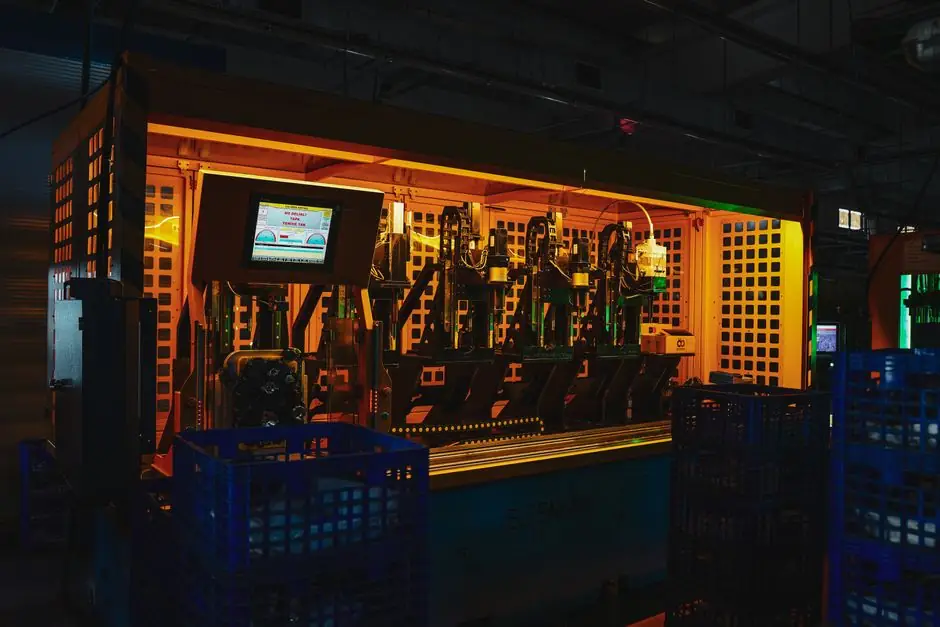
Industrial air compressor buyers in 2026 are increasingly adopting Industry 4.0 and smart manufacturing technologies as a baseline capability, with the global air compressor market moving from $27.8 billion in 2025 to a projected $29.0 billion in 2026 and $40.2 billion by 2033 [S8]. Stationary compressor demand alone tracks from $17.76 billion in 2026 to $25.4 billion by 2034, a 4.58% CAGR, indicating the bulk of Industry 4.0 sensor retrofits will land on fixed assets rather than portable units [S3].
Smart manufacturing rollout is the dominant demand lever: a May 2026 industry ranking names smart-factory and Industry 4.0 adoption as the lead market accelerant for the top air compressor OEMs, with the broader compressed-air sector valued near $27.7 billion on the same basis [S1]. Compressor plants are now treated as connected nodes on the plant LAN, with power, flow, dew point, vibration, and discharge temperature streamed to a SCADA or cloud historian.
What Industry 4.0 Actually Changes in Compressor Specification
Industry 4.0 reframes the air compressor from a mechanical asset into a cyber-physical instrument, so spec sheets now list communication protocols, edge compute capability, and data export cadence alongside CFM and PSIG [S2]. Rotary-screw, reciprocating, centrifugal, and scroll platforms each carry different instrumentation footprints: oil-flooded screw units ship with differential pressure on the oil separator and a thermistor on the discharge line, while oil-free screw and scroll platforms add bearing-temperature RTDs and a dew-point sensor on the outlet [S2].
For a new 2026 build, the data a buyer should require at the I/O layer includes: motor current and voltage per phase at 1 Hz or higher, package discharge pressure at 0.5 s scan, intake airflow in CFM or m³/min, oil temperature in oil-flooded machines, and a remote setpoint input for trim control [S2]. A typical package will stream those values over Modbus TCP, OPC UA, or PROFINET, with PROFINET dominant on European plant floors and EtherNet/IP dominant in North American discrete and packaging lines. Cybersecurity on those nodes is no longer optional: the controller must support role-based access, signed firmware, and a documented patch cadence, since the compressor now sits on the same VLAN as the pressure transmitter network feeding safety loops.
Drive Train, Lubrication, and Air Quality: The Decision Matrix
Drive-train choice is the largest single lever on both energy and Industry 4.0 value capture, with variable-speed drive (VSD) rotary screw units delivering the bulk of measured savings in controlled-load profiles [S2]. The decision criteria stack cleanly: part-load efficiency, peak-load reserve, air-quality class (ISO 8573-1:2010), oil carryover in ppm by mass, and sensor count per cubic foot of package volume.
For plant buyers in 2026, the comparison looks like this. Fixed-speed rotary screw remains the lowest capex option for 24/7 near-full-load operation but offers limited trimming data. Oil-free screw and scroll platforms, with PTFE-coated rotors or water-injected chambers, target pharmaceutical, food, and electronics plants where ISO 8573-1 Class 0 oil carryover is contractually required, and they are routinely fitted with redundant dew-point and particle counters on the outlet. Centrifugal units serve 1000+ CFM high-volume loops but demand the most disciplined surge control and vibration monitoring to feed the plant historian.
US demand tilts strongly toward rotary screw: the segment has surged into robotics and precision assembly lines, while shale gas activity in Texas and North Dakota pulls oil-free and high-pressure reciprocating units into well-site compression [S5]. For air-treatment pairing, the air solenoid valve downstream of the receiver now carries the same protocol stack as the compressor, so a buyer who standardizes on one bus saves integration hours on every drop.
Sensors, Controls, and the Edge Compute Layer

The Industry 4.0 compressor package treats the air system as a measurable loop, and the instrumentation has converged on a small set of physical sensors with well-defined ranges. Discharge pressure transmitters span 0-200 PSIG on most fixed-speed units, intake temperature runs -20 to +80 °C, motor winding RTDs sit at 130-155 °C trip class F, and bearing housings use 100 Ω platinum RTDs at 0-150 °C [S2]. A modern package will also carry a vibration velocity sensor on the airend, typically 0-25 mm/s RMS, and an air quality monitor on the outlet measuring dew point to -40 °C pressure and particulate to ISO 8573-1 Class 1 or 2.
Flow measurement is where the spec gets productized: a thermal mass flow meter at the compressor outlet now feeds both efficiency calculations (kWh per 1000 standard cubic feet) and leak-detection analytics, with a Class 1.0 or better accuracy floor that most 2026 vendor quotes meet as standard. The edge controller runs the load/unload or VSD profile locally, exposes a REST or OPC UA interface to the plant historian, and supports over-the-air firmware with rollback. In procurement language this is a "smart compressor" package, but the engineering content is a defined sensor bill of materials and a defined API.
Cost, Energy, and Where the Savings Actually Land
Compressed air is a known energy sink: industrial electricity prices in the US reached 7.5 cents per kWh in 2023, and motors driving compressors account for a large fraction of plant baseload, which is why VSD retrofits and leak programs dominate the 2026 payback spreadsheet [S4].
The US air compressor market is forecast to grow from $3.96 billion in 2024 to $5.29 billion by 2033 at 3.56% CAGR, a slower pace than the global figure, which reflects a saturated installed base where the action is replacement and retrofit rather than new lines [S7]. For a 2026 retrofit project, payback on a VSD + smart sensor package typically lands in 18-36 months on plants running two or more shifts, faster where heat recovery displaces an existing hot-water or make-up air load.
Standards, Sourcing Constraints, and What to Verify at PO
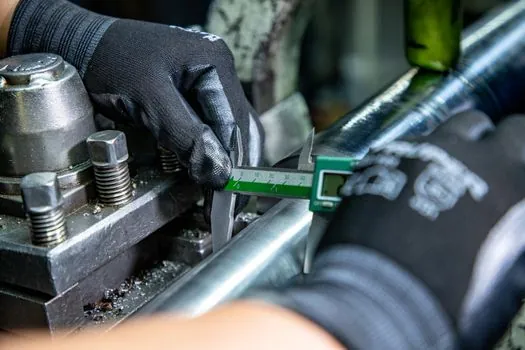
The standards stack that governs a 2026 Industry 4.0 compressor package is well-defined: ISO 8573-1 for air purity classes, ISO 12100 for safety of machinery, IEC 60079 for hazardous-area electronics, and ATEX 2014/34/EU or IECEx for any unit installed in zoned areas, with NEMA MG 1 covering motor efficiency tiers in North America [S2]. For oil-free pharmaceutical and electronics use, the buyer should require an ISO 8573-1 Class 0 air purity certificate and a documented material compatibility list for the rotor coating, since vendor claims on "oil-free" vary without a third-party test report.
Supply-side constraints in 2026 still center on VSD inverter lead times and rare-earth motor magnets, so a 12-16 week delivery window for a 100+ hp VSD rotary screw package is normal in mid-2026, and longer on IECEx-rated units. For buyers linking a new compressor into a control migration, the practical sourcing move is to align compressor protocols with the plant's existing air impact wrench and air pick tooling network only where those tools are also connected nodes; on most plants they remain pneumatic-only, so the bus lives above the receiver and stops at the point-of-use valves. Verified signals worth tracking: vendor release of OPC UA companion specifications for compressor packages, expansion of PROFINET certification on 100+ hp VSD drives, and any third-party air-purity test data published against ISO 8573-1 Class 0. A complementary breakdown of component-level cost splits for pneumatic skids sits in Pneumatic System Manufacturing Cost Breakdown: 2026 Component Splits, and the instrument-air spec side of the same problem is mapped in Air Compressor Process Control: 2026 Spec Map for Instrument Air.