
Global air compressor demand was valued at $28.4 billion in 2021 and is projected to reach $46.2 billion by 2031, expanding at a 4.9% CAGR over the 2022-2031 window [S1]. The growth curve is broad-based across stationary and portable units, with regional pockets in North America and India showing sharper trajectories than the global average.
By comparison, the global air brake system market — a downstream pneumatic user — was valued at $4.81 billion in 2018 and is projected to reach $6.6 billion by 2026 at a 4.4% CAGR, with North America alone contributing $2.03 billion in 2018 and an estimated $2.70 billion by 2026. That 4.4% pace is a useful proxy for the underlying heavy-vehicle and rail pneumatic demand that feeds compressor OEM order books.
Global Market Sizing and 2026 Trajectory
Market figures diverge by methodology: Allied Market Research values the 2021 market at $28.4B and projects 4.9% CAGR to $46.2B by 2031 [S1], while an earlier industry-side reference cites a $39.28B figure for 2023 as a working consensus point [S2]. The variance reflects oil-flooded vs oil-free segmentation, portable vs stationary bundling, and whether rotary screw, reciprocating, scroll, and centrifugal subclasses are folded together.
For spec engineers, the more useful cut is the automotive electric compressor sub-segment, which TechSci Research sized at $1.93B in 2024 and projects to $3.87B by 2030, a 12.31% CAGR from 2025-2030 — well above the broader industrial pace and driven by EV HVAC loops [S6]. This is the right comparator when an application is vehicle-mounted rather than shop-floor.
Purchasers aligning 2026 capex should treat $40-42B as the working global midpoint for total addressable value, recognizing that the 4.9% baseline CAGR compounds roughly 24% over five years — so a 2021 baseline spec of $28.4B implies a 2026 value near $36B before mix shifts [S1].
Regional and Application Split
North America was valued at $4,475M in 2016 and is projected to reach $5,754M by 2023 at a 3.68% CAGR through the 2017-2023 forecast window. That sub-4% regional rate sits below the global 4.9% headline, indicating faster growth in Asia-Pacific and India specifically, where the 2030 outlook breaks the market down by positive displacement vs dynamic, oil-free vs oil-flooded, and pressure band from ultra-low through hyper-pressure [S3].
Application mix in the India segmentation runs through construction, power generation, industrial manufacturing, HVAC-R, chemical and cement, automotive, oil and gas, food and beverage, and textile [S3]. For an industrial buyer in any of these verticals, the pressure-band filter (ultra-low / low / medium / high / hyper-pressure) is the first selection gate — most stationary plant air sits in the 7-13 bar medium-pressure band, while hyper-pressure (>40 bar) is reserved for PET blowing and power-plant aeration.
Adjacent demand signals reinforce the trajectory: laser processing equipment — a major downstream compressed-air user for pneumatic beam steering and gas-assist cutting — is forecast to grow from $30,862.1M in 2026 to $62,075.1M in 2033 at a 10% CAGR, pulling compressor auxiliary demand along with it.
Compressor Type Comparison: Selection Criteria
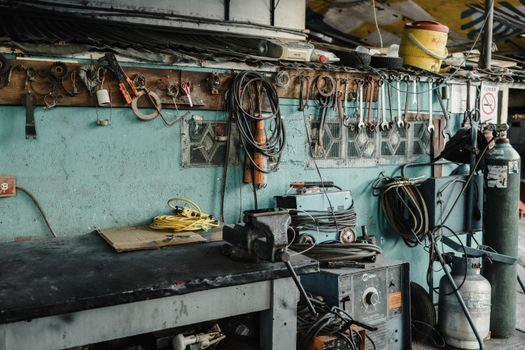
For oil-flooded rotary screw vs oil-free vs reciprocating vs centrifugal, the decision criteria for 2026 specification typically line up across four axes: airflow (CFM or m³/min), discharge pressure (bar), air quality class (ISO 8573-1 solid/water/oil cleanliness tiers), and total cost of ownership over a 10-year horizon. Reciprocating units dominate the small-CFM, intermittent-duty portable segment; rotary screw covers the 10-500 CFM continuous-duty middle; centrifugal takes over above roughly 1,000 CFM; scroll and oil-free tooth are specified where ISO 8573-1 Class 0 oil content is mandatory (pharma, food, electronics). [S1]
The India report treats portability as a first-class segmentation axis alongside pressure band, indicating that this is now a board-level procurement decision rather than a mechanical-engineering afterthought [S3]. Buyers comparing options should also weigh the cost structure against adjacent catalog items such as a three-phase asynchronous motor, since motor frame size, IE3/IE4 efficiency class, and DOL vs VSD drive topology directly govern compressor part-load efficiency.
Standards, Sourcing and Component Levers
Three standards govern most 2026 compressor specifications: ISO 8573-1 for air purity class declaration, ASME PTC 9 for displacement and isentropic performance verification on larger units, and API 618 for reciprocating compressors in oil and gas service. For the air-end itself, the dominant cost lever is the rotor profile (rotary screw) or the cylinder/valve assembly (reciprocating) — both of which scale with CFM and discharge pressure. For control systems, the VSD (variable speed drive) retrofit on a fixed-speed rotary screw typically cuts part-load energy by 25-35%, which over a 10-year duty cycle is the single largest cost-of-ownership lever. [S2]
Adjacent component markets that move with compressor demand include the bearing market, where bearing demand, supply and spec pressure for 2026 procurement ties directly to rotor-shaft and motor-skate bearing selection. Buyers should also reference the air pick and air impact wrench encyclopedia entries to size downstream pneumatic tooling loads, and the air solenoid valve reference for downstream control-loop component count.
Price, Cost and Sourcing Levers for 2026

The dominant 2026 price drivers are copper (motor windings), electrical steel (stator/rotor laminations), and cast iron (crankcase and cylinder). Steel and copper index moves typically pass through to compressor OEM list prices within a 6-9 month lag. Oil-free designs carry a 30-50% price premium over oil-flooded equivalents at equivalent CFM, justified by ISO 8573-1 Class 0 compliance and the elimination of downstream filtration. [S3]
For a typical 50-100 CFM oil-flooded rotary screw at 8-10 bar, the 2026 buyer should expect: 60-70% of life-cycle cost to be electricity, 15-20% maintenance, 5-10% installation, and the remainder as initial capital amortized. Sourcing from Indian and Chinese OEM bases has compressed 2024-2026 list prices by an estimated 8-12% versus the 2021-2022 peak, though freight and tariff exposure on trans-Pacific shipments remains the main 2026 sourcing risk.
Buyers weighting rugged-site compressor applications against other capital equipment should note that rough terrain forklift selection in 2026 is governed by similar site-power and duty-cycle logic — a useful cross-reference when the same construction or mining site is specifying both air and material-handling fleets.
Trackable 2026 Signals and Watch Items
Two signals to track through the rest of 2026: (1) the Allied Market Research update cadence on the 2031 forecast — the 2021 $28.4B base was set pre-pandemic and the post-2023 inflation pass-through will likely shift the CAGR baseline when Allied re-anchors [S1]; (2) the India sub-regional report, where positive-displacement share gains in the 2025-2030 window will signal whether oil-free tooth and scroll designs are penetrating mid-tier industrial buyers, or whether oil-flooded screw remains the default [S3].
For spec-writing purposes, the working 2026 figure to anchor procurement budgets is the 4.9% global CAGR with North America tracking closer to 3.7% and automotive-electrical sub-segments running above 12% [S1][S6]. A buyer locking in 2026 capex should model the CFM x pressure-band x air-quality-class matrix against motor efficiency class and VSD-vs-fixed-speed topology before committing to a frame size.