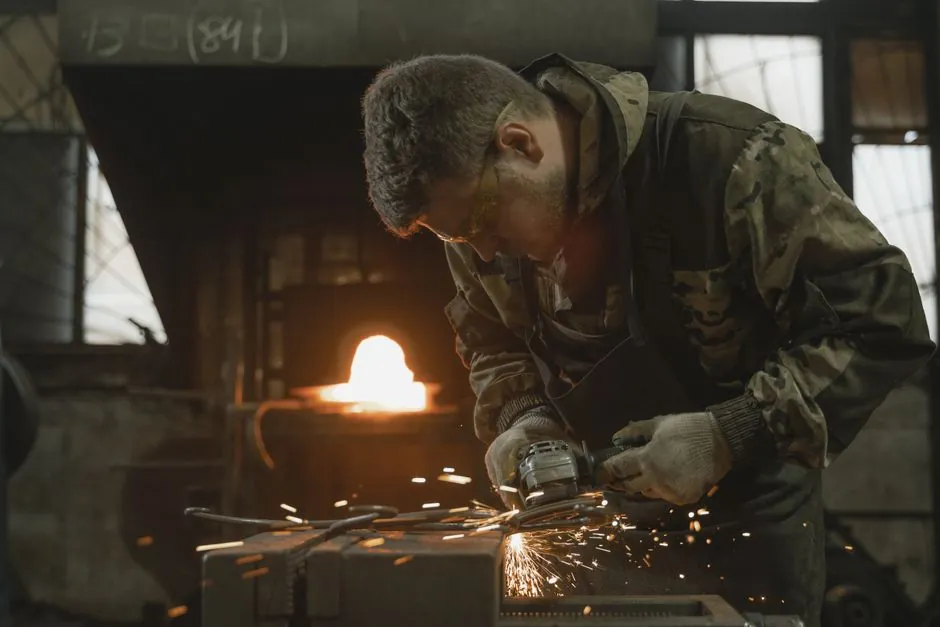
Production air impact wrenches span roughly 1,000 to 1,500 blows per minute (BPM, also called impacts per minute, IPM) on 1/2-inch pneumatic models, with twin-hammer clutch designs consistently landing near the upper end of that band [S2][S4].
For a 1/2-inch wrench, BPM tells you how many rotational hammer strikes the clutch delivers per minute, separate from free speed (RPM) and from maximum torque (ft-lbs), so the three numbers must be read together, not in isolation [S2][S3].
What BPM/IPM Actually Measures on a Pneumatic Impact Wrench
BPM is the impact frequency of the hammer mechanism once the motor is under load, not the free-spinning speed of the anvil [S2]. The Ingersoll Rand 2135QTiMAX, for example, posts 9,800 RPM free speed against 1,250 BPM under stall, with breakaway torque of 1,486 Nm (1,100 ft-lbs) and average air consumption of 142 L/min (5.0 cfm) at a sound pressure of 86.0 dBA [S3].
Twin-hammer clutches generally deliver higher BPM and smoother torque pulse than single-hammer (or "single dog") designs, which is why most 1/2-inch pro-shop wrenches in 2024-2026 use a twin-hammer or double-hammer mechanism [S1][S4]. The AIRCAT 1/2-inch Nitrocat family is a representative twin-hammer case, with published 1,400 BPM and a 15% larger rotor than comparable models [S4].
How Blows Per Minute Maps to Torque Class
Higher BPM alone does not guarantee higher working torque, because torque is set by hammer mass, air pressure, and stroke length, not by impact rate alone [S2][S3]. A 1,250 BPM 2135QTiMAX delivers 68 to 746 Nm (50 to 550 ft-lbs) of working torque and 1,054 Nm (777 ft-lbs) of maximum reverse torque, while lighter 1/2-inch units at similar BPM are typically capped at 500 to 750 ft-lbs of working torque [S2][S3].
The 1/2-inch and 3/4-inch drive classes have the most published data; SHALL's 1/2-inch MT-4700 lists 8,000 RPM free speed, 1,000 Nm (738 ft-lbs) maximum torsion, and 24 mm bolt capacity, while its 3/4-inch to 1-inch high-torque line drops free speed to 6,000 RPM and pushes torque to 2,200 to 2,400 Nm (1,624 to 1,771 ft-lbs) at a 30 to 36 mm bolt capacity [S1]. That pattern, lower RPM and higher per-impact energy on larger drives, holds across most OEM catalogs.
Air Supply, CFM, and Working Pressure: The Hidden Constraint on BPM
BPM is only delivered in full when the compressor can keep the regulator above the wrench's minimum working pressure, which is 90 PSI (6.2 kg/cm2) for most 1/2-inch units and up to 6 to 10 kg/cm2 (about 85 to 142 PSI) for heavier 3/4-inch and 1-inch models [S1][S5]. Air consumption for typical air impact wrenches runs 4 to 12 cfm, with some heavy-duty models pulling 15 cfm or more, so a small pancake compressor (around 150 PSI peak, 3 to 4 second cut-in cycles) will starve the hammer mechanism and BPM drops the moment tank pressure falls below the regulator setpoint [S5][S6].
SHALL's 1/2-inch line specifies a 1/4"PT air inlet and 10 mm hose inner diameter at 6 to 8 kg/cm2 working pressure, while the 3/4-inch to 1-inch heavy line moves to a 1/2"PT inlet and 6 to 10 kg/cm2 working pressure; undersizing the hose or inlet is the single most common reason a 1,200+ BPM wrench performs like a 700 BPM wrench in the field [S1]. If your shop air cannot hold above 90 PSI at the tool under load, the published BPM figure is theoretical, not operational.
IPM vs BPM vs RPM: How to Read the Spec Sheet
Specifications on the same tool can quote free speed in RPM and impact rate in IPM or BPM, and a higher free-speed RPM does not always mean higher BPM [S2]. Bob Vila's 2024-2025 tested set shows Ingersoll Rand 232TGSL at 10,000 RPM free speed, Campbell Hausfeld at 8,000 RPM, and ACDelco ANI405A at 8,000 RPM, with torque ranging from 500 ft-lbs on the lightest units to 1,300 ft-lbs on the Aircat 1250-K and Ingersoll Rand 2235QTiMAX [S2].
For spec selection, three numbers matter: free speed (RPM, sets approach speed on the fastener), BPM/IPM (sets how fast the hammer strikes once resistance is met), and maximum torque (sets the upper limit of breakaway force). A 1/2-inch pneumatic wrench for general auto-repair and tire work typically lives in the 8,000 to 10,000 RPM, 1,100 to 1,400 BPM, 500 to 1,300 ft-lbs band, which covers lug-nut removal on passenger and light-truck wheels [S1][S2][S4]. Heavy equipment, refinery shut-down, and large-bolt M16-plus work shifts to 3/4-inch or 1-inch drives with lower BPM but much higher per-impact energy [S3].
Comparison: 1/2-Inch Twin-Hammer Models by BPM, RPM, and CFM
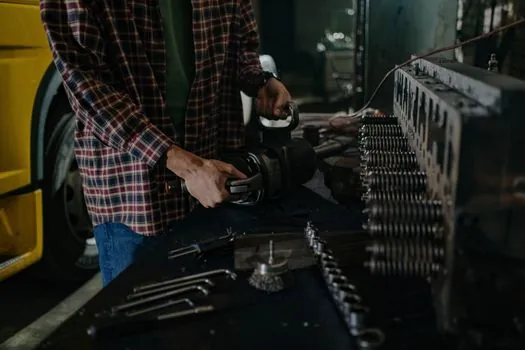
Side-by-side, the published 1/2-inch twin-hammer models cluster as follows: Ingersoll Rand 2135QTiMAX at 9,800 RPM, 1,250 BPM, 5.0 cfm, 86.0 dBA [S3]; AIRCAT 1/2-inch Nitrocat line at 1,400 BPM, 86 dB, with a 15% larger rotor than class average [S4]; Aircat 1250-K at 8,500 RPM, 1,300 ft-lbs, 86 dB; Ingersoll Rand 2235QTiMAX at 8,500 RPM, 1,300 ft-lbs, 88.7 dB; Aircat 1056-XL at 9,000 RPM, 750 ft-lbs, 85 dB; and budget units like the ACDelco ANI405A and Campbell Hausfeld at 8,000 RPM and 500 to 550 ft-lbs [S2].
The selection logic, then, is: pick by torque class first (under 600 ft-lbs for occasional home use, 600 to 1,000 ft-lbs for shop tire work, 1,000 to 1,500 ft-lbs for heavy vehicle and equipment), verify CFM is within your compressor's FAD rating, and only then compare BPM and noise. Higher BPM is most useful on production lines and high-cycle shop use where fastener run-down time per shift is the metric, not on one-off lug-nut jobs where torque headroom matters more.
Where BPM Misleads Buyers and Where It Genuinely Matters
BPM is a poor proxy for "power" because two wrenches at 1,250 BPM can differ by 2x in breakaway torque if the hammer mass, stroke, and air pressure differ [S3]. The 2135QTiMAX at 1,250 BPM delivers 1,100 ft-lbs of breakaway torque off 5.0 cfm, an unusually efficient result, while many catalog 1,250 BPM wrenches in the same drive size plateau near 600 to 700 ft-lbs of breakaway [S3]. When a spec sheet omits breakaway or nut-busting torque and quotes only BPM and "max torque," treat BPM as a tiebreaker, not a primary criterion.
BPM genuinely matters on sustained-run work: production assembly, fleet tire shops, and any application where the tool is in the load zone for hours at a time. For a deeper look at how pneumatic tools interact with plant air systems and process control, see the air impact wrench reference page, and for adjacent pneumatic-tool specifications the air pick and impact drill entries cover related hammer mechanisms. Compressed-air system design in heavy industry is treated in Cupola Blast Air: PD Rotary Lobe vs Centrifugal Blower Decision Map, which uses the same CFM-versus-pressure tradeoff that governs any impact-wrench air drop.
Next signals to track: (1) OEM movement on regulated 6 to 8 kg/cm2 minimum working pressure as ISO 4414 pneumatic safety guidance tightens on shop-air distribution; (2) 3/4-inch and 1-inch high-torque BPM ratings, which are still sparsely published versus 1/2-inch lines and remain the spec gap to watch through 2026.