
Free speed on an air impact wrench is the no-load RPM the anvil spins at, and it varies sharply with drive size and intended torque class: 1/4" hex models hit 7,000-11,000 RPM, 3/8" drive wrenches land around 9,500-11,000 RPM, 1/2" drive units settle in the 7,000-8,500 RPM range, and 1" industrial straight wrenches drop to 4,500-5,000 RPM [S3][S4].
Higher free speed is not a free lunch: as RPM climbs, maximum torque typically falls, and the wrench trades raw bolt-rundown pace for turning heavier fasteners. Compact 1/4" units from the CP719 family deliver 7,000 RPM free speed with only 30 ft-lbs (47 Nm) of max torque at 90 PSI, while 1" AIRCAT 1992-series wrenches run 5,000 RPM free speed but push 1,800-2,300 ft-lbs of max torque on bolt capacities up to 1-1/4" [S3][S4].
How Free Speed Is Measured and Why It Differs From Working RPM
Free speed is rated at zero load with the tool supplied at 90 PSI shop air, which is the industry-standard reference condition used across OEM catalogs, not a figure the tool will sustain while driving a fastener [S3][S4]. Once the hammer mechanism engages against a resistant bolt, RPM collapses to a much lower rundown value, sometimes 10-20% of free speed, before the percussive impacts deliver final torque.
OEMs and pneumatic-tool guides reinforce that published RPM and torque numbers in catalogs are reference figures, and operators must size accessories (sockets, adapters, extensions) to run at or above the tool's maximum rated speed, not at its working RPM [S4]. On an under-dashboard 3/8" wrench with only 220 RPM maximum rundown speed, the difference between free speed and loaded speed is dramatic, and the operator trades outright speed for access in confined spaces [S3].
Free Speed Bands by Drive Size and Application
Three distinct RPM bands show up across the catalog data. Light-duty 1/4" hex and 1/4" square-drive wrenches cluster at 7,000-7,500 RPM free speed, exemplified by the CP719 at 7,000 RPM / 30 ft-lbs and 1/2" pistol models such as the GH-2800 at 7,500 RPM with 502 ft-lb max torque for M16 (5/8") bolts [S3][S6]. Mid-range 3/8" drive wrenches span 8,500-11,000 RPM, with 3/8" models in the CP721/CP722 family hitting 9,500-11,000 RPM at 75 ft-lbs (102 Nm) max torque and bolt work up to 200 ft-lbs in the CP724H class [S3].
1/2" drive heavy-duty wrenches such as the CP726H run 8,500 RPM with 200 ft-lbs (271 Nm) max torque, while 1" industrial straight wrenches sit at 4,500-5,000 RPM free speed, with the AIRCAT 1992 at 5,000 RPM and 1,800 ft-lbs max, and the 1994 super-duty at 4,500 RPM and 2,300 ft-lbs max [S3][S4]. For ultra-heavy bolting like truck wheel lug nuts at M24-M36, the top Mister Worker 2025 pick runs 4,500 RPM free speed with 1,800 Nm max torque and 3/8" GAS air inlet [S2].
Free Speed vs Torque: The Real Trade-off
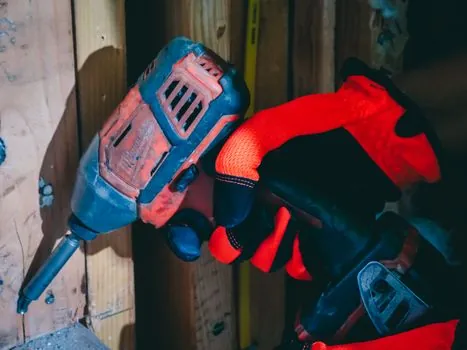
Free speed inversely tracks torque class in OEM lineups, which is why 1" straight wrenches at 4,500-5,000 RPM are the right call for 1,800-2,300 ft-lbs of loosening torque, not for production assembly on small fasteners [S4]. Industry guidance recommends 7,000-8,000 RPM as the sweet spot for general automotive work where a balance of speed and control matters, with super-high speeds harder to manage on precision tasks [S5].
For an AEROPRO A398-class 1/2" wrench running 7,800 RPM free speed and 810 ft-lbs (1,100 Nm) working torque, the 1/4" NPT air inlet and 3/8" ID hose requirement pair with the RPM class to define compressor load [S5][S7]. Operators pushing the free-speed envelope must match compressor CFM delivery, since CFM requirements scale from 2-3 CFM for a 1/4" drive up to 10-15 CFM for a 1" drive at 90 PSI minimums, and starved airflow collapses both free speed and torque [S7]. Read more on hose sizing and CFM trade-offs in Air Impact Wrench Hose Sizing: ID, Length, and CFM Trade-offs before committing to a compressor setup.
Selection Criteria: Matching RPM to Bolting Work
Four decision criteria separate the right wrench from the wrong one: drive size, free speed, max torque at 90 PSI, and air consumption at rated CFM [S3][S4][S7]. A 1/4" or 3/8" wrench at 7,000-11,000 RPM fits small-engine repair, body panels, and under-dashboard work; a 1/2" wrench at 7,500-8,500 RPM covers general automotive and light truck lug work; 3/4" and 1" wrenches at 4,500-5,000 RPM cover heavy equipment, mining, and structural bolting [S3][S4][S5].
Free speed alone is misleading without the matching CFM and hose sizing; 1" drive wrenches at 12-16 CFM consumption need 1/2" air inlet and reinforced hose, while a 1/4" hex at 2 CFM runs on a 1/4" inlet and 3/8" ID hose [S3][S4][S7]. Buyers should reject any "max RPM" claim that isn't paired with the operating pressure, drive size, and bolt capacity, since free speed on a 1" straight wrench at 4,500 RPM and free speed on a 1/4" hex at 11,000 RPM describe two completely different tools [S3][S4].
Real-World Use Cases Across the RPM Spectrum
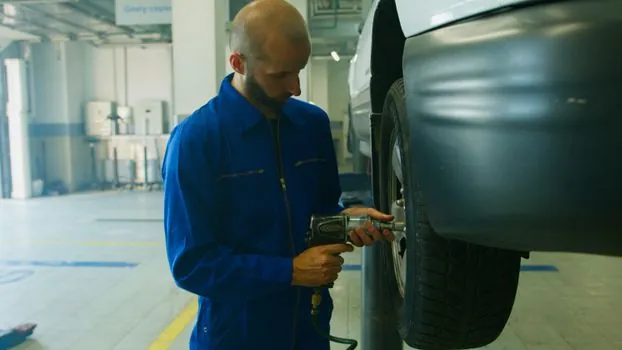
Compact 1/4" and 3/8" models at 9,500-11,000 RPM free speed target small-engine repair, bench work, carburetor and ignition jobs, body panels, transmissions, and oil pans, where 75 ft-lbs of ultimate torque is enough [S3]. The CP726H-class 1/2" wrench at 8,500 RPM with 200 ft-lbs handles transmission, exhaust, and general repair shop duty, and the 360-degree air inlet swivel and handle exhaust keep the operator in control at sustained free-speed operation [S3].
Industrial 1" straight wrenches at 4,500-5,000 RPM free speed target construction, rail, and heavy-equipment bolting where loosening torque climbs to 2,000-2,500 ft-lbs and bolt capacity reaches 1-1/4" diameter, with pin-less hammer mechanisms and Ni-Cr-Mo alloy steel internals rated for the duty cycle [S4]. For a 1/2" drive run on 90 PSI shop air with 7,500 RPM free speed and 502 ft-lb max torque, the GH-2800 spec sheet (M16 / 5/8" max bolt capacity) lines up with the pneumatic air impact wrench performance band typical of automotive repair work [S6].
Standards, Safety, and Accessory Speed Ratings
Pneumatic-tool catalogs require accessory sockets and adapters to be rated at or above the maximum rated speed of the air tool they will be used on, with worn or modified accessories explicitly disqualified and the air supply disconnected before any fitting change [S4]. This rule matters most at the high end of the RPM band, where an underrated socket on an 11,000 RPM 3/8" wrench becomes a fragmentation hazard.
On the noise side, AIRCAT publishes 86 dBA for its 1" straight wrenches against an industry average of 112 dBA, a 26 dBA drop that is meaningful over an 8-hour shift but does not change the free-speed or torque class of the tool itself [S4]. For a closer look at how the air impact wrench family compares against torque wrench tester workflows in quality-controlled bolting, the free-speed / working-torque split is the defining spec line that separates rundown tools from final-torque verification.
Trackable signals to watch in the next sourcing cycle: (1) whether 3/8" drive wrenches push past 12,000 RPM free speed as twin-hammer efficiency improves, and (2) whether 1" industrial wrenches drop below 4,500 RPM free speed as 2,500 ft-lbs loosening-class models proliferate in the AIRCAT 1994 / IR 231-series segment [S1][S2][S4].
Detailed specification references: variable speed drive.