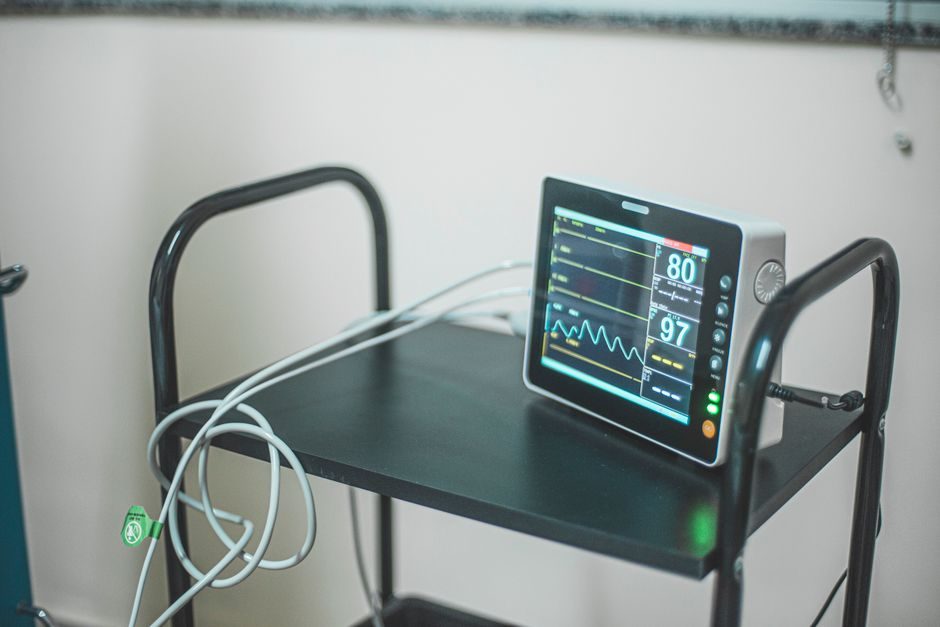
An air quality monitor is a multi-sensor or single-sensor instrument that detects and reports airborne pollutants such as PM2.5, PM10, CO2, TVOC, and CO, plus environmental factors including temperature and relative humidity, and the US EPA frames these as "low-cost air pollution monitors" that may also be called air sensors or air quality sensors [S1].
The selection problem is not "which brand" but "which sensor class for which gas, what detection range, what data interface, and what duty cycle," because the same physical package (a wall or desk indoor unit) can carry very different sensor modules, and the wrong match returns plausible but wrong numbers, as EPA explicitly warns that performance data for some low-cost sensors indoors is limited [S1].
Sensor Class and Pollutant Pairing
Laser-based light-scattering modules are the default for PM2.5 and PM10 mass concentration: the TSI BlueSky Air Quality Monitor 8143-B1 is a laser-based particle instrument that simultaneously measures PM2.5 and PM10 mass concentrations, temperature, and relative humidity, and ships as an IoT/cloud-connected hyperlocal node [S8].
For CO2 the de-facto bench is NDIR (non-dispersive infrared), and the open-source 3x3k/esphome-air-quality-monitor (last commit tracked in the 2026-06-03 repo view) and the canuckdev/Air-Quality-Monitor micropython project both pair a CO2 channel with temperature and humidity in roughly 50-80 mm desk-form boards, with the canuckdev build explicitly using a PMS7003 PM module over UART [S7][S9].
TVOC and CO2 together usually means an MOX (metal-oxide) plus NDIR stack, as in the TSI AirAssure IAQ Monitor, which is positioned for continuous indoor air quality insight and is paired with TSI Link Software dashboards [S5]. Electrochemical cells remain the safe answer for CO, NO2, O3, and SO2 in any instrument that has to claim those channels, because MOX sensors cross-react to humidity and VOCs and will not pass an EPA Indoor airPLUS or commercial-building spec review. The hard rule is one pollutant class, one matched sensor physics, and no creative shortcuts.
Indoor IAQ Monitors vs Ambient/Outdoor Stations
Indoor IAQ units such as the TSI AirAssure and the Amazon Smart Air Quality Monitor are built for occupied-space comfort and trend reporting, ship with a vendor cloud or Alexa dashboard, and measure PM, CO2, VOCs, T, and RH — the Amazon product's own support page documents an Alexa Indoor Air Quality Dashboard, a screen-equipped Echo dashboard, and on-device LED notification rings [S3][S5].
Ambient and outdoor stations such as the TSI BlueSky 8143 are a different class: laser PM, rugged enclosure, AQS 1 / Dust Sentry compatible accessories, Winterization Kit for cold-climate deployments, and paired with a 1/2/3-year TSI Link Software + Data Services subscription [S4][S8]. Reference-grade sites are run by state agencies — the Alaska Department of Environmental Conservation publishes a Butte Air Quality Monitor station map inside the Matanuska-Susitna Valley, which is the kind of fixed reference site that an industrial buyer should calibrate against rather than trust a single indoor unit's absolute number [S2].
Buying a desk IAQ monitor for fence-line duty, or buying a laser PM ambient station for a cleanroom trend board, is the most common spec error and the one EPA's performance caveats are written to defuse [S1].
Selection Criteria: 5 Hard Filters

Five filters decide a monitor spec on a single pass, and each must be backed by a numeric or named value on the datasheet, not by marketing copy [S1].
1. Pollutant list and sensor principle. The buyer must fix PM2.5/PM10, CO2, TVOC, CO, T, RH one by one and verify each is implemented with the correct sensor physics (laser for PM, NDIR for CO2, MOX for TVOC, electrochemical for CO). 2. Range and resolution. PM channels must cover at least 0-1000 µg/m³ with 1 µg/m³ resolution to survive wildfire-smoke spikes; CO2 NDIR modules must cover 400-5000 ppm to be HVAC-actionable. 3. Data interface. Look for documented Wi-Fi (the Amazon and TSI BlueSky units are Wi-Fi/IoT) and at least one of MQTT, REST, Modbus, or Alexa/Google integration so readings can flow to a BMS [S3][S8]. 4. Calibration and traceability. EPA states low-cost air pollution monitors are not a complete representation of indoor air quality, so any spec without a stated calibration interval or reference comparison is incomplete [S1]. 5. Duty cycle and environment. Outdoor and cold-duty units need an accessory plan — Aeroqual sells a Winterization Kit to extend the operating range of the AQS 1 and Dust Sentry, and that kind of accessory line is the real indicator that the vendor takes field duty seriously [S4].
Mainstream Options Compared on 4 Criteria
Four realistic options line up against the four criteria that matter to a buyer writing a PO: indoor IAQ node, DIY/hobby build, fixed outdoor PM station, and reference-grade agency monitor. [S1]
Indoor IAQ node (TSI AirAssure, Amazon Smart AQM): strong on CO2/TVOC/T/RH, Wi-Fi + cloud dashboard, weak on outdoor duty and on heavy PM events; not regulatory-grade [S3][S5]. DIY/hobby build (esphome-air-quality-monitor, canuckdev Air-Quality-Monitor): strong on cost and customisability — both are open-source, the canuckdev build uses a PMS7003 over UART and renders an AQI bar on WS2812 LEDs — but no factory calibration, no enclosure rating, no warranty [S7][S9]. Fixed outdoor PM station (TSI BlueSky 8143-B1): laser PM2.5/PM10, T/RH, IoT, TSI Link Software + Data Services subscription for 1/2/3 years, and an accessory path via Aeroqual's Winterization Kit [S4][S8]. Reference agency monitor (ADEC Butte AQM): regulatory-grade, the right answer for compliance, but not a buyable product for an industrial site — it's used as the benchmark an industrial sensor gets cross-checked against [S2].
Cross-cutting rule: any monitor that doesn't publish the sensor principle for each channel is mis-selling the channel, and EPA's low-cost-monitor page is the cleanest single-line summary of why that matters [S1].
Who Should NOT Pick a Low-Cost IAQ Monitor

Anyone who needs a compliance number for a regulated pollutant in a regulated space is in the wrong category: EPA flatly states that a low-cost monitor that only measures PM will not alert you to radon or carbon monoxide, and that information on how well some low-cost sensors detect pollutants indoors is limited [S1].
Industrial hygienists, school districts that need ASHRAE 62.1 or Indoor airPLUS paperwork, and any facility with a CO or NO2 liability should specify a multi-gas monitor with electrochemical cells and a calibration certificate, not a desk IAQ node. A home user worried about wildfire smoke is well served by a PM-only or PM+CO2 laser/NDIR unit, because the action threshold (run the filter, close the windows) does not require sub-ppm precision.
Real Use Cases and the Shortlist Logic
Three concrete use cases drive three different shortlists. For a home IAQ dashboard after wildfire season, the shortlist is TSI AirAssure or the Amazon Smart Air Quality Monitor, with the deciding factor being ecosystem (Alexa routines and the Alexa Indoor Air Quality Dashboard) versus lab-style trending [S3][S5]. For a school or office trend board, the shortlist adds a TSI BlueSky 8143 as a hyperlocal outdoor reference, with the 1/2/3-year TSI Link Software + Data Services tier chosen to match the warranty window of the building's BMS [S8]. For a construction or mining site that has to keep working below 0 °C, the shortlist is any PM station that pairs with an Aeroqual Winterization Kit, because the kit is what extends the AQS 1 and Dust Sentry operating range into cold-climate deployments [S4]. A practitioner spec on air quality monitor should always print the five filters above and reject any candidate that does not name the sensor principle for every claimed channel [S1].
For buyers who already manage IAQ in a controlled space, the same logic transfers to adjacent instruments: a temperature monitor on the same dashboard closes the comfort loop, and an electrical fire monitor covers the air-quality-adjacent safety case where overheating insulation is the actual pollutant source. For general shop-air trend work, an air impact wrench duty cycle and a power quality analyzer on the same feeder tell you whether the air going into the room is the problem or the building envelope is.
Trackable signals over the next two quarters: TSI's continuing 1/2/3-year TSI Link tiering on the BlueSky 8143, Aeroqual's accessory-line extensions to the AQS 1 and Dust Sentry platforms, and any state-agency publication of cross-validation data between low-cost indoor units and reference monitors like the ADEC Butte AQM [S2][S4][S8]. Spec-first selection maps for adjacent instruments — for example Dust Particle Meter Selection: Principle, Range, and Application Match and Lux Meter 2026: Sensor Class, Range, and Certs Drive the Buy — apply the same sensor-class-first rule that an air quality monitor spec has to start from.
