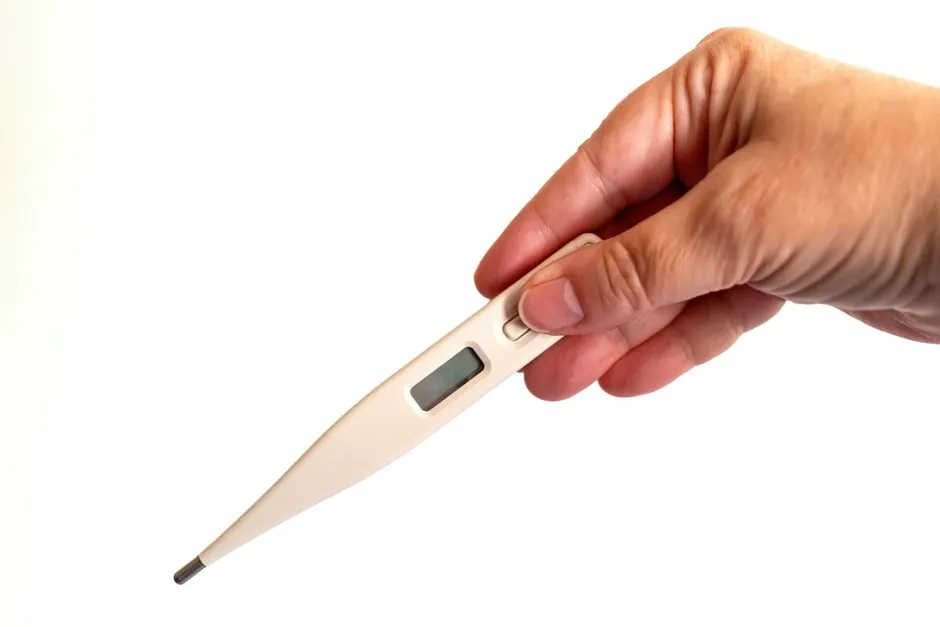
Non-contact infrared temperature sensors are specified by four hard numbers: spectral band, temperature range, accuracy, and output protocol. The reference part Calex PMU201 (PyroMiniUSB series) ships with a -20 to 1000 C range, 8 to 14 μm long-wave optics, ±1% accuracy, 125 ms 90% response, and selectable Modbus or USB output in an 18 mm-diameter 316 stainless housing, priced at RMB 2,074.13 on RS Components China (2026-07-04) [S3].
This guide ranks the practical decision points for a process engineer who already knows they want a non-contact unit. It cross-checks the 8 to 14 μm band against alternative optics, sizes the range against process targets, and matches the output to whatever bus the existing PLC or DAQ already speaks.
Spectral band: 8 to 14 μm vs 1.0 to 1.6 μm vs 5 μm
The Calex PyroMiniUSB series infrared temperature sensor operates in a long-wave 8 to 14 μm spectral range with a measurement range of -20°C to 1000°C, adjustable emissivity from 0.2 to 1, a 125 ms (90%) response time, and a 316 stainless steel IP65-rated sensing head [S3]. Short-wave 1.0 to 1.6 μm units are reserved for high-temperature metal targets above 500 C where emissivity climbs and the short-wave signal stops being fooled by atmospheric water vapour. A 5 μm band sits between and is commonly quoted for glass-surface measurement; specifying the wrong band is the single most common field failure.
A useful rule: if the target is metal above 500 C, choose 1.0 to 1.6 μm with a laser or through-lens sight; if it is below 500 C or non-metal, choose 8 to 14 μm with through-lens or fibre-optic sighting. Specifying 1.0 to 1.6 μm on a painted housing at 80 C gives a low, drifting reading that looks like a sensor fault. More on optics geometry lives in the infrared thermometer reference page.
Range, accuracy, and distance-to-spot ratio
Calex PMU201: -20 to 1000 C, ±1% of reading, 125 ms to 90% step, 18 mm head, IP65 at the sensing end, 1.45 m output cable, 1.45 m head cable, 316L stainless head, ambient ceiling 75 C [S3]. Accuracy class should always be stated as a percentage of reading, not full-scale, because an IR sensor that reads 200 C with ±1% of reading is twice as good as a competitor at ±2% of full-scale on the same span.
Distance-to-spot ratio is the second silent killer. A 2:1 optic reads a 50 mm circle from 100 mm away, useless for a 200 mm-wide conveyor; a 30:1 optic reads the same 6.6 mm spot from 200 mm, fine for a moving target. Always size the spot at the working distance and add 20% margin for vibration and alignment drift. Where measurement sits inside a temperature controller loop, total loop accuracy should add sensor accuracy, transmitter offset, and ADC quantisation error in quadrature rather than worst-case sum.
Output protocol: 4 to 20 mA, USB, Modbus, CAN, or alarm relay
PMU201 supports Modbus and USB, 5 V maximum supply, screw-terminal mounting, and the related PyroMini family spans mA, USB, CAN, alarm, and Modbus variants on a 24 to 28 V bus [S3]. A practical cross-reference for output selection:
4 to 20 mA loop: legacy DCS, two-wire loop-powered, immune to ground shift, the right call for new chemical plant and skid builds. Modbus RTU: multi-drop on RS-485, up to 32 sensors on one cable, ideal for retrofits where the existing PLC already has a free RS-485 port. USB: bench and lab work, no extra power supply needed, but useless for a control room. CAN: mobile and on-vehicle applications where the rest of the harness is CAN. Alarm relay: simple over-temperature trip with no controller; right for bearing-housing trips and motor-winding backup trips.
Mixing protocols on the same bus is a common mistake; a 4 to 20 mA loop and a Modbus RS-485 link look superficially similar but use incompatible electrical layers. Wiring topology, terminating resistor, and shield grounding follow the protocol, not the project. For panel-side reading, pair the sensor output with a temperature controller or local display; for asset monitoring only, a remote temperature sensor family is often the right umbrella term.
Emissivity, mounting, and environment
PMU201 emissivity is user-set from 0.2 to 1.0 in software, a mandatory feature because most real surfaces read between 0.85 (oxidised steel) and 0.98 (asphalt, paper); assuming 1.0 on a shiny roll can read 20 to 30 C low at 200 C target [S3]. For shiny or polished metal targets, a black-body tape, paint, or sandblasted patch can be added to bring effective emissivity above 0.95.
Mechanical fit: the PMU201 head is 18 mm diameter, 316 stainless, IP65; 316L survives chloride-bearing washdown, paper-machine hoods, and marine salt spray, while zinc-plated mild steel will pit within a season in those locations. Mounting brackets from the same family include a 20 mm x 150 mm ABL bracket and a fixed-mounting kit that holds the head at a fixed aim angle; for high-vibration skids, a vibration-isolated clamp is worth the marginal cost. Other infrared level sensors and infrared thermometer variants share the same housing pattern, allowing one bracket inventory across multiple spot types.
Decision matrix: PyroMini family options for industrial use
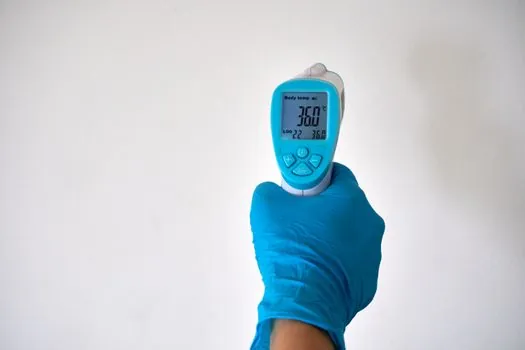
For an existing RS-485 plant bus, the PyroMini Modbus variant (PMB-style, 28 V DC, Modbus output, 1000 C max) is the lowest-friction retrofit [S3]. For a vehicle harness or mobile generator, the PyroCAN (24 V, CAN bus) matches the existing J1939-style architecture without a translator box. For a lab or commissioning engineer running a laptop, the PyroMiniUSB (PMU201) drops straight in and powers from the laptop.
For a cabinet retrofit where the only spare slot is a 4 to 20 mA analog card, the 24 V mA-output PyroMini variant (250 C or 1000 C option) is the right call; for a stand-alone over-temperature trip with no controller, the 24 V alarm-output unit drives a relay coil directly. Across the family the optics, head, and IP rating stay constant, which means one bracket, one cable gland, and one aiming procedure across the whole plant.
Limitations and failure modes to flag up front
IR sensors cannot see through glass, dust curtains, or heavy steam; a quartz view-port is transparent in some bands but absorbs in 8 to 14 μm, so a sight tube with an open path or purged air purge is needed in dusty kilns. Smoke, flame, and hot gas in the sight path bias the reading up; the engineer must clean or purge the air column. The PMU201 ambient ceiling is 75 C, so any cabinet above that on a summer afternoon needs a heat shield or water-cooled jacket. [S1]
For very high temperature contact backup, a calibrated thermocouple or RTD remains the only defensible option; the related RTD price and cost guide 2026 covers the contact sensor side. For pressure-loop-driven applications where a temperature sensor rides on a hydraulic or pneumatic skid, the hydraulic accumulator sizing and selection guide provides the surrounding engineering context. Field reality also includes the warning that 1.0 to 1.6 μm sensors read incorrectly through ordinary window glass, while 8 to 14 μm sensors read incorrectly through quartz and certain plastics, so protective windows must be matched to the spectral band.
Final signal to track: confirm the next RS Components China stock wave of the Calex PMU201 and PMB variants (the PMU201 page lists further 17 units shipping 2026-08-10 and a further 8 shipping 2026-09-28 [S3]), and watch for EN 61326-1 / EN 61326-2-3 EMC-compliance updates on the PyroMini family, since industrial-site immunity is the usual limiting factor once a unit leaves the lab.