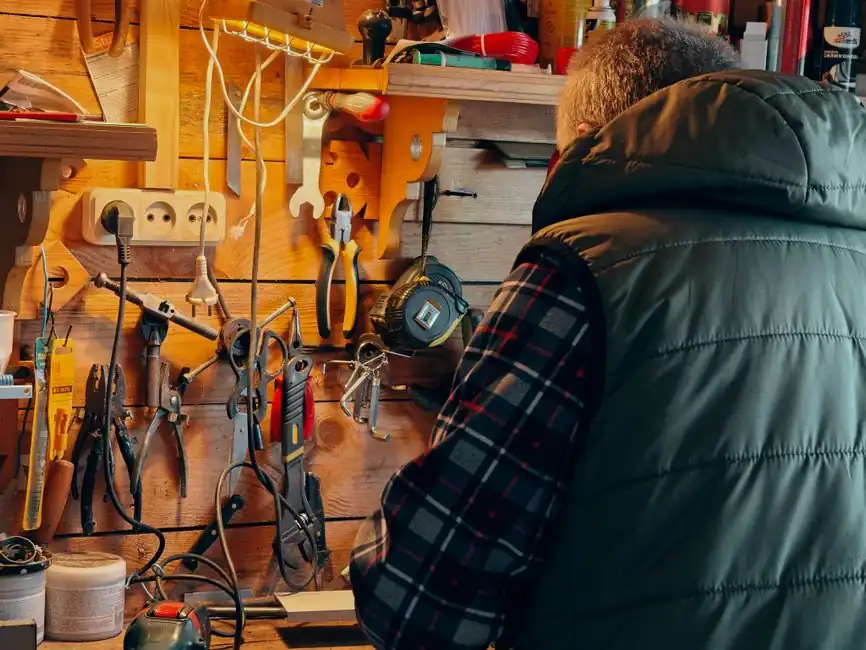
Pneumatic 1-inch-drive impact wrenches routinely hit 2,000–3,000 ft-lb of breakaway torque, while 1/2-inch cordless electric units in the same shop class cluster around 260–1,400 ft-lb depending on platform and battery state-of-charge [S5][S4].
That headline gap is real, but torque consistency through a tightening cycle is a separate spec, and it is where the two drive types diverge in ways that a single torque number on a data sheet will not show [S1][S3].
Why Pneumatic Wrenches Peak Higher but Sag Mid-Cycle
Air impact wrench output scales directly with regulator pressure, and the common shop operating window sits at 90–120 PSI at the tool inlet; below that window torque falls off almost linearly [S1]. A practical floor is built in: as the hose run grows or the compressor tank drops, the same wrench on the same fastener can deliver measurably less clamp load, and the operator has no closed-loop way to see it [S1].
The REDATS P-220 pneumatic, rated 2,200 Nm (about 1,622 ft-lb) at 2.14 kg, illustrates the power density ceiling: more torque per kilogram than a comparable cordless platform, which lands closer to 4 kg for an equivalent class [S2]. Heamar's December 2024 buying guide still calls out air wrenches as the higher-torque option for the most demanding jobs, even as cordless platforms have closed the gap on mid-range work [S6].
Why Cordless Wrenches Repeat Better Joint-to-Joint
Cordless impact wrenches run from a battery with a relatively flat voltage curve under load, so the motor sees a stable energy input across a tightening cycle, and modern brushless platforms add electronic torque management that pulses down once a target is reached [S1][S3]. The result on the shop floor is more uniform clamp load from the first fastener to the fiftieth, which is why assembly cells doing warranty-sensitive work have largely standardised on cordless 1/2-inch and 3/4-inch platforms [S3][S4].
User field reports back this up: a Milwaukee M18 Fuel 1/2-inch owned since 2017 is described as able to break anything short of needing a torch, and a DeWalt 20V 1/2-inch used in a working shop is called out as "doing great" on truck and passenger lug work [S4]. A corded electric 260 ft-lb unit at one retailer's $75 price point is judged sufficient for occasional suspension and rust-fastener work, but not for heavy truck lug nuts where 3/4-inch cordless is the working minimum [S4].
Decision Matrix: Air vs Cordless on Four Criteria
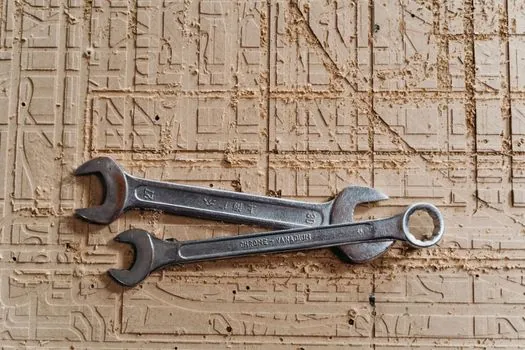
Comparing the two drive types on the criteria that drive repeatability and uptime, using the public data above: [S1]
Peak breakaway torque: pneumatic 1-inch-drive wins at 2,000–3,000 ft-lb [S5]; cordless 1/2-inch sits at roughly 260–1,400 ft-lb and 3/4-inch cordless reaches further but with added mass [S4]. Joint-to-joint repeatability: cordless wins because the battery voltage and electronic shut-off hold the output stable across cycles [S1][S3]. Portability and shop footprint: cordless wins outright, no compressor, no hose, no regulator [S1][S6]. Total cost of ownership over a 3–5 year window: cordless batteries need replacement on a 3–5 year cycle, while pneumatic requires compressor upkeep (oil, tank drain, occasional tank replacement) and an airline that can freeze the gun below about 45 °F as one operator reports [S1][S4].
For a high-volume assembly cell where every joint must hit the same clamp load, cordless is the rational pick. For a tire shop, structural steel, or heavy-truck bay where peak breakaway torque is the gating spec, pneumatic remains the standard [S3][S5][S6].
Operating Limits That Decide the Choice
Air impact wrenches need a compressor sized for the tool's CFM draw, and a hose run that does not starve the regulator; the longer the hose or the smaller the bore, the more the line pressure at the tool drops below the 90 PSI floor, and torque consistency follows pressure down [S1]. The practical manifestation is a wrench that breaks the first ten lug nuts and stalls on the eleventh because the tank has cycled. Cold ambient operation is a known failure mode: one operator describes a 1-inch extended-anvil pneumatic freezing up below 45 °F on truck-wheel work, which is exactly the environment where crews reach for cordless [S4].
Cordless impact wrenches are limited by battery state-of-charge and platform voltage; an 18V or 20V pack will deliver a different torque curve on a half-empty cell than on a full one, and there is no industry-published SOC-vs-torque curve that buyers can use to spec a job. Cold-weather operation also degrades lithium-ion capacity, though the tool itself does not freeze the way a moist airline does. For a closer look at how drive anvil choice changes the same torque numbers on paper, see the spec-level breakdown of #5 spline vs 1-inch square drive impact wrenches.
Standards, Sourcing, and What to Verify on a Data Sheet
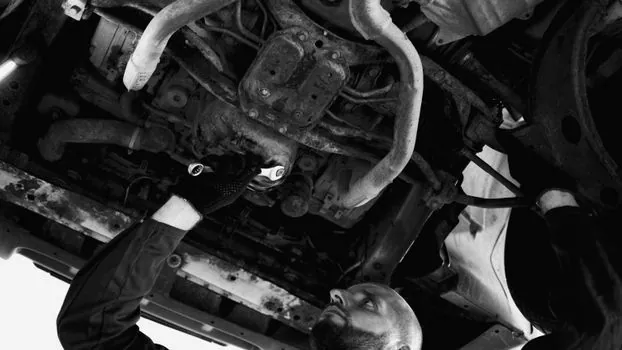
There is no single industry standard that defines "torque consistency" for an impact wrench, so buyers have to read between the lines of three numbers: maximum reverse torque (peak breakaway), working torque in forward (the tightening number that matters on a data sheet), and the air pressure or battery voltage at which each is measured [S5]. Pneumatic data sheets almost always quote torque at 90 PSI at the tool inlet, and a longer hose run quietly invalidates that number [S1].
For procurement, the actionable checks are: (1) confirm the CFM draw of the pneumatic wrench against the compressor's delivered CFM at the working PSI, not the compressor's peak; (2) confirm the cordless wrench's torque at the lowest SOC you will see in a shift, not at a full battery; (3) confirm the anvil and socket retention interface, which is covered separately in air impact wrench socket retention: hog ring vs pin-and-O-ring vs detent pin, because retention failure mid-cycle will look like a torque-consistency problem even when the tool itself is sound. Buyers comparing pneumatic torque data also need to factor hose length and bore, which the air hose length vs pressure drop for impact wrenches reference covers in CFM and PSI terms.
Who Air Is For, and Who It Is Not For
Air impact wrenches are for shops that already run a compressor sized for the tool, that need the 1,500–3,000 ft-lb breakaway class for truck, agricultural, or structural work, and that can hold line pressure at 90+ PSI at the tool inlet through a properly sized hose [S1][S5]. They are not for occasional users, not for cold or dirty field work where airlines freeze, and not for assembly cells that need joint-to-joint repeatability more than peak [S3][S4][S6].
Cordless electric impact wrenches are for mobile service, assembly cells, and shops that need repeatable clamp load across hundreds of cycles per shift; they are not for the 1-inch-drive class where pneumatic still holds a 2x breakaway advantage, and they are not for users who will not manage a battery rotation on a 3–5 year replacement cycle [S1][S3][S4]. The air impact wrench category still owns the heavy end, and the impact drill category overlaps only on the light-duty end of the comparison.
Track these two signals before next quarter: any IEC or ISO harmonised test method for impact-wrench torque repeatability under varying line pressure or battery SOC, and OEM-published SOC-vs-torque curves on the next generation of 3/4-inch cordless platforms, since both would shift this comparison materially.