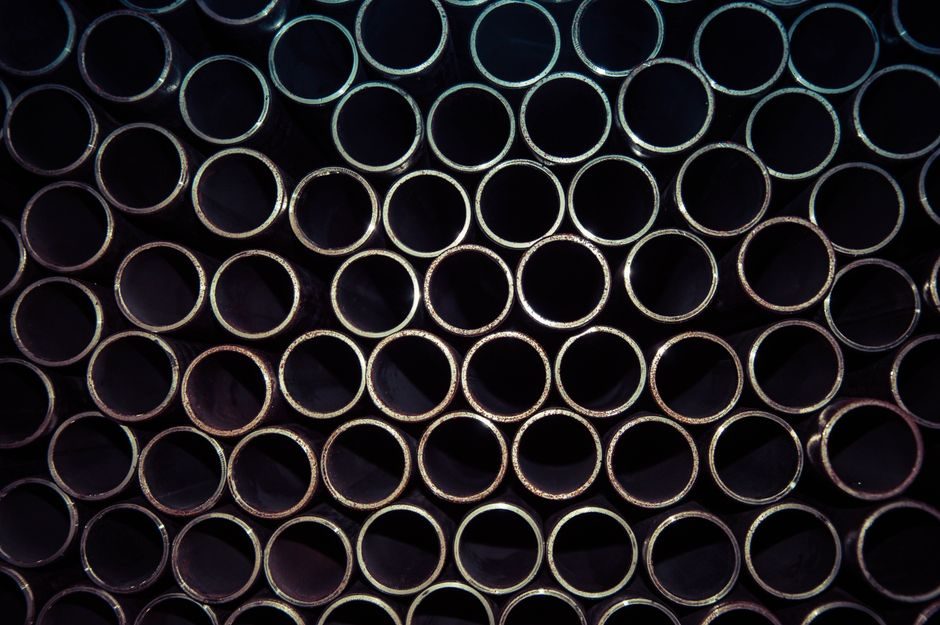
Where plain carbon steels cap out near 690 MPa tensile, alloyed grades such as 4140, 4340 and 8620 routinely reach 1020–1240 MPa as-rolled and 1500–2000 MPa after quench-and-temper, which is why gear, shaft and pressure-vessel specs default to alloy grades when section size, fatigue or temperature service rules out carbon steel.
Where Alloy Steel Outperforms Carbon and Stainless
Alloy steel wins on hardenability: a 4140 round bar 100 mm in diameter will through-harden in oil, while a 1045 bar of the same size requires water quenching and still shows a soft core above ~50 mm, with the boron-modified 15B37 variant pushing that limit further at only 0.0008–0.003% B [S3].
At elevated temperature, chromium-molybdenum grades such as 1.25Cr-0.5Mo (P11/T11) and 2.25Cr-1Mo (P22/T22) are code-approved for creep service to 595 °C under ASME B&PV Section I and VIII, where stainless steel 304/316 strength falls off rapidly and nickel-alloy alternatives are typically reserved for higher-temperature or corrosive service above 650 °C.
For wear and impact, 4340 quenched-and-tempered to 28–32 HRC delivers Charpy V-notch impact energy above 54 J at –40 °C, the gate most specifiers set for mining, off-highway and sub-arctic components, while a 1045 normalized bar generally fails the same gate at –20 °C with values under 27 J.
Where the Spec Falls: Cost, Welding and Machinability
Raw material cost is the headline disadvantage: alloy steel billet typically runs 20–60% over 1045/1060 carbon billet at mill scale, and once nickel and molybdenum are in the recipe, surcharges track the LME Ni and MoMo price, exposing the buyer to volatility that a simple carbon steel PO does not carry. [S1]
Welding is a documented pain point — preheat to 150–300 °C, controlled interpass below 230 °C, and post-weld stress relief at 595–680 °C for 1 hour per inch of thickness are the typical gate values for 4140/4340 assemblies, and missing those steps drives cold-cracking risk in the HAZ; the 8620 case-hardening grade is more forgiving (typical preheat 150 °C) but still demands a low-hydrogen electrode such as E7018.
Machinability also drops with hardness: 4140 at 28 HRC machines roughly 55% of free-cutting B1112 (rated 100%), so cycle time rises 30–80% versus a 1018 weldment on the same part geometry, and tool life with carbide inserts contracts accordingly unless the shop drops cutting speed to 60–90 m/min and tightens coolant delivery.
Comparison Table: Alloy vs Carbon vs Stainless for Common Spec Gates

On a normalized 25 mm bar at 200 °BHN working hardness: carbon steel 1045 gives 570 MPa tensile and reaches 25 mm through-section hardenability; alloy steel 4140 gives 1020 MPa tensile with 100 mm through-section hardenability; martensitic stainless steel 410 gives 760 MPa tensile but only 50 mm hardenability and adds 2.5–3× the raw-material cost. [S2]
On weldability: 1045/1018 plate demands preheat 100–150 °C and no PWHT; 4140/4340 demands preheat 150–300 °C plus mandatory PWHT 595–680 °C; 410 stainless demands preheat 200–300 °C and PWHT 650–760 °C plus matching E410NiMo consumables, so total weld-fab cost scales with how aggressive the thermal cycle must be.
On high-temperature capability: 1045/4140 lose creep strength rapidly above 425 °C; 1.25Cr-0.5Mo alloy retains usable creep life to 595 °C; nickel-alloy Inconel 600/625 retains it to 980 °C+, with a step-change in price (roughly 8–15× alloy steel per kg).
Selection Gates: When to Pick Alloy Steel and When to Walk Away
Pick alloy steel when at least two of these gates trigger: through-section hardness required, section size above 50 mm where plain carbon will not harden, elevated-temperature service 400–600 °C, impact requirement below –20 °C, or wear/contact-fatigue duty that demands 28 HRC+ on a non-surface-hardened part. [S3]
Walk away from alloy steel when the part is thin (under 12 mm), welded extensively, low-stress, and cost-sensitive — a 1018 or stainless steel 304 solution will land 30–60% cheaper once welding, preheat and PWHT labor are counted, and total lead time drops because the carbon grade is almost always a mill stock item.
For sour-service (H₂S) oilfield or refinery service, alloy steel is still the workhorse but only when paired with NACE MR0175 / ISO 15156 hardness limits of 22 HRC maximum for sour environments; exceeding that gate means a switch to a nickel-alloy such as 825/625 or a duplex stainless steel 2205 becomes mandatory, with a corresponding cost step.
Common Failure Modes Worth Calling Out
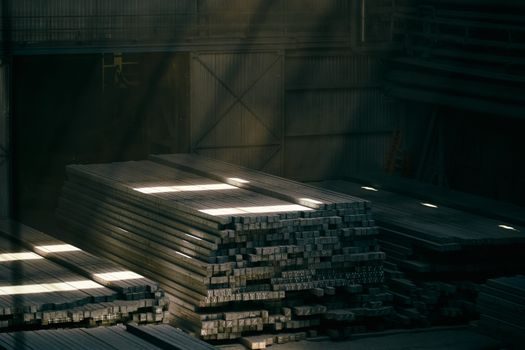
Temper embrittlement hits 2.25Cr-1Mo and similar Cr-Mo grades held in the 300–575 °C range for long service — impact energy can drop from 80 J to under 27 J in the as-tempered condition, and the only fixes are stricter chemistry control (Sn + P under 0.01%) or a re-temper above 620 °C, which costs production time. [S4]
Quench-cracking on water-quenched heavy sections of 4140 is a documented shop-floor failure mode; switch to oil or polymer quench, and verify with a Jominy end-quench test per ASTM A255 before locking the heat-treat procedure — for a reading on supplier vetting practice, see Wire Form Part Suppliers in 2026: Tier Map, Spec Gates and Sourcing Paths.
Standards, Specs and the Sourcing Trace
For seamless mechanical tubing, ASTM A519 governs 4130/4140 cold-drawn and hot-finished tubes; for pressure service, ASTM A335 grades P11/P22 cover seamless ferritic Cr-Mo pipe to 595 °C; for bar stock, ASTM A29/A322 and SAE J404 set chemistry and hardenability bands, while AMS 6349/6382 govern aircraft-quality 4140 bar with vacuum-arc-remelt cleanness limits. [S5]
Hardenability testing follows ASTM A255 (Jominy end-quench), with the resulting J-number (J6 = 28 HRC, J20 = 36 HRC on 4140H) being the cleanest single spec number to put on a buy print if the buyer wants the heat to behave the same way heat-to-heat — a tactic that is common in 86XX series gear-steel buys per Stainless Steel Types and Classifications: A Spec-Driven Reference for 2026 framing of how alloy-grade substitutability is policed.
Traceable mill certs to EN 10204 3.1/3.2 with full chemistry, mechanical properties and grain size, plus ultrasonic testing to ASTM A388 for bar above 100 mm, are the cost-effective insurance that the alloy bar you receive is in fact the grade on the print; for a complementary look at non-metallic consumables that often share the same shop floor, Rubber Tubing Selection: Polymer, Size, Service and Standard Map covers the polymer side of the spec ledger.