Global supply of custom wire form parts in 2026 routes through three identifiable clusters: Chinese mass-market factories listing 2,000+ suppliers on Made-in-China with 6,000+ SKUs of wire, mesh, cable and titanium wire (ex-works US$0.008–33/kg depending on grade and MOQ) [S1], UK/EU engineering job shops offering bespoke wire forms and coil springs to ISO 9001 for automotive, aerospace, medical and electronics end-uses [S2], and Indian clip/clamp/fastener OEMs that supply global spring and stamping distributors [S4]. A senior buyer should match the tier to the part's tolerance class, alloy requirement and annual volume before sending an RFQ.
Reference parts in this category range from clips, hooks, clamps, hose band clamps, speednuts, palnuts, lock washers, thrust washers and pin springs for clevis [S4] to compression, torsion, extension and constant-force springs produced from round wire [S6]. For a deep dive on part-level spec gates, see the wire form part selection five-gate spec map and the adjacent vibratory feeder suppliers sourcing-tier analysis for the same July-2026 sourcing baseline.
Tier 1 — Chinese mass-market and export-platform suppliers
Made-in-China indexes 2,000+ wire manufacturers with 6,000+ products, dominated by stainless steel wire mesh (US$5–9.5/kg, MOQ 1–10 kg), titanium wire (US$30–33/kg, MOQ 1 kg) and enameled/litz copper wire for motor and transformer windings (US$3–23.25/kg, MOQ 20–100 kg) [S1]. Lead time on standard stocked grades runs 15 workdays for audited suppliers; response time is typically ≤3 hours. Tier 1 fits non-critical brackets, architectural mesh, fencing, grounding conductors and high-volume commodity clips where the buyer accepts 0.1 mm dimensional spread and full-container FOB pricing.
For EDM and high-precision stamping buyers, a parallel Tier-1B sub-cluster is the Suzhou-based consumables specialists (e.g. Ankok, serving Sodick, Mitsubishi, Fanuc, Makino, Seibu, GFMS AgieCharmilles EDM platforms with brass wire, molybdenum wire and electrode tubes) [S3]. This sub-cluster is a useful signal that a single Chinese factory can deliver 100% traceability plus 7-working-day FCL turnaround on consumables when the SKU is well-defined.
Tier 2 — UK and EU custom wire form job shops
Custom wire form manufacturers in the UK and EU typically run for 50–100+ years, hold ISO 9001, and offer press capacity from hand-fed 5-tonne presses to 200-tonne progression tooling with in-house tool making, CAD design and prototyping [S5][S6]. Materials on the published menu at European Springs include spring steel, Hastelloy, Elgiloy, Nimonic, Inconel, beryllium copper, phosphor bronze, brass, aluminium, Melinex and various nickel alloys — wire forming is listed alongside multi-slide production, laser cutting, precision stamping and assemblies [S2]. These shops target small batches to high-volume runs into automotive, aerospace, medical, electronics, oil & gas, rail and hydraulics.
Tier 2 is the correct fit when a part needs ±0.05 mm tolerance, full PPAP/IMDS documentation, controlled-atmosphere heat treatment, or 100% final inspection with FAIR. Master Spring (ISO 9001, 75+ years operating) explicitly lists clips, hooks, clamps, fasteners, compression springs, torsion springs, extension springs and custom wire forms from round wire [S6] — a useful reference benchmark for what a Tier-2 shop's product catalogue should contain.
Tier 3 — India clip, clamp and fastener OEMs
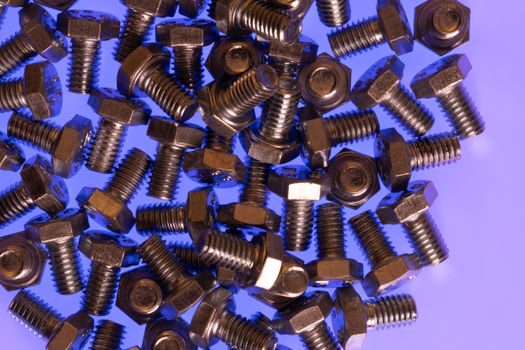
Alibaba's wire-form-parts supplier index for July 2026 is dominated by Indian manufacturers whose main products are clips, clamps, speednuts, palnuts, lock washers, hose band clamps, thrust washers, pin springs for clevis, and Starlock washers; secondary product lines include round and flat wire springs, coil/compression/torsion/tension springs, and assemblies combining wire products with sheet metal stampings [S4]. Tier 3 wins on price-to-volume ratio for standard retaining and fastening geometries that ship into white goods, automotive sub-assemblies and furniture hardware.
Buyers should note that Tier-3 Indian clip/clamp suppliers rarely hold the multi-slide tool libraries of European Tier-2 shops, so 3D-bent or non-symmetrical custom forms still route to the UK/EU. For non-fastener custom wire forms at moderate volume, a useful adjacent reference is the graphite machined part sourcing-cost guide which uses the same low-to-mid volume tiered-sourcing logic.
Selection criteria — material, diameter, tolerance, certification
Five spec gates dominate wire form part sourcing decisions in 2026: (1) base material — music wire ASTM A228, hard-drawn carbon steel A227, stainless 302/304/316, oil-tempered chrome-silicon, phosphor bronze, beryllium copper, Inconel, Hastelloy; (2) wire diameter, typically 0.2–12 mm with four-slide machines reaching 0.1 mm fine wire; (3) tolerance class — Tier 1 offers ±0.1–0.2 mm, Tier 2 ±0.05 mm, Tier 3 ±0.15 mm; (4) secondary operations — heat treatment (induction, austempering), plating (zinc, tin, nickel, powder-coat), passivation per ASTM A967 for stainless; (5) quality system — ISO 9001 baseline, with IATF 16949, AS9100, ISO 13485 required for automotive, aerospace and medical respectively [S2][S6]. Buyers in oil & gas must also reference NACE MR0175 / ISO 15156 for sour-service components — a constraint pushed by European Springs' explicit oil & gas sector offering [S2].
The "wire rod" upstream input also gates final mechanical properties; for a primer on rod-grade selection and drawing practice, see the wire rod encyclopedia entry which feeds directly into the wire form supply chain.
Process capability and equipment classes
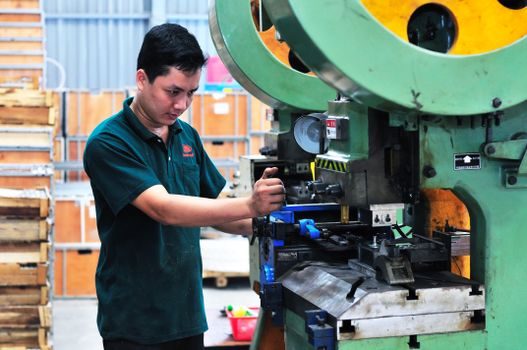
Wire forming itself spans three equipment classes: (a) 2-axis CNC benders for simple hooks and frames, (b) multi-slide (four-slide) machines for complex 3D clips and contacts, and (c) multi-axis servo benders for tight-tolerance torsion and compression spring geometries [S2]. UK/EU Tier-2 shops commonly combine wire forming with in-house CNC spring coiling, precision stamping, laser cutting and full sub-assembly, allowing one PO to cover a wire form plus its mating pressed bracket [S2][S6]. Tier-1 Chinese factories typically run 2-axis and four-slide only, with press work sub-contracted.
For buyers sourcing wire forms that are part of a larger sensor or instrument assembly, the embedded part encyclopedia entry explains how wire-formed contacts and spring elements integrate with embedded sensing assemblies — a useful read when the wire form is an electrical contact rather than a structural bracket.
Volume, MOQ and lead-time benchmarks
MOQs in the 2026 supplier base span four orders of magnitude: 1 kg for high-purity titanium wire (US$33/kg) and stainless mesh (US$5/kg) on Chinese platforms [S1]; 100 m of cable / magnet wire at 0.008–0.1 USD/m [S1]; 20–100 kg for enameled copper and litz wire [S1]; small batches to high-volume runs at UK/EU job shops without a fixed MOQ [S2]; standard catalogue clips at Tier 3 with sub-1,000-piece MOQs [S4]. Lead time on Tier 1 stock grades is 15 workdays; Tier 1 custom tooling adds 20–30 days; Tier 2 custom tooling 4–6 weeks; Tier 2 production 2–4 weeks after sample approval; Tier 3 standard clips 30–45 days ex-India.
A useful adjacent read for any buyer who also has to specify wire-rope-driven measurement or tension systems is the draw wire sensor encyclopedia entry — these sensors themselves contain wire-form springs and guides, so a sensor buyer and a wire-form buyer are often the same person inside the OEM.
Limits, failure modes and what to push back on

Common wire-form failure modes buyers must pre-empt: (1) fatigue cracking at the bend tangent on parts specified with a radius below 1× wire diameter, (2) hydrogen embrittlement after acid pickling or improper electroplating of high-carbon wire, (3) stress-corrosion cracking on stainless 304 in chloride-rich environments — specify 316 or passivation per ASTM A967, (4) spring-set / loss of load in compression springs that have been cold-worked but not stress-relieved, and (5) galling of zinc-plated steel against stainless mating parts. Push back on any supplier that cannot show a heat-treatment and surface-finish data sheet traceable to the PO's lot number. [S1]
For wire forms used inside process instrumentation — for example, a spring element inside a pressure transmitter or a flow meter body — insist on material traceability to EN 10204 3.1 and on a documented sample approval (FAIR / PPAP) before the production run. The same traceability logic applies to wire-formed valve internals on industrial valve assemblies in oil & gas service.
Trackable signals to watch over the next two quarters: (a) any UK/EU Tier-2 shop acquiring a four-slide cell to capture clip work currently routed to India; (b) Chinese Tier-1 factories moving up-stack into AS9100 / IATF 16949 certification to win aerospace Tier-1 business; (c) consolidation among Indian clip/clamp OEMs as automotive platform volumes consolidate. Each of these moves reshapes the price-to-certification curve in a different direction.