Alloy steel TCO is the sum of material, fabrication, heat treatment, lead-time, and lifecycle cost; on most industrial parts, fabrication and heat treatment outweigh the bar price itself, and a misplaced grade can swing lifecycle cost by 2x to 3x [S1].
For a 2025-vintage high-end alloy steel market valued at $98.4 billion growing to a projected $158.7 billion by 2034 (5.5% CAGR), procurement discipline on TCO matters more than headline price per ton [S5]. This article breaks the TCO into its real cost drivers, ranks common grades against four decision criteria, and gives a working TCO formula for both alloy steel and adjacent materials like titanium alloy and aluminum alloy.
Anatomy of Alloy Steel TCO: Six Line Items That Move the Number
TCO for a steel component collapses into six buckets: raw material, secondary processing, fabrication (cutting/welding/machining), heat treatment, inspection/NDT, and lifecycle cost (wear, corrosion, replacement frequency) [S1][S4].
On a typical alloy steel part, raw bar stock often accounts for only 30 to 50% of the finished-part cost; the rest is consumed by CNC time, heat treat, and QA, and that split is why over-specifying an alloy is a fast way to inflate TCO [S1]. On the cost-sensitive side, carbon steel is almost always the rational starting point for brackets, frames, covers, and structural panels, where low-carbon grades are easy to cut, bend, weld, and finish [S1]. Alloy steel earns its premium only when the part faces extreme mechanical load, severe wear, or a harsh environment where failure is not an option [S1].
Material and Grade Cost Drivers: 4140, 4340, HSLA, and Microalloying
High-strength low-alloy (HSLA) steel commands a 15 to 40 percent price premium over commodity carbon grades, and typically reduces structural weight by 20 to 30 percent compared to standard carbon grades [S2].
Automotive body-in-white applications using 340/440 MPa HSLA grades achieve 15 to 25% thickness reduction and save 18 to 25 kg per sedan, justifying an $8 to $12 per-vehicle material premium through lifetime fuel savings [S2]. For heavier industrial service, AISI 4140 and 4340 remain the default alloy choices, with 4340 delivering higher hardenability and toughness for critical shafts, heavy-duty gears, and load-bearing pins where standard steel would fail [S1].
Fabrication and Welding: The Hidden Multipliers on Labor Hours
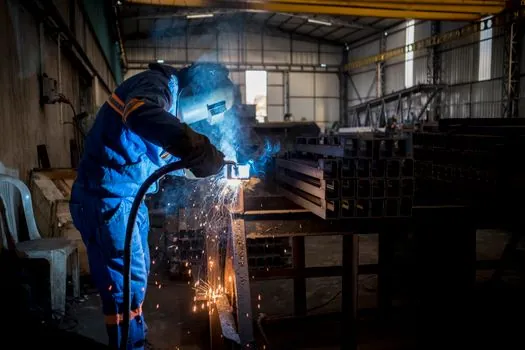
Low-carbon steel is the easiest steel to weld, with low HAZ cracking risk and generally no specialized process controls; welding alloy steel typically requires preheating, controlled cooling, or post-weld heat treatment, which adds hours and drives labor cost [S1].
That fabrication gap is where most of the TCO differential between alloy and carbon steel is actually realized on welded assemblies. The practical TCO formula for high-performance alloy pipe systems follows the same shape: TCO = Initial Cost + Installation + Operating + Maintenance + Downtime + Disposal, and installation is where alloy steel's welding burden lives [S6]. Lead time is a second hidden multiplier: common carbon grades are universally in stock, while specialty alloys can delay a project by weeks, and that schedule slip is itself a TCO line item on contract work [S1]. For cost-driven projects where extensive fabrication is required, low-carbon steel remains the right call on the strength of welding economics alone.
Heat Treatment, Wear Life, and the Long Tail of Lifecycle Cost
Properly heat-treated alloy steel achieves a deeper, more stable hardness than surface-hardened carbon steel, dramatically extending wear life in continuous-friction, impact, or abrasive service [S1].
The trade-off is that alloy steel's TCO win only materializes when the part actually sees those conditions. For wear-resistant parts like dies, pins, and ground-engaging components, carbon steel can survive simple wear service through secondary surface hardening, but its TCO often ends up higher once the extra coating or carburizing process is added [S1]. On the standards side, common alloy steel grades for sour-service and pressure-bound use are typically specified against NACE MR0175 for sulfide stress cracking resistance, though exact grade-to-environment mapping should be confirmed against the latest revision. In the broader materials debate, aluminum alloy has been shown to deliver better TCO than steel options by more than $4,000 in maritime and urban environments, except under specific load cases where steel wins on strength per dollar [S3]. The TCO-vs-purchase-price distinction is the entire ballgame: purchase price is a one-time line, while wear, replacement, and downtime compound across service life.
Decision Matrix: Alloy Steel vs Carbon Steel vs HSLA vs Alternatives

A four-criterion comparison ranks the main options on cost, strength, fabrication ease, and lifecycle: low-carbon steel wins on cost and fabrication, HSLA wins on strength-per-mass in structural use, 4140/4340 alloy wins on wear life and hardenability, and alternatives like titanium alloy win on corrosion and strength-to-weight at much higher upfront cost [S1][S2][S7].
For a working spec: specify low-carbon steel when the part is cost-sensitive, heavily welded, or carries static load below A36's 250 MPa yield limit. Specify HSLA steel when the 20 to 30 percent weight reduction pays back the 15 to 40 percent material premium through downstream savings, which is typical in automotive, construction, and energy-sector applications [S2]. Specify 4140 or 4340 alloy when the service is high-load, high-torque, or abrasive and the part will be heat-treated to spec. For corrosion-bound or weight-critical aerospace and chemical service, titanium alloys are often the rational TCO choice despite higher material cost, because the lifecycle math flips once you account for avoided replacement and inspection cycles [S7]. For context on how these material choices ripple into fabrication tooling, see this air pick spec guide for steel construction.
Who TCO Discipline Is For, and Where It Breaks Down
TCO discipline pays off most on parts that are high-volume, wear-critical, or carry penalty cost on failure; it adds little value on one-off prototypes, short-life tooling, or where the spec is already locked by a customer drawing [S1][S4].
For procurement teams in automotive, oil and gas, and structural infrastructure, an HSLA or alloy upgrade typically passes the TCO test; for low-volume fabricators and job shops, the same upgrade usually fails on lead time and minimum-order quantities. Two common failure modes: (1) over-specifying alloy steel for cosmetic or non-loaded parts, which can triple raw material cost and double CNC machining time for zero functional gain [S1]; (2) under-specifying in wear or impact service, which then drives TCO up through premature replacement, unplanned downtime, and warranty exposure. The right discipline is to start the grade decision at the lowest-cost steel that meets the load and environment, then justify every alloy premium with a quantified downstream saving or risk reduction.
Tracking Signals: Where the 2026 Alloy Steel TCO Story Will Move Next
Two trackable signals will move this TCO picture through 2026: HSLA penetration in automotive body-in-white, which is already pushing average alloy steel intensity per light vehicle to roughly 182 kg in 2025 (up from 163 kg in 2020), and the 5.5% CAGR trajectory of the high-end alloy steel segment toward $158.7 billion by 2034 [S5]. For sourcing decisions, watch published regional market shares and the dominant producer footprints: Asia Pacific held 47.6% of high-end alloy steel revenue in 2025, with ArcelorMittal cited as leading the competitive landscape by production footprint and grade portfolio [S5]. For a working TCO calculator, the canonical form remains TCO = Initial + Installation + Operating + Maintenance + Downtime + Disposal, applied consistently across candidate grades [S6].