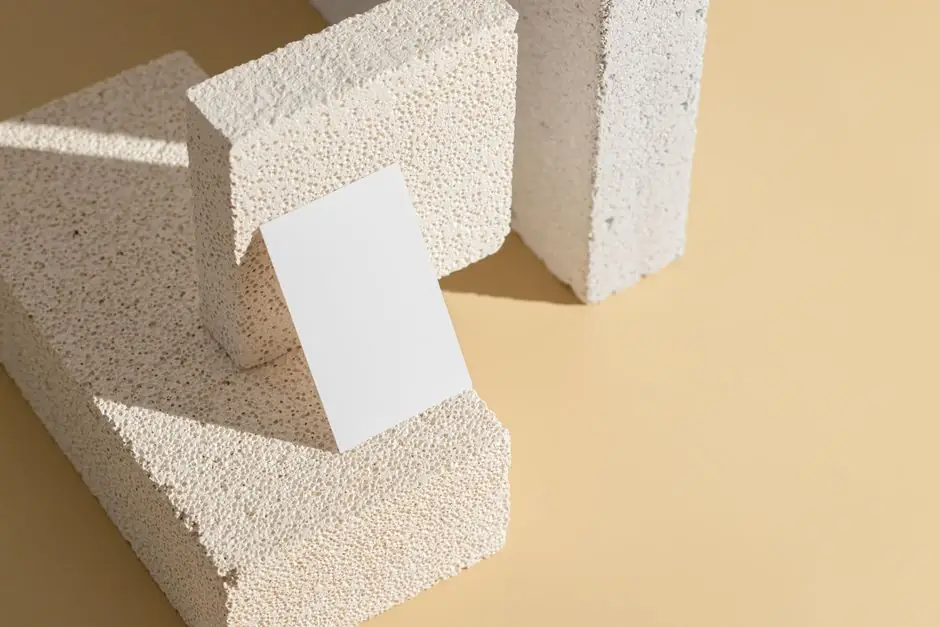
Alpha alumina (α-Al2O3) is the hexagonal close-packed corundum phase with aluminum ions filling two-thirds of the octahedral sites, the most thermodynamically stable and densest form of aluminum oxide [S4].
Gamma alumina (γ-Al2O3) is a transition phase with a cubic spinel structure that inverts to α-Al2O3 at roughly 1150°C, making it impossible to sinter into a fully dense body but excellent as a high-surface-area support [S4]. Activated alumina is, in industrial practice, a partially dehydroxylated γ-Al2O3 engineered for adsorption duty, valued for its porosity and moisture affinity rather than for its mechanical strength [S5].
Crystal Structure and Phase Stability
Alpha alumina crystallizes in a trigonal R-3c lattice with an ABAB stacking of oxygen planes, the geometry that gives corundum (and its gemstone forms sapphire and ruby) its characteristic hardness and chemical inertness [S1][S4]. Beta phases encountered in industry, β-alumina (Na2O·11Al2O3) and β″-alumina (Na2O·5Al2O3), are sodium-stabilized lattices left over from the Bayer process and are valued for ionic conductivity in batteries rather than for structural use [S4].
Gamma alumina adopts a defective cubic spinel structure and is metastable; once the powder crosses roughly 1150°C, the lattice reconstructs into α-Al2O3, releasing 20–40 kJ/mol of exothermic heat and coarsening the grain structure irreversibly [S4]. This gamma-to-alpha transition is what locks alpha alumina in as the dominant phase in any sintered technical ceramic, and it is also why gamma material is reserved for low-temperature applications like catalysis and drying where the surface area is the asset, not the bulk density.
Surface Area, Porosity, and Density
Gamma alumina powder typically delivers a specific surface area near 100 m²/g with a porous internal network, while alpha alumina drops to roughly 5 m²/g as a nearly non-porous dense grain [S4]. The two-decade gap between those values is the single most useful number for selecting between them: if the duty needs adsorption, ion exchange, or a catalyst washcoat, gamma/activated wins; if the duty needs structural strength, abrasion resistance, or dielectric insulation, alpha wins [S4][S6].
Activated alumina is produced by controlled thermal dehydroxylation of aluminum hydroxide, leaving a porous γ-Al2O3 skeleton with high internal surface area and a strong affinity for polar molecules, especially water [S5]. The trade-off is mechanical fragility: activated alumina beads and granules crush more easily than dense alpha parts, so hopper and bed design must account for attrition.
Mechanical, Thermal, and Chemical Behavior
Alpha alumina is described across suppliers as having very high hardness, high wear resistance, high melting point, good thermal stability, low porosity in dense sintered form, and good electrical insulation [S5]. These properties make it the default choice for technical ceramics, mill lining media, abrasion-resistant tiles, electrical insulators, and spark plug bodies [S5].
Gamma alumina, by contrast, is preferred for its high surface area, high porosity, and catalytic activity, and is widely used as a catalyst support and adsorbent, properties that depend on the metastable spinel staying below the inversion temperature [S2][S6]. Chemically, alpha alumina resists acid attack far better than the porous grades because the attack path is grain-boundary impurities; high-purity alpha is therefore the go-to material where corrosion matters, while low-purity alumina concentrates impurities at the grain boundaries and corrodes faster [S4].
Comparison Across Selection Criteria
On four standard decision criteria the three grades line up as follows. Crystal structure: alpha is trigonal R-3c corundum, gamma is cubic spinel, activated alumina is porous γ-Al2O3 [S1][S4][S5]. Specific surface area: alpha near 5 m²/g, gamma near 100 m²/g, activated alumina similarly high (gamma-based) with engineered pore-size distribution [S4][S5]. Density and porosity: alpha is dense and non-porous, gamma and activated are porous and lightweight [S4][S6]. Alpha alumina is suited to refractories, wear-resistant parts, insulators, and ceramic substrates due to its dense, stable, low-surface-area structure; gamma alumina's high surface area and porosity suit it for catalyst carriers and active supports; and activated alumina is used for drying, purification, and adsorption beds [S4][S5][S6][S7].
Buyers who also pull a pressure transmitter onto a dehydration skid, or who run lamps and light fittings with alpha-alumina insulating sleeves, will recognise the same selection logic: pick the phase whose physics matches the duty, not the phase with the more familiar name.
Industrial Applications by Grade
Activated alumina is the workhorse of compressed-air drying, gas purification, and water-treatment adsorbent beds because of its moisture affinity and regenerability [S5]. Gamma alumina is the dominant catalyst support in petroleum refining, petrochemical, and emission-control catalysts, where its high surface area lets precious metals be dispersed as nanoparticles that remain accessible to reactants [S2][S7].
Alpha alumina fills the structural side: large-grained alpha (grains 100–200 µm) for creep-resistant refractories, small-grained alpha for high-strength components, low-alkali alpha for electronic substrates, and high-purity alpha for corrosion-resistant linings in chemical plants [S4]. Calcined alumina, tabular alumina, and fused alumina (white and brown) are all alpha-phase products in different particle-size and purity windows, and most engineered alumina ceramic parts are sintered from one of these alpha feeds rather than from a gamma powder [S5].
Sintering Behavior and Process Limits
Because γ-Al2O3 inverts to α-Al2O3 near 1150°C with an exotherm of 20–40 kJ/mol, sintering a pure gamma body to high density is effectively impossible: the phase transformation drives rapid grain coarsening before densification is complete [S4]. Practical sintering routes therefore use alpha-phase feeds, often with MgO additions of 300–500 ppm to suppress grain-boundary mobility, plus silicate additives in the MgO–SiO2–Al2O3 system to form a transient liquid phase that promotes densification without runaway coarsening [S4].
For gamma and activated grades the process focus is inverted: thermal treatment is held below the 1150°C inversion point, and time-at-temperature is tuned to control pore size, surface area, and residual hydroxyl content, all of which directly set the adsorption capacity of the finished bead or granule [S4][S5].
Limitations, Failure Modes, and Selection Boundaries
Alpha alumina is not the right pick when the application needs surface chemistry: its ~5 m²/g surface area cannot host a meaningful catalyst dispersion, and its dense lattice has no internal porosity for adsorption [S4]. Gamma and activated alumina fail in the opposite direction: they cannot be used as structural members, they shed fines under vibration, and they lose surface area permanently if any process excursion pushes them across the 1150°C inversion line [S4][S7].
Activated alumina also carries a known failure mode specific to adsorbent service, attrition and surface contamination that drop working capacity over time, so bed sizing must include a safety factor and a planned change-out interval rather than the published equilibrium capacity [S5][S7]. Where ionic conductivity is desired instead of mechanical or adsorbent behavior, β/β″-alumina (sodium-stabilized phases) is the correct family, with no overlap into the alpha/gamma/activated decision tree covered here [S4].
Track the next three signals when you need to lock a grade for a build: the verified γ→α inversion temperature on the supplier certificate (it can drift by tens of degrees with impurity content), the BET surface area of the activated lot (often specified as 300–400 m²/g for premium adsorbent grades, falling to 100–200 m²/g for catalyst supports), and any MgO or SiO2 sintering-aid level declared on the alpha powder datasheet. Process engineers comparing checking and testing apparatus for in-house BET or particle-size QC will see the same trade-off play out between fast screening and ISO-grade verification.
See also our earlier report, Cooling Tower Lead Times 2026: Two-Tier Market and Schedule Tactics.